

How To Prevent Ground Ivy From Wreaking Havoc On Your Vegetable Garden
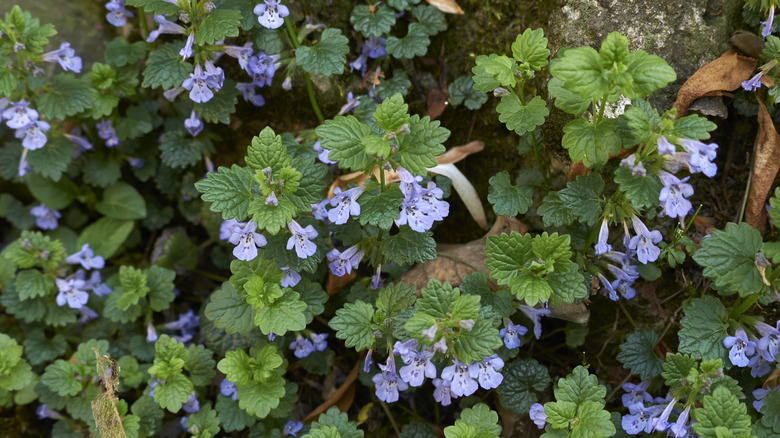
When it comes to spring gardening tasks you shouldn't skip, weed control is at the top of the list. However, managing ground ivy often requires multiple treatments over several years before you see real results.
Ground ivy is an invasive member of the mint family, meaning it's an aggressive spreader both above and below the soil. This makes it impossible to eradicate in one go and often requires the use of both mechanical and chemical treatments. Around your vegetable garden, your best bet is good old-fashioned manual labor, carefully picking out all the vines and tiny roots, and possibly even using a shovel to remove the top layer of soil. You don't want to spread too much herbicide near your grow area, and it's more effective in the fall anyway, when the plant takes what it absorbs down to its roots.
This first treatment should keep the ivy from growing too rampantly during the spring, but following it up with a selective post-emergence herbicide once your garden's done for the year is vital. This preserves all your hard work from the spring, and post-emergence herbicides typically only target a few select weeds as they emerge, rather than killing off anything they come in contact with. You'll want to avoid using it in your garden, but it's great for establishing a firm perimeter. Repeat this cycle, as necessary, for a couple of years, and you should notice a drastic reduction in ground ivy.
How to eliminate and repurpose stubborn ground ivy
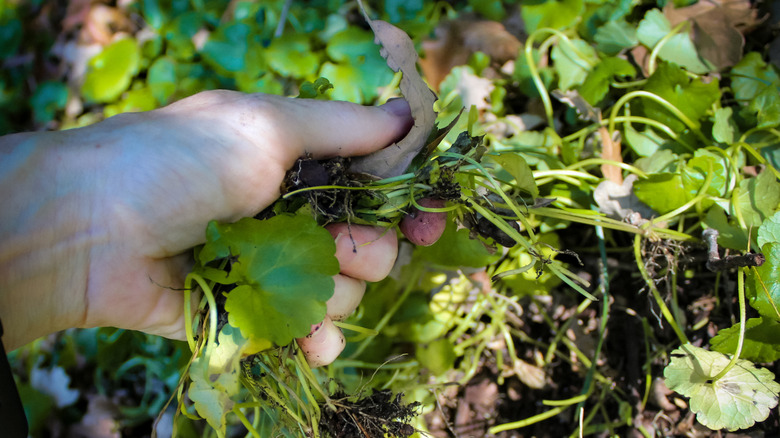
If ground ivy is present, it's borderline impossible to completely eradicate it without heavily relying on potent herbicides and a complete overhaul of the soil. However, once you've effectively eliminated it from an area, there are a few tricks to prevent it from returning.
Using cardboard for weed control is moderately effective at stymieing the growth of ground ivy. While it can still spread overground, it's quite useful at preventing those insidious rhizomes from popping up new growth underneath the soil. While you'll want to combine this trick with manual labor and post-emergence herbicide treatments, it's great at catching a few stray vines you may have missed and serves as a solid insurance policy. Plus, cardboard biodegrades in less than a year, so it's an extra spring chore that adds both weed control and fertilizer.
Ground ivy produces tons of foliage, and once you rip it all out, there's no sense in wasting it. Composting it is a risky idea, as ivy can essentially regenerate from the tiniest piece of live matter. However, in the same way fireplace ashes can benefit your garden, all those torn-up leaves and vines can become a boon rather than a hindrance. Let the ivy dry a bit, then burn it to either add directly to your garden or mix into your existing compost. Always check local ordinances regarding open burning or fire pits, as many cities have strict regulations on burning yard waste, and be sure to only do this with spring ivy that you have yet to apply herbicide to.