

Burger King Whopper Changes: How The Fast Food Chain's Burger Has Transformed Over The Years
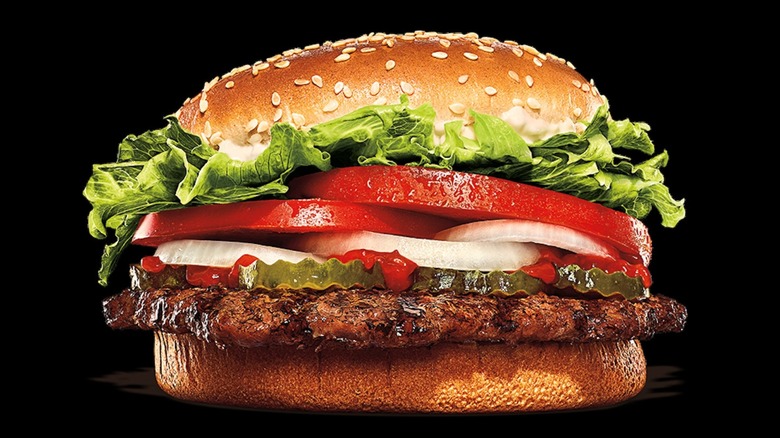
Few fast food menu items have made the same impression as the Burger King Whopper. Since its inception in 1957, the flame-grilled burger has become one of the most recognizable sandwiches in the world. But while the Whopper seems to have remained consistent for years, it's actually undergone many changes.
Since its original 37-cent debut, the burger has been adjusted, redesigned, and reimagined several times to fit customer tastes and changing food trends. These changes have ranges from big to small, from a slight shift in patty size to an all-around facelift of its core ingredients. There have been temporary changes, too, with BK altering its appearance to coincide with movie releases and other promotions. Through all the changes, though, this burger has remained legendary. Here's a look back at the biggest transformations that turned the Whopper into one of the most iconic items in fast food.
Origins of the Whopper
When Burger King first introduced the Whopper in 1957, the fast food world was still largely dominated by smaller, simpler hamburgers. McDonald's wouldn't start selling the Big Mac for another 11 years. Then-Burger King co-owners, James McLamore and David Edgerton, wanted to introduce a burger named to convey a bigger, better burger.
At the time, the price of a Burger King Whopper was shockingly low, featuring a 4-ounce flame-grilled patty topped with lettuce, tomato, pickles, onions, mayonnaise, and ketchup. This burger may seem like common fare now, in an age when corporations are constantly trying to make everything larger, but it was a groundbreaking menu item.
Most fast food chains sold burgers that were a fraction of the size and included only a few toppings. The Whopper felt like a premium option in a sea of smaller offerings. The invention of this burger transformed the entire Burger King brand, building the foundation for one of the most recognizable fast food items in the world.
The bun changes from plain to sesame seed
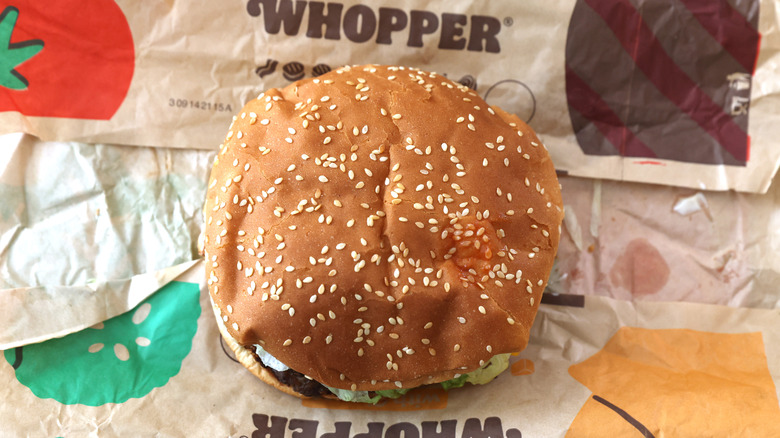
One of the biggest visual changes to the Whopper came when Burger King switched the sandwich from a plain bun to the sesame-seed bun customers recognize today. When the Whopper first launched, it was served on a standard toasted bun without sesame seeds, as advertised in Burger King materials from the 1960s. This earlier version of the burger shows a gleaming blank bun; however, by the 1970s, advertisements shifted to show the Whopper's bun bejeweled with sesame seeds. While the actual adjustment wasn't widely advertised, it's now part of Whopper lore.
The sesame seed bun gave the Whopper a more distinctive appearance and became associated with the burger, helping it stand out from other fast food chains. But unique buns weren't all fast food chains were doing to make waves as they grew in the 1960s and '70s. Bold and bright colors became very popular in this era of fast food marketing, and in fact, Burger King's logo is designed to make customers crave fast food. The sesame seed bun became closely associated with the Whopper. Although Burger King has experimented with different breads and specialty buns over the years, the sesame seed version remains the version most customers associate with the sandwich. This seemingly simple ingredient change shows how even small alterations can become an important part of a fast food item's history.
The Have It Your Way campaign
The Whopper became more than just a burger in 1974, when Burger King launched its famous "Have It Your Way" campaign. At a time when many fast food restaurants focused on speed and consistency, Burger King took a different approach by emphasizing customization. The message behind the advertisements was simple: Customers should be able to order their Whopper any way they wanted it. This could mean adding or removing any toppings or ingredients that came on a standard Whopper.
The Whopper was the perfect product to carry the "Have It Your Way" message because its larger size and variety of toppings made customization a natural selling point. This campaign also marked a shift in American dining culture, where customers began to expect increased opportunities for restaurants to accommodate personal preferences. Customization has only increased with the introduction of mobile ordering and online menus. (You can now even order your Whopper "Hot Off The Broiler" in the chain's app.) Burger King was one of the first places to make customization part of its brand identity; nowadays, it boasts that there are over 200,000 ways to customize its signature burger.
The Whopper gets a bigger patty and a different bun
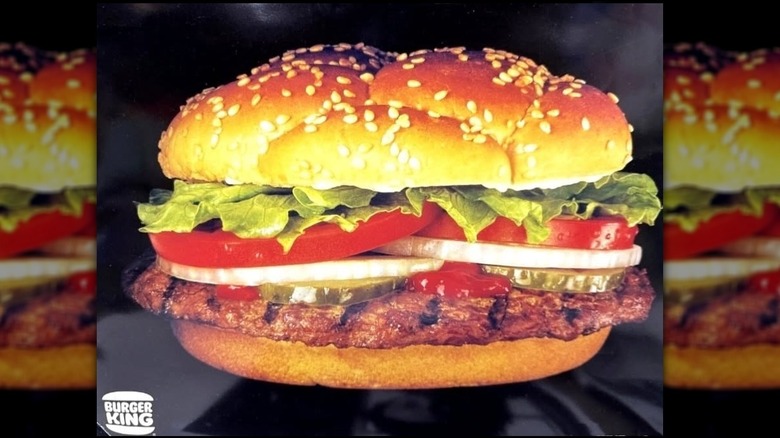
By the mid-1980s, the fast food market was becoming increasingly competitive, and Burger King needed to keep up. The chain altered its signature burger once again, increasing the size of the beef patty to 5.3 ounces. This adjustment made the Whopper feel even more substantial and reinforced the initial plan for it to be a larger, more premium option than other fast food hamburgers. Around the same time, Burger King also changed the Whopper's bun, moving away from the traditional sesame seed bun and introducing a Kaiser-style roll.
The addition of the Kaiser roll was an experiment in modernizing the Whopper. However, this change did not last long. While the larger patty remained, customers eventually saw the Whopper return to the sesame-seed bun it was known for. A product can be updated to feel new, but customers often have nostalgic attachments to the way they've always eaten it. Burger King was trying to stay relevant, but even the Whopper cannot undergo big changes without some blowback.
The Whopper's packaging changes due to environmental concerns
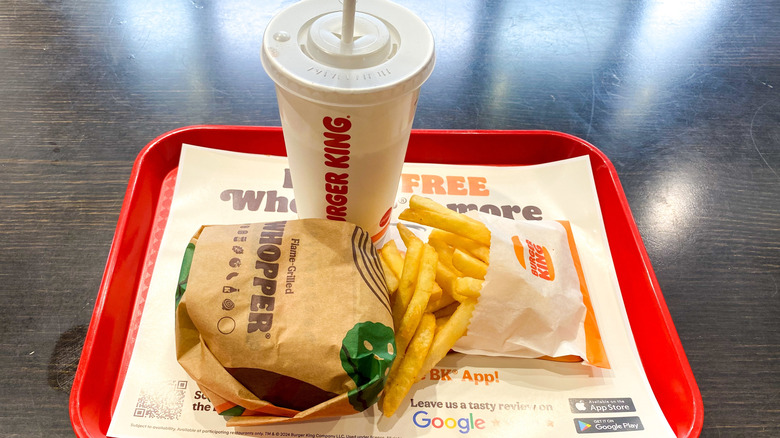
In the early 1990s, fast food companies faced increasing pressure to reconsider the impact of the their packaging. As environmental groups raised awareness about the wastefulness of fast food containers, people started to become critical.
Burger King responded to the outcry by changing how it packaged the Whopper. The company moved away from the paperboard boxes it had been using for almost every sandwich on the menu and instead switched over to using waxed paper wrapping. This shift might seem minor compared to ingredient changes, but it was a clear acknowledgement of consumer and social concerns. Early shifts like these led to some larger fast food packaging changes we've seen in recent years, such as the introduction of compostable packaging. Whoppers would eventually return to their clamshells, though.
Special anniversary packaging is introduced
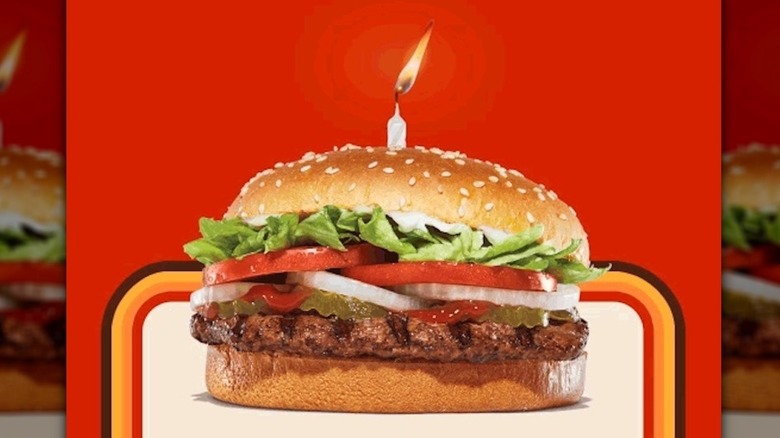
In 2002, Burger King marked the Whopper's 45th anniversary with a limited-time packaging change that gave the iconic burger a more celebratory feel. Whoppers were wrapped in gold-colored foil packaging, a flashy presentation designed to highlight the sandwich's importance in Burger King's history. The special wrapping would not remain as a permanent change, but it reminded customers of the long-standing role the Whopper played in the broader fast food context.
Limited-edition packaging has long been a way for fast food brands to create excitement around familiar products and special limited-time promotions. The Whopper has certainly leaned into the latter over the years (more on that in a moment), and the gold-foil Whopper was an early example. It's also proof of just how highly Burger King values what the sandwich means for the chain.
Upgrades to premium mayo and buns
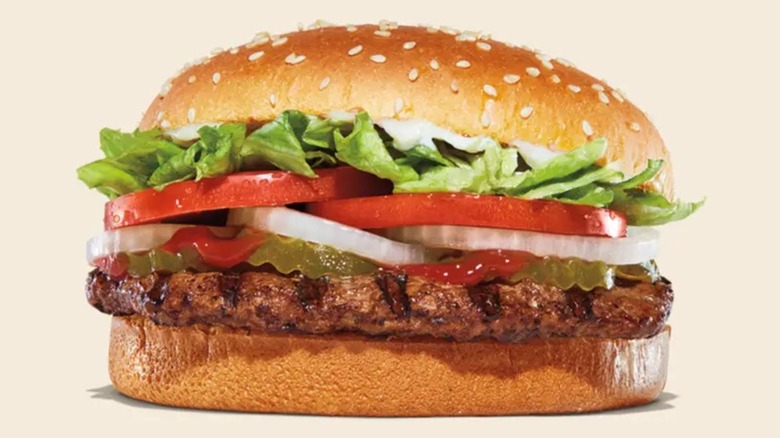
Almost 70 years after its debut, Burger King once again decided to update the Whopper in an effort to improve its most famous burger. In 2026, the company announced upgrades focused on some of the burger's core ingredients, including a new premium bun and improved mayonnaise.
These changes were sparked after Tom Curtis, president of Burger King in the U.S. and Canada, gave out his phone number and spent two weeks fielding calls from customers. Along with the premium bun upgrade and a more flavor-forward mayo, the clamshell box returned to hold the Whopper together, as customers were complaining that their burgers were smushed in the wax paper. Overall, the changes have garnered positive responses from customers online, specifically about the new bun's quality and how it improves the entire burger.
Promotions and Whopper variations
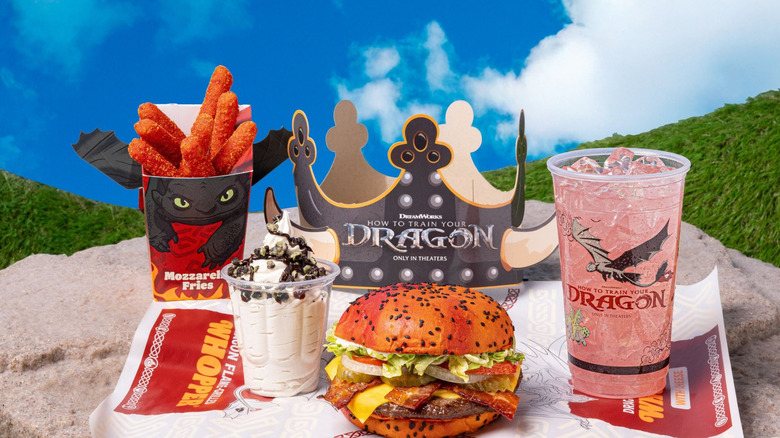
Over the years, Burger King has repeatedly experimented with new versions of the Whopper. Famously, it introduced the Impossible Whopper in 2019, providing a plant-based option of its iconic burger. Burger King was ahead of the pack again with this release and remains one of the few fast food chains to prominently feature a meatless option on its menu.
There have been far more limited-time promotions and changes, including switching up and adding to the core components with certain ingredients and flavor profiles. The Ghost Pepper Whopper, for example, featured spicy sauce and a flaming red bun, while the Ultimate Steakhouse Whopper had Swiss cheese, mushrooms, onion rings, and peppercorn aioli. Talk about a mouthful.
Certain movie release partnerships have led to Whopper changes, too, especially with bun color. "The SpongeBob SquarePants Movie" Whopper had a yellow bun, and BK celebrated "How To Train Your Dragon" in 2025 by changing the bun to a fiery red-orange; in 2024, it slapped the Whopper on a purple bun as part of a limited-time Addams Family menu around Halloween. Aside from a promotional partnership, it's an interesting way to change up the iconic burger from time to time.