

Bacon Vs Pork Sausage: Which Breakfast Meat Has More Protein?
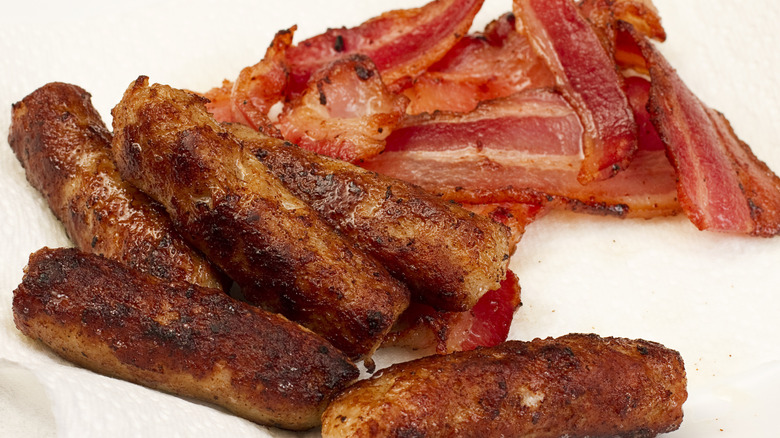
Few things beat a proper breakfast — eggs, pancakes, and, for meat lovers among us, the unmistakable pork sausage and bacon to top it all off. Both options do provide a fair dose of protein. But when picking between the two, which comes out on top?
Bacon is denser and technically provides more protein per gram — typically around 35 to 36 grams of protein per 100 grams cooked, not too dissimilar from one of the ultimate protein sources: chicken. Pork sausage, on the other hand, offers closer to half that amount for the same serving — at roughly 14 to 17 grams if you're looking at raw labels, which concentrates to about 19 to 22 grams per 100 grams once cooked.
That said, the answer is actually somewhat nuanced and depends largely on the bacon cut and sausage type. Pork sausage can end up providing more protein overall, largely because people tend to eat bigger servings of it. Ultimately, both can be complete protein sources useful for muscle growth and retention.
Bacon is denser in protein
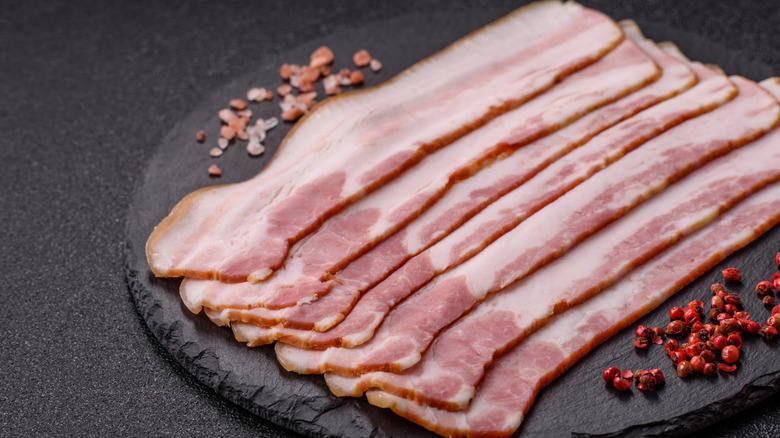
American culture is wrapped in bacon — it's one of the country's favorite foods. With its tasty, salty-sweet profile, deep umami, and slight smokiness, it's pretty understandable. As a pork cut, typically from the belly or back, it's primed for savory deliciousness. Whether it's a breakfast side, in a turkey club sandwich, diced up in a meaty potato cheese bake, or even served with vodka, there's no limit to how those mouthwateringly crispy strips can be used in our dishes.
It's also a great source of protein. Since bacon becomes more concentrated when cooked as it loses water, its protein content rises. That said, because of processed meat's known carcinogenic profile — especially when it comes to bowel cancer — many health organizations recommend limiting combined red and processed meat consumption to around 70 grams per day at most, which would yield around 25 grams of protein if you maxed out that entire limit on bacon alone.
Pork sausage remains a multi-purpose culinary staple

Pork sausages are also a staple in hearty U.S. cooking. Imported from British Isles and Germanic culinary traditions, they make a perfect companion to pancakes, pasta dishes, and mashed potatoes — or what the Brits would describe as their comfort-food staple, bangers and mash. They're affordable, tasty, and easy to prepare at home, making them a versatile meat base for a plethora of dishes.
Made by grinding different cuts of pork, mixing them with seasonings, fillers such as breadcrumbs and binders, and ultimately stuffing them into casings, pork sausages generally have a lower concentration of protein than bacon. Nonetheless, they still provide a solid dose of complete protein containing all essential amino acids. However, they are also high in saturated fat, sodium, and often processed additives, so moderation is key if you're watching your sodium intake or aiming to reduce highly processed foods in your diet.