

What Makes Pyrex's Material So Special?
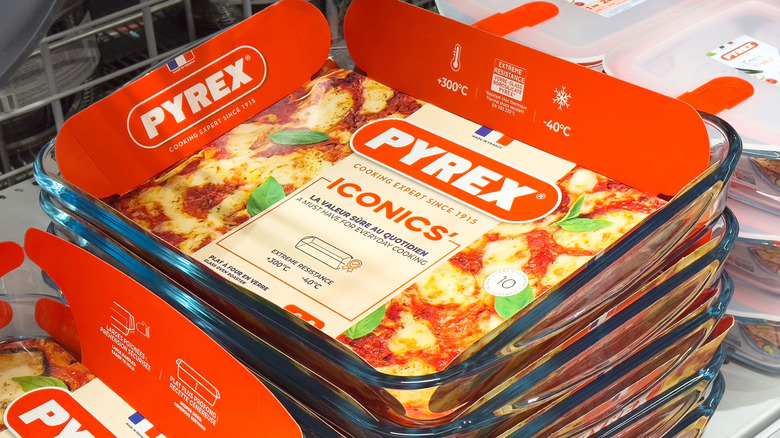
Glass Tupperware often lasts longer than plastic, but it has some drawbacks. It's vulnerable to shattering on impact and, like plastic, does quite poorly in the oven or freezer. Pyrex, however, is a retro kitchen item that changed the game, creating an all-in-one container with seemingly no limitations thanks to its incredible building materials.
Pyrex uses tempered, rather than regular, glass, which is about four times stronger. The process is similar to old-school blacksmithing, where manufacturers superheat the materials, then quench them with blasts of air to create layers that end up far more resistant to impact. This same treatment also makes it far less prone to damage from sudden temperature changes. When glass heats or chills, it expands and contracts, often too rapidly, causing cracks or even explosions. Pyrex, however, does this far more slowly, preventing these issues.
This is what allows you to freeze food in Pyrex rather than glass jars. While Pyrex may command a higher-than-normal price, most cooks think it's well worth it to have such a durable, versatile, and long-lasting cooking tool on hand. Plus, the company has had more than 100 years to diversify its product line, so you can get the same functionality from a wide variety of dishes, whether you're looking for a glass cooking tray or something decorative to take to a potluck.
Pyrex's formula shift traded thermal resistance for impact durability
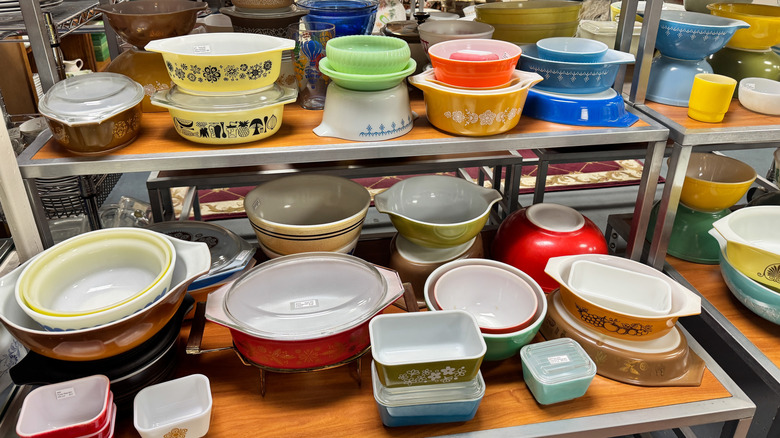
Like many companies, Pyrex no longer uses the same materials it once did. But while, in many cases, this is quite good, such as the removal of lead- and asbestos-tainted materials, in Pyrex's case, it actually leads to some problems.
Vintage Pyrex from 1915 to the 1950s exclusively used borosilicate glass. This was what made the company the giant it is today, as this formula proved highly resistant to thermal shock from rapidly changing temperatures. One of the biggest selling points was that you could completely assemble a lasagna or a chicken pot pie ahead of time, put it in the fridge, then immediately place it in a preheated oven without worrying about shattering.
Pyrex today, however, is largely made from tempered soda-lime glass, which, while far more resistant to impact damage, is less resistant to thermal shock than borosilicate. If you plan to bake with pieces made after the 1950s, you may have to take some steps to prevent glassware from shattering in the oven, such as letting it come to room temperature first. While Pyrex has brought back borosilicate in some of its products, soda-lime glass tends to be the norm, creating a huge market for vintage pieces among collectors and chefs alike.