

Here's The Average Lifespan Of Granite Countertops
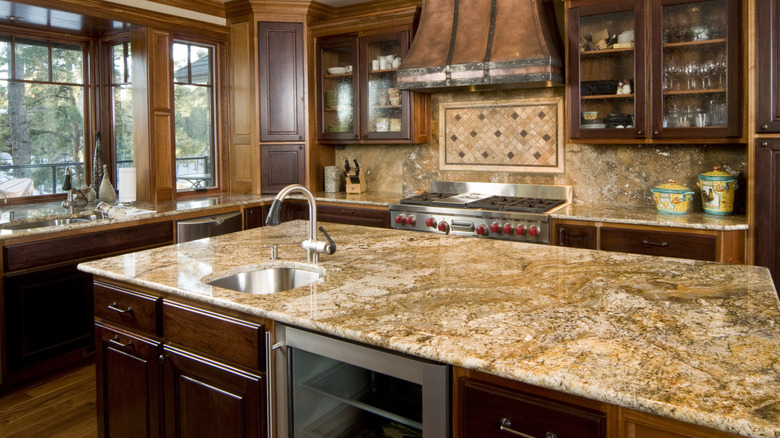
Few areas of the kitchen work harder than the countertop. It's the front line for food prep and has to withstand years of daily wear, from hot pots and boiling-water splashes to acidic ingredients, spills, and constant cleaning. That's why choosing the right material isn't just an aesthetic decision. A durable countertop can save you money on repairs and replacements down the road while also adding to your home's long-term value. One such material with a reputation for longevity is granite. On average, these countertops can last for approximately 20 years, and with proper care, it's not uncommon for them to remain in good nick for 100 years or more.
Granite countertops start life as enormous blocks of natural stone that are quarried from the earth. These blocks are then sliced into slabs, polished, and custom-cut. Unlike many modern countertop materials, such as engineered quartz or porcelain, granite isn't manufactured from a mixture of ingredients. You're literally buying a solid piece of natural rock. That's part of the reason it has such an impressive lifespan. The stone is formed deep underground under immense heat and pressure over millions of years, so it's already handled much more than a busy family kitchen.
The pros and cons of a granite countertop
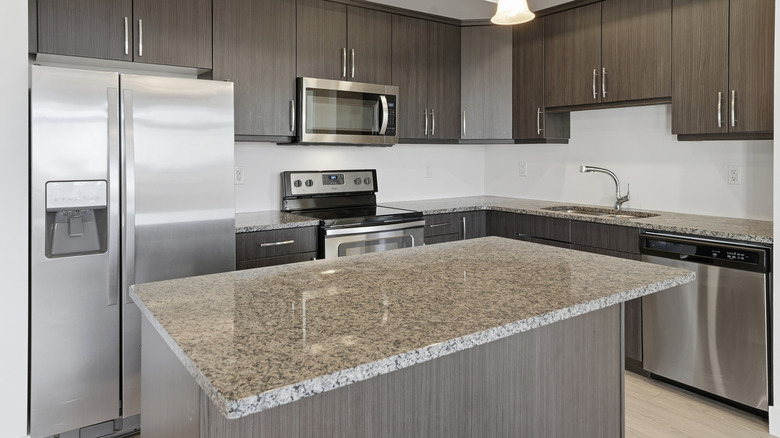
Granite is extremely resistant to high heat, which is one of the most obvious features that sets it apart from other popular materials, such as laminate. It won't melt or leave scorch marks like synthetic surfaces, though keep in mind that placing incredibly hot pots and pans directly on a cold slab can still cause the stone to crack or pit.
On the Mohs scale, which measures a material's scratch resistance, granite typically ranges from 6 to 7, meaning it's highly resistant. You don't technically need a cutting board because it's so tough. However, granite can instantly dull your knives, so it's best to always use one.
Granite does tend to sit on the more expensive side of things. But one of the biggest factors to consider when determining whether a high-end kitchen remodel is worth the price is whether it will boost the value of your home. For starters, granite's speckled appearance has a timeless appeal that can translate into real value (although some trend forecasters suggest it could be going out of style).
While granite's natural origins are responsible for many of its biggest strengths, they are also behind one of its weaknesses. Unlike engineered materials, granite is naturally porous, meaning it can absorb moisture over time. Left unprotected, this makes the stone more vulnerable to stains from everyday kitchen culprits, such as red wine, coffee, and cooking oils. Fortunately, this isn't a deal-breaker, and the countertop just needs to be regularly sealed to prevent liquids from soaking in.