

10 Cookout Foods You Should Try Braising In Beer This Fourth Of July
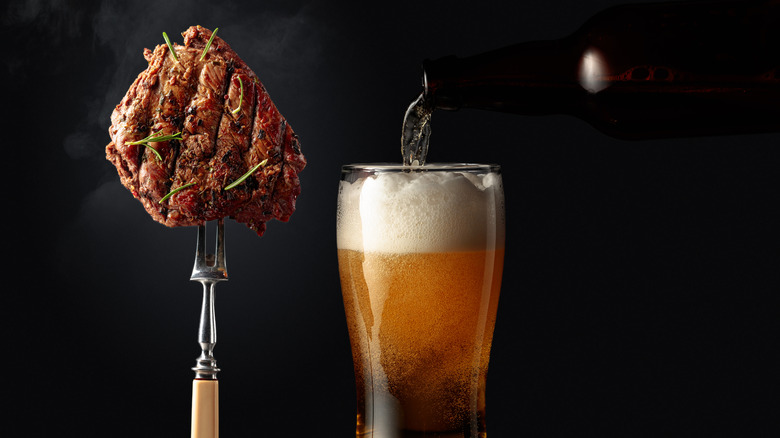
Few things go together better than a cold beer and grilled meat — especially on July Fourth. But to enhance the experience even more, why not try using the beer while cooking, too? Braising in beer helps tenderize tough cuts of meat while keeping them juicy during cooking. It also gives it a savory depth that can be adjusted by using lighter or darker beers. And this technique is not limited to meat — there are all manner of different foods that can be prepared with a braise in your favorite lager, pilsner, or ale. If you're new to pairing beer with different ingredients, this chart can help you find your new favorite combination.
Because braising is a two-step process that starts with cooking the food over high heat, your grill will get some love, too. You can also place the Dutch oven you're braising in on the grill as well, provided you've got enough lid clearance. That said, braising can look a little different depending on what kind of food we're discussing, but more on that in a bit. As you get ready to fire things up this Fourth of July, consider giving these foods a bath in your favorite beer before the cookout. You'll taste the difference in every bite.
Short ribs
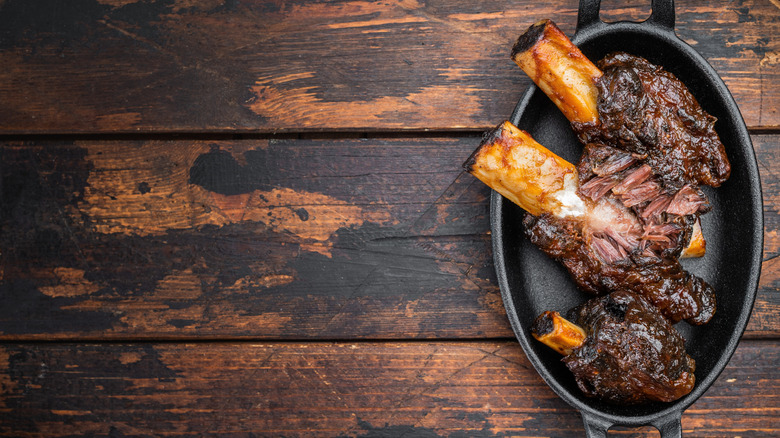
Both beef and pork short ribs are a great cookout food, and braising them in beer helps break down their connective tissues. Starting the meat on the grill gives it a smoky quality that goes great with a hoppy beer. Plus, braising will keep a leaner meat, like pork, moist while cooking, instead of letting it dry out over direct heat.
To cook your short ribs with beer, you can sear them on the grill for a few minutes per side before placing them in a Dutch oven with beer, spices, and other aromatics. Be sure the covered pot is positioned away from the flames so the food at the bottom doesn't burn. Braising the short ribs over indirect heat allows them to gently and evenly cook through. The moist heat also breaks down the collagen in the meat's connective tissues, adding flavor and texture to the finished dish.
Brisket
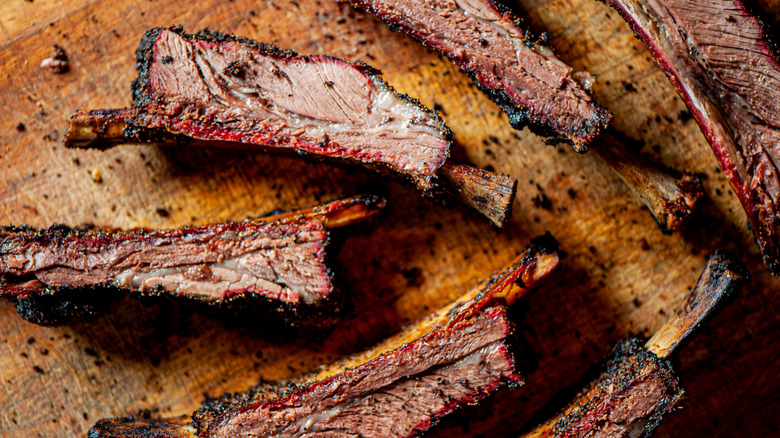
Brisket is a perennial favorite at cookouts and barbecues because it's incredibly tender when cooked low and slow; trying to cook it too quickly will leave you with a tough, dry piece of meat. Luckily, braising brisket in beer creates one of the most moist, fall apart on its own meals you'll ever have.
Like short ribs, you can grill the brisket for a few minutes on each side to create a crust before putting it into a Dutch oven. Dark beers, like a stout or porter, are a great choice for the meat (or a homemade barbecue sauce) because they impart a roasted, malty flavor. The beer's acid also helps to break down the connective tissue, leaving a succulent dish that can be sliced or shredded for sandwiches. While brisket does take several hours to cook, letting it go too long will make it dry because the protein breaks down so much it can't hold moisture.
Another thing to consider whether you want a flat cut or the point, as butchers break down brisket into these two types. The point is well-marbled and has more intense flavor, but is harder to cook because it has an uneven shape. The flat cut is generally easier to cook with, thanks to it being the same size throughout. However, the flat cut is leaner, so it can dry out more easily than the fattier point.
Onions
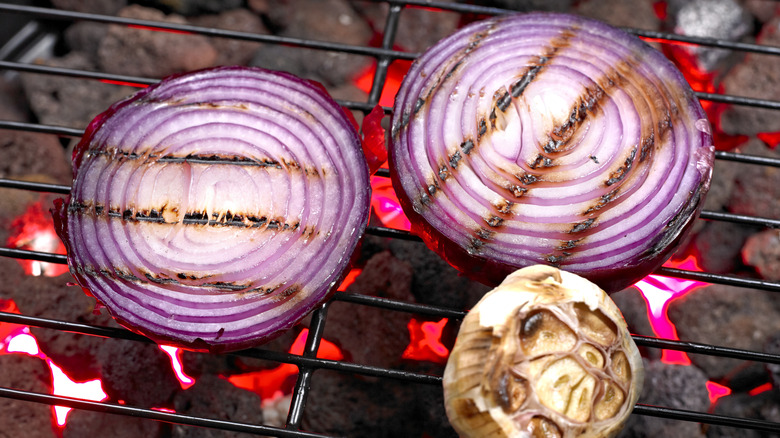
Braising isn't just for meats. A variety of vegetables can benefit from being cooked this way, too, and onions are one. Soaking slices or rings of onions in beer is a time-honored way to make fried treats, but beer-braised onions are a game changer for your burgers. The process here is a bit different because onions can easily break apart. To avoid that, cut the onions into thick slices that can stand up to being on the grill for a few minutes while they get some color and a bit of char.
Once you pull them off the grates, they can go into a pot with a tight-fitting lid and your beer of choice. If you're not sure which kind to use, this list gives you over a dozen varieties to try. Veggies take less time to cook through than meat, so be sure to adjust your timing to avoid the onions falling apart in a bad way.
Cabbage
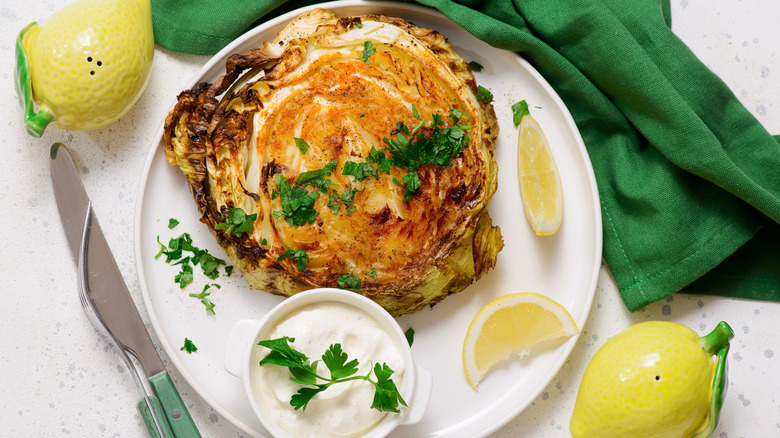
Cabbage greatly benefits from a beer bath. The vegetable quickly absorbs the flavor, and the sugars and malt in the beer help give it a roasty taste while cooking. There are two ways you can braise it on the grill. The first takes wedges of cabbage and sears them over the flames for a few minutes per side. After they have some color, you can put them into a prepared Dutch oven on the grill. The second method simply skips the grilling step. Instead, the Dutch oven is used to sauté the cabbage with butter or oil before beer is added and allowed to cook down. Many people will use bacon, garlic, onions, mustard, and apples to up the flavor while it braises.
If you decide to use bacon or another meat while braising the cabbage, you can place the meat on top of the vegetables. This lets the bacon cook slowly while the meat drippings infuse the cabbage and braising liquid. Just remember that cabbage cooks quickly, so leaving it on the grill too long will break it down into mush.
Chuck roast
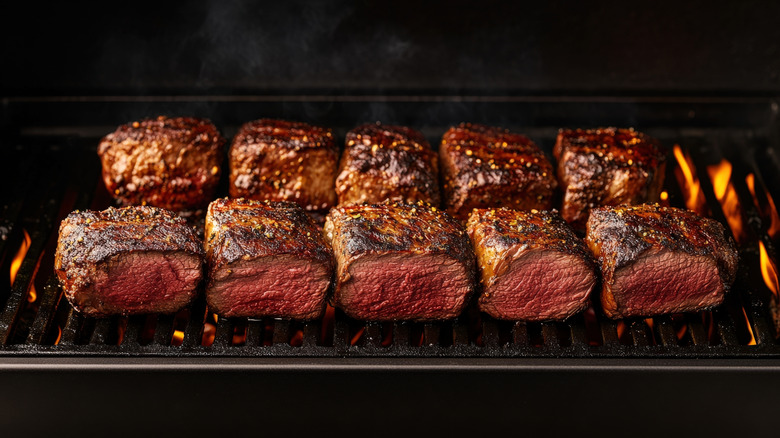
Chuck roast is an economical cut that can be a little tough without the right preparation. Luckily, a quick swim in a dark beer will take care of any chewiness before it hits your plate. And with a thick chuck roast, you can double the flavor by marinating it before it goes on the grill and then using a strong beer to braise it. A thickener, like cornstarch, can be added to the braising liquid near the end of cooking to help thicken it if you'd like.
Grilling the roast is going to give it a good crust and a smoky taste before it goes into a Dutch oven to finish cooking. In addition to the roast, you can use vegetables in the braising liquid to add flavor and texture. If you're worried about the veggies overcooking, you can add them an hour or two into the braising time to keep them intact.
Sausages
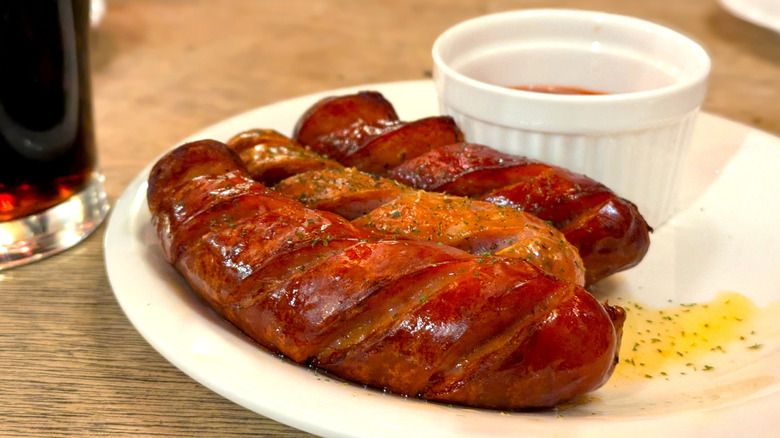
This might be the most classic beer and meat combination there is. Braising any type of sausage, like a bratwurst or regular smoked link, makes it moist and complements the spices already in the meat. There are many recipes for braised sausage with cabbage, onions, or garlic, but few take the extra step to sear the sausage after it's cooked.
This might sound counterintuitive, but there's a method behind the madness. If you were only going to grill the sausage, cooking it over indirect heat before searing gives it a better snap without splitting the casing. The same idea applies here, with the braised sausage getting a quick turn over the flames before being served. The braising liquid can be used as is or to make a gravy. If you want to save the liquid, it's great to use with cooking rice or potatoes for rich, easy flavor without extra effort.
Chicken thighs
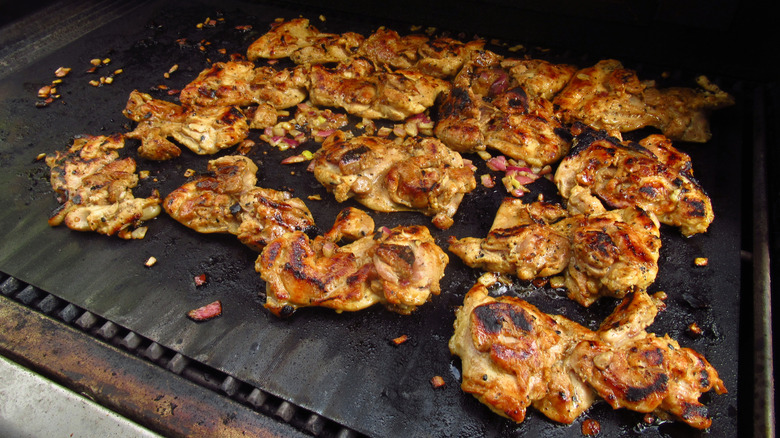
Chicken thighs are something you often see at cookouts, and with good reason. They're an economical choice that have natural flavor and cook quickly. They're also perfect for braising in beer. The dark meat soaks up the sugars and malt flavor while the beer's acid tenderizes the sometimes tough protein. Both dark and light beers will give you incredible flavor, although a lighter lager or ale won't overpower the meat the way a very dark beer might.
Another thing to avoid when braising chicken thighs is using too much liquid. If the thighs are completely submerged, the meat can stew instead of braising properly. This means the thighs can take on too much liquid, turning them mushy instead of tender. If that's a concern for you, reverse the braising method like you would for sausages, and sear the thighs after a shorter braise. You'll still get great flavor and succulent meat.
Pork butt
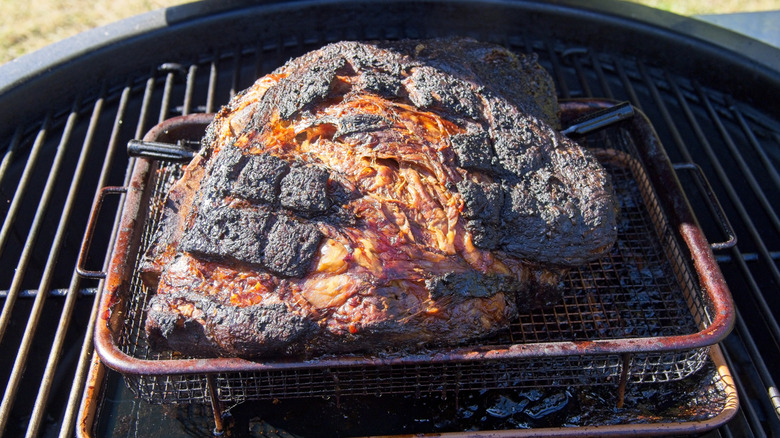
Also called a Boston butt, pork butt is a popular cut for carnitas and other pulled pork dishes. The meat comes from the top of a hog's shoulder, so it can be tougher due to having been worked more. Sometimes sold with the bone-in, both that and the boneless are great candidates for braising. The meat has connective tissue and fat running throughout it, so slow cooking turns the cut into something wonderfully tender. Using a dark beer will keep the meat juicy as it cooks down, while adding a spectacular depth of flavor.
To cook the pork butt, place it on the preheated grill and close the lid. Cook it until it begins to char a bit before transferring it to a prepared Dutch oven or roasting pan with your beer of choice and aromatics. The charred meat will be smoky and, because it's already hot, should braise in only a few hours. That's good news for everyone with a rumbling belly at the cookout.
Lamb shanks
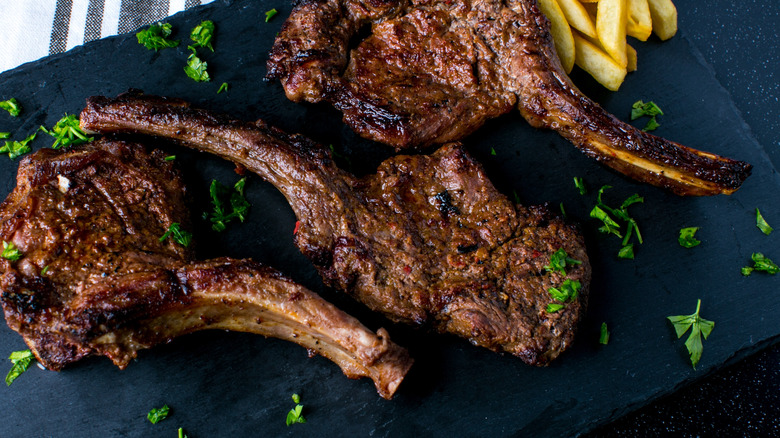
Braising lamb shanks in dark beer will help break down the tough connective tissues, making them fall apart after some time over gentle, indirect flames. Slow cooking is the best way to handle the cut, which can be stringy if it's overcooked or cooked too fast. The shank comes from a sheep's lower leg, just under the knee. It's one of the most used muscles in the sheep's body, which is why it contains so much connective tissue. While that makes it harder to cook correctly, when you get it right, the large amounts of collagen that melt out create a thick sauce from the braising liquid.
Depending on how many shanks you're cooking, it can take more than three hours to turn the meat fork-tender. But the time is worth it, especially after you've given the shanks a good bath in beer after pulling them off the grill. The strong taste of lamb is sometimes called grassy, but a dark beer can neutralize that taste. Adding aromatics, such as onions or lemongrass, will deepen the flavor and add texture.
Potatoes
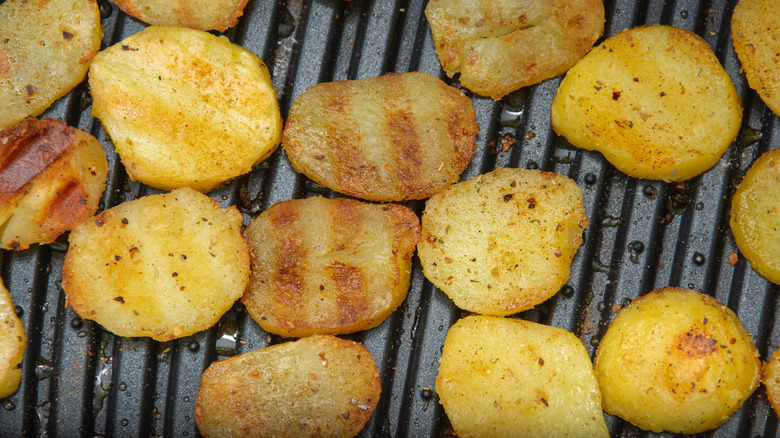
It's not quite braising, per se, but parboiling your potatoes in beer before grilling will give them spectacular and unexpected flavor. Food Networks' "Iron Chef America" Michael Symon recommends parboiling potatoes, particularly sweet potatoes, to ensure they cook through on the grill without burning. Because potatoes tend to be dense, they can become unpleasantly charred on the outside before the middle is done. But parboiling helps you avoid the problem altogether.
If you want to infuse flavor into the potatoes as they cook, start by putting salt and beer into a pot or bowl. From there, you can use one of two methods. If you want to simply soak the potatoes, put them in a bowl with the salt and around 12 ounces of the beer of your choice. Place the potatoes in the mixture and use water or broth to cover them completely. Put them in the fridge and let them chill between two hours and overnight. Dry them before coating in oil and grilling.
To parboil with beer, follow the same procedure in a pot and skip the chilling step. Instead, place the pot on a burner and let it come to a gentle boil. Depending on the size of the whole potatoes or chunks, getting them fork tender can take between 5 and 10 minutes in most cases. If you're worried about them getting too soft to grill, you can add a bit of vinegar to the water/beer mixture or use waxy potatoes, which hold their shape well.