
What Shake Shack Does With Its Leftovers
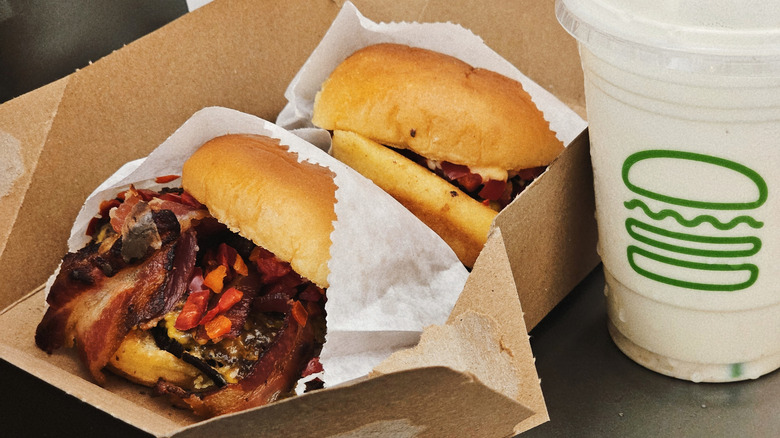
Evolving from a humble hot dog cart, Shake Shack has grown into one of the defining fast food success stories of the 21st century. As of February 2026, the chain boasts more than 660 locations worldwide, distinguishing itself from its competitors by sourcing high-quality meat for its delicious burgers and consistently rolling out innovative menu items — even Ina Garten loves its fried chicken sandwiches! But being a modern restaurant chain is about more than just serving burgers, and for many customers, sustainability is just as important as what's on the plate. Fortunately, for a company known for redefining the fast food industry, Shake Shack has an efficient system in place that significantly reduces its food waste.
A Shake Shack brand representative told Tasting Table how the company manages leftover food: "While Shake Shack does not have a formal food waste policy, the company works diligently behind the scenes to minimize waste across operations. Because all Shake Shack food is cooked to order, the amount of food waste generated is minimal, particularly compared to full-service restaurants, which tend to have significantly more prep-related waste," the brand representative revealed.
This also means Shake Shack's food waste looks a little different from that of many traditional fast food chains. Unlike restaurants such as KFC that cook large batches of chicken ahead of time to keep up with demand, Shake Shack's burgers are made to order, making it less likely that cooked beef will be left sitting around with nowhere to go. While this certainly reduces excess waste, it doesn't eliminate it, and Shake Shack has partnered with food banks and nonprofit organizations to ensure its leftovers don't end up in the trash. In 2022 alone, the company reported donating more than 100,000 pounds of unused ingredients.
How does Shake Shake manage its waste in other areas?
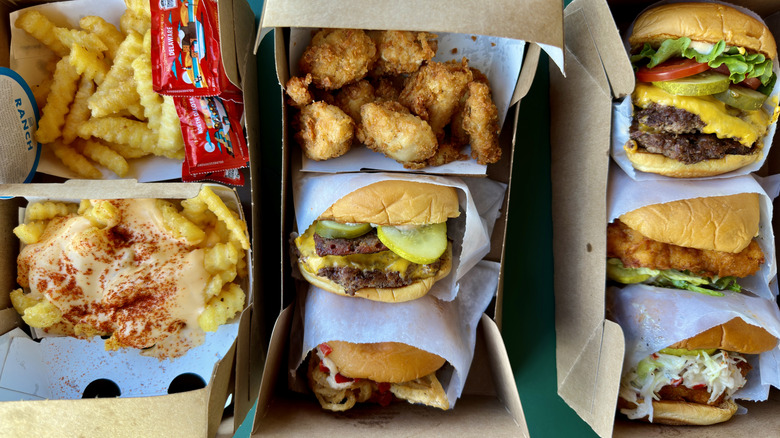
Shake Shack hasn't stopped at just food donations. The chain has also experimented with new technology designed to keep food waste out of landfills. At one New York location, it installed a Mill machine, which processes leftover fruit and vegetable scraps into nutrient-rich grounds. Rather than being thrown away, the material is collected and then sent to farms, where it's used as animal feed. In just three months, this kept more than 550 pounds of food scraps out of landfills (via Linkedin).
The burger chain also has innovative ways to reduce its operational waste. It partners with Restaurant Technologies Inc., which collects used cooking oil in special tanks rather than disposing of it as waste. This oil is then converted into biofuel, with more than 2 million pounds recycled annually across its locations (per a 2025 report from Shake Shack). This partnership has also eliminated the need for packaging waste entirely, saving the equivalent of 124 dumpsters' worth of trash (via Restaurant Technologies Inc.).
Beyond taking meaningful measures to reduce its operational waste, Shake Shack also strives to have a positive social impact through its "Stand For Something Good" mission. Even a new store opening raises money for charity by partnering with a local nonprofit to donate $1 for every designated menu item purchased on opening day. According to Shake Shack's report, this initiative raised roughly $46,000. And there's more: Restaurants host "donation days," which see 25% of participating sales directed toward charitable organizations. In the same report, it was estimated these days raised a staggering $450,000.
Static Media owns and operates Food Republic and Tasting Table.