

What A Typical Steakhouse Was Like In The 1800s
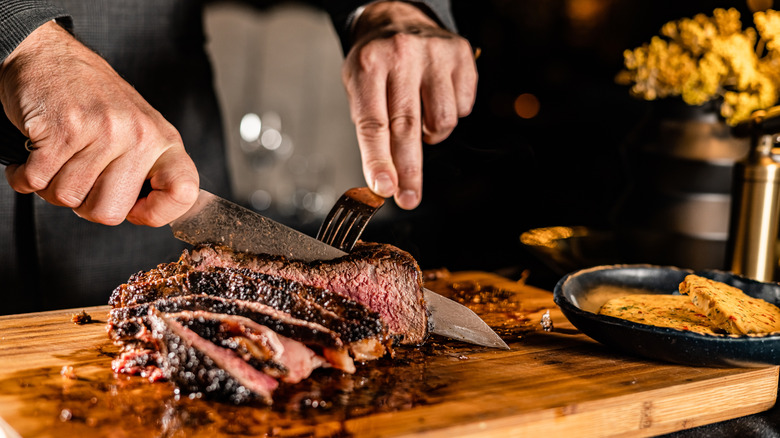
Steakhouses are one of the cornerstones of the U.S. food industry. With around 16,000 such establishments throughout the country, and multi-billion dollar franchises like Texas Roadhouse, Outback, and LongHorn, it's clear Americans like to find a hearty slab of meat to sink their teeth in — and an equally upscale atmosphere to match, especially when splurging out on increasingly expensive dinners. The specific restaurant model, known for its dim-lit ambiance and wood-panelled decor, for centuries has been embedded in the nation's cultural fabric, imported from Britain and developing rapidly in 19th-century New York City. But steakhouses back then were decidedly different to those of today — and not everyone was quite so welcome.
The modern-day steakhouse fundamentally weds two distinct 19th-century dining concepts: chophouses, which catered to a working class base, and eventually spread to the American West, drawing in ranchers, cowboys and miners alike; and beef banquets, which had blue-collar origins, but ended up attracting a decidedly wealthier clientele by the turn of the century, as popular spots for political fundraisers. The former had often dingy interiors, and served simple, bone-in cuts to hungry laborers; the latter were broadly akin to a high-end version of the modern-day all-you-can-eat: gluttonous, cutlery-free buffets with unlimited steak and booze to spare.
A testament to their enduring appeal, you can still find examples of these 19th-century establishments across the Big Apple. Old Homestead and Keens are among oldest steakhouses in the country, while 1837-founded Delmonico's dates back to before the Civil War, and was an example of an extravagant fine-dining locale. Steakhouses today remain a popular place for romantic dinners, special occasions, and family outings, known for a typically warm and accommodating atmosphere. This image, however, was in large part the work of women who, formerly denied entry, helped shape the restaurants as we now know them.
For women, ordering a steak was an act of defiance
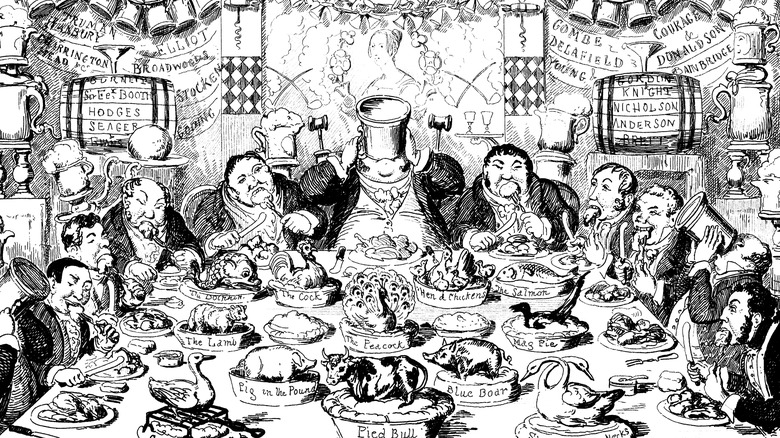
In the 1800s, chophouses and dining rooms were largely reserved for men, and women were generally only allowed into such establishments provided they had a male chaperone. "Ladies' Ordinaries" spaces existed in some hotels, but dining out was a challenge for women, potentially leading to significant social backlash.
After years of being denied a seat at the table, women started fighting back — and one steak dinner at Delmonico's changed everything. In 1868, journalist Jane "Jenny June" Cunningham Croly protested when Delmonico's refused to allow her to participate in an event hosted by the New York Press Club, subsequently founding Sororis, a women-only club. The steakhouse eventually caved, and women were granted entry — garnering them huge profits. As for Keens, it was only in 1905 that the restaurant allowed women into its premises, after actress Lillie Langtry challenged its men-only policy.
Women's entry into restaurants helped refine the steakhouse concept. From rowdy all-male spaces, restaurateurs attempted to cater to what they considered a more palatable and child-friendly aesthetic, which, by the late 19th and early 20th century, evolved into today's steakhouse format. After years of exclusionary policy, steakhouses had to fight hard to rebrand and make women feel welcome – to this day, society still associates meat with masculinity. But the steakhouse format is in a constant state of evolution: Even in the oldest of New York establishments, the Old Homestead Steakhouse, you can now get your hands on the most prime — and often expensive — of beef imports: Wagyu.