

How This New York Restaurant Changed Dining For Women In The 19th Century

It's shocking to today's sensibilities, but women weren't always welcome at the dining table throughout history. Indeed, restaurants were almost exclusively the reserve of men and gentlemen's clubs, especially the so-called "chop houses" and beefsteak banquets that preceded the modern-day steakhouse. That all changed on April 20, 1868 — when a group of women at the New York City high-end restaurant Delmonico's staged a protest and changed the future of fine dining.
The rupture itself happened when journalist Jane Cunningham Croly (known by her pen name "Jennie June" where she wrote columns, literary criticism, and argued for women's rights) was barred from a dinner at the iconic Manhattan establishment — the city's oldest fine-dining restaurant, predating the Civil War — after attempting to get tickets to a literary event held by the New York Press Club. Croly herself was reporting on the event (a reception of none other than Charles Dickens) and, infuriated by the injustice, decided to take matters into her own hands.
After complaining to the club, which offered a demeaning halfway solution — women could join but had to be seated behind a curtain, out of men's sight — she refused, and decided to form a separate ladies-only luncheon at Delmonico's, which she called "Sororis." The success of the event helped usher in a new era in public dining, which, in the 19th century, acted as an important space for fundraisers and networking, and eventually helped shape both the tastes and menus of restaurants in the decades to come.
Delmonico's — a New York institution that made history
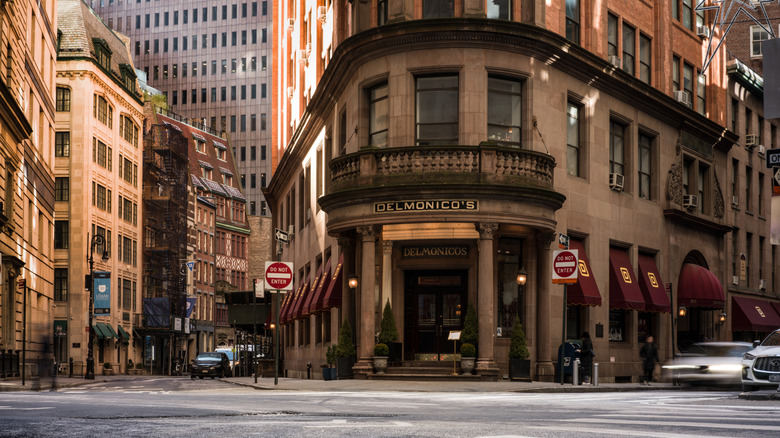
Over the course of the last few centuries, Delmonico's firmly established itself as a haunt of the city's elite. A bona fide institution founded in 1837 in Beaver Street — what is now Manhattan's Financial District — it clings on immaculately to its Gilded Age heritage, most evidently visible in its luxurious décor: dark mahogany and gold coating, glittering chandeliers, indoor palm plants, and Greco-Roman-inspired flourishes. Its status within the upper echelons of New York society was so consolidated that at one point, it garnered the nickname "The Citadel."
While Delmonico's certainly made history by making dining more accessible to women, it also left a mark on what is served at the table. A wide range of beloved dishes — some still widely popular, others increasingly forgotten — are said to have been created at the Manhattan establishment. Out of these, Delmonico steak, referring to what is typically a 2-inch thick cut of ribeye, has entered the culinary lexicon and become a restaurant staple across the country — despite dropping from many restaurant menus. Delmonico potatoes — a decadent casserole-like concoction of shredded potatoes, melted cheese, and breadcrumbs — also got their start at the restaurant in the 19th century. And the list does not end there, as there are compelling theories suggesting Chicken à la King (or Keene), Baked Alaska, and Eggs Benedict may have first been served to Delmonico's diners — and can still be savored at the restaurant today.