

Are Spoon Tomatoes Hard To Grow Yourself?
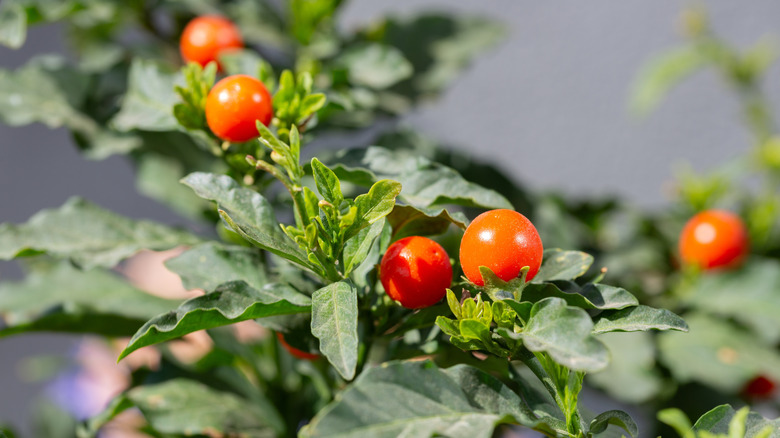
Tomatoes, in general, are fairly easy to grow, provided you have the right climate and soil. When it comes to determinate versus indeterminate, many beginners prefer determinate since they don't need pruning and don't grow to unmanageable sizes, but even indeterminate varieties only require a little know-how. As an indeterminate, spoon tomatoes are simple and easy to grow, so long as you observe some best practices.
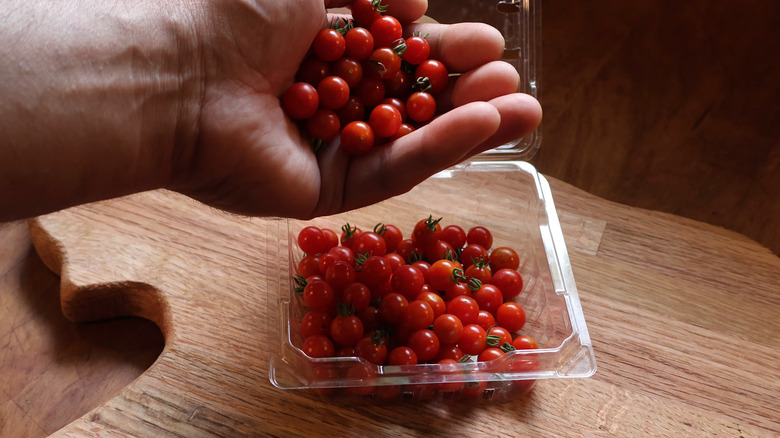
Spoon tomatoes (and Tomberries) are the tiniest type of tomato, growing in tight, berry-like clusters on the vine. They're so named for their incredibly small fruits, and you can fit four or five on a soup spoon. In some ways, this actually makes them far easier to grow than heavier varieties, such as beefsteaks. Since the fruits are so small, they're not at risk of weighing down and snapping a vine, so while they'll need plenty of trellising to support their growth, you'll only have to worry about providing something for the main branches to climb.
Most varieties max out around seven feet tall, but only bush out to about two feet. This makes them well-suited to cages, so you don't have to set up a complicated trellis operation either. While even the smallest pests can ruin a whole tomato, their incredible abundance gives you plenty more, so don't fret too much if you have to toss a few away.
How to grow better spoon tomatoes
Indeterminate tomato plants are pretty forgiving of most mistakes, creating new growth if you accidentally overprune or miss a watering day and dry out some leaves. Still, training them to produce a high-quality crop and providing a fresh and fungus-free environment helps conserve every last little fruit.
Spoon tomatoes are great if you have a tight gardening space, but the two-leader pruning system helps it take up even less space while balancing the quality and quantity of your harvest. By encouraging two main branches that produce flowering vines, you guarantee good air circulation and focus the plant's resources toward producing a more modest amount of tomatoes. However, while you might end up with a little less, this will inevitably make your spoon tomatoes a bit larger and juicier.
For large, determinate variety tomatoes, a few spots aren't an issue since you can just cut them out. However, fungus, disease, and pests can pose a serious issue if they manage to infect a whole cluster of your spoon tomatoes. The easiest way to prevent this is to mulch around the plant, preventing water from splashing back on leaves and carrying all sorts of spores and other infections. This also reduces the amount of supplemental moisture your tomatoes need, keeping the leaves drier and creating less work.