

The Pruning System For More Tomatoes In Tight Garden Spaces
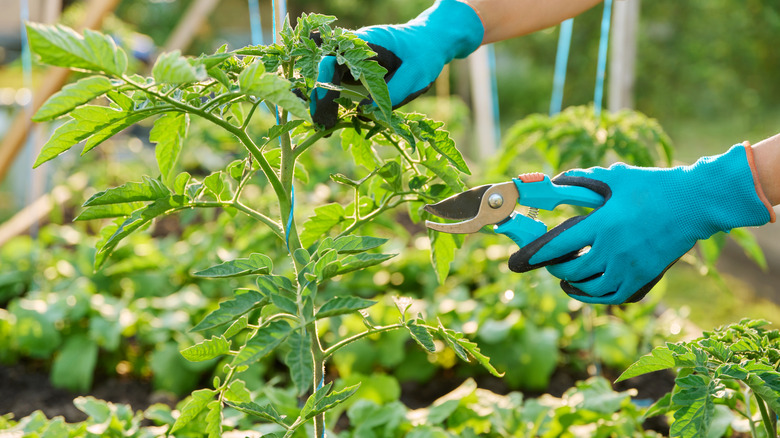
Pruning for perfection is one of the best beginner tomato gardening tips because it encourages more growth while keeping the plant manageable. If you're tight on space but want the largest tomatoes possible, the double-leader system is your best option for the tastiest harvest.
After identifying the main stem, the thickest, healthiest looking one that first came from the seed, you need to identify the "second leader." Typically, this is the first sucker, those little branches that emerge at the juncture between two other stems, directly below the first budding flowers. If you've already removed this stem, no problem, just identify the next closest sucker that fits the bill. This focuses your tomato's energy into producing off of just two main stems, rather than all of them, which can cause it to bush out uncontrollably.
While this helps your plant produce larger fruit while taking up less space, it should only ever be used on indeterminate varieties, those that endlessly grow until they die off in the fall. Determinate varieties — those that only grow up to a certain point — need all their foliage to photosynthesize enough energy to produce fruit. Additionally, keep in mind that suckers do produce fruit, so while you'll end up with larger tomatoes, you'll also have fewer of them. Still, it creates good air flow and access to sunlight in small spaces, leaving you room for more plants.
How to increase the efficacy of the double-leader system
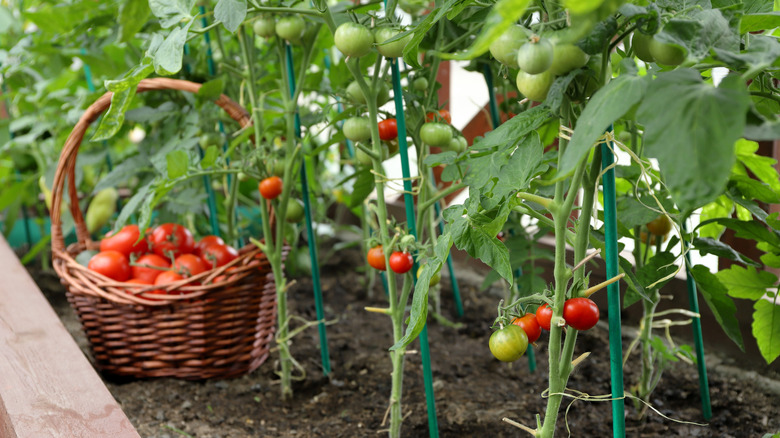
While this pruning method saves on space and takes some stress off of your tomatoes, it does have a few requirements. While indeterminate tomatoes generally have a wider margin of error than determinates, you'll still need to provide good trellising and soil conditions for them to thrive.
Tomatoes are voracious feeders and drinkers, so soil matters when growing them. Since the goal of the double-leader system is to get the biggest tomatoes possible, you'll need to compound this with adequate feeding. Container plants like to eat roughly every two weeks since they have access to less nutrients, but in-ground plants can do just fine with a monthly sprinkle of slow-release fertilizer. You generally want something high in phosphorous, for fruit development, with just a touch of nitrogen for healthy leaves. Still, mixing compost directly into the hole you plant them in is the best way to give them a good head start.
While the double-leader system produces stronger, but fewer, branches, you'll still want to give them support since the fruits will be heavier. Plus, you'll be training the leaders to grow in certain directions, so you'll want something fairly tall. Stakes are the easiest way to accomplish this, and Martha Stewart even uses a crowbar to dig their holes. You can also use stakes to create a string trellis — a flexible, gentle scaffolding that gives just enough support to prevent plants from breaking in a storm.