

The One Word Servers Hate When Taking Steak Orders
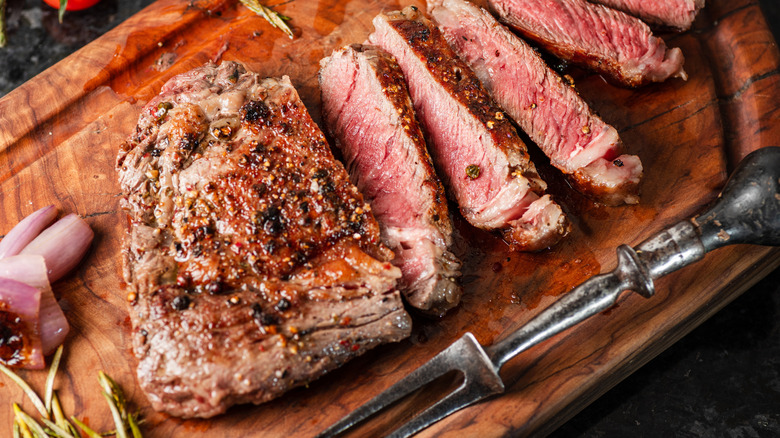
Going out for steak is rarely a bad idea, but there are several common mistakes you can make when visiting a steakhouse, some of which could land you on the wrong side of your server. Whether you're grabbing an affordable sirloin at Texas Roadhouse or splurging on a USDA Prime ribeye at a high-end place, one request is known to make restaurant staff universally cringe, and that's asking for your steak "medium plus" — really, any vague or nonstandard descriptor of doneness.
Unlike standard steak temperatures like rare, medium, well-done, or even the more divisive blue, "medium plus" isn't considered a universally recognized level of doneness. The term generally refers to a steak cooked somewhere between a medium and medium-well, but because there's no exact industry standard for it, chefs are often left guessing what the customer actually wants. On Reddit, one server shared their frustration at this obscure order: "I've been serving for years now[,] and this year alone[,] I've had so many people asking for their steak cooked medium plus/medium rare plus!? Whenever this happens[,] I just ring in medium well (for medium plus) and medium (for medium rare plus)."
This order becomes even trickier when you consider how small the gap already is between medium and medium-well. Steak temperature terms don't actually mean anything, and what truly matters is the internal temperature of the meat. A medium steak is typically cooked to around 140 to 145 degrees Fahrenheit, while a medium-well lands closer to 150 to 155 degrees, and a medium-rare around 130 to 135 degrees. In practice, a medium-plus can account for seconds on or off the grill, and it'll probably fall within the temperature range of a medium or medium-well anyway.
Other ordering requests that might not go down well at a steakhouse
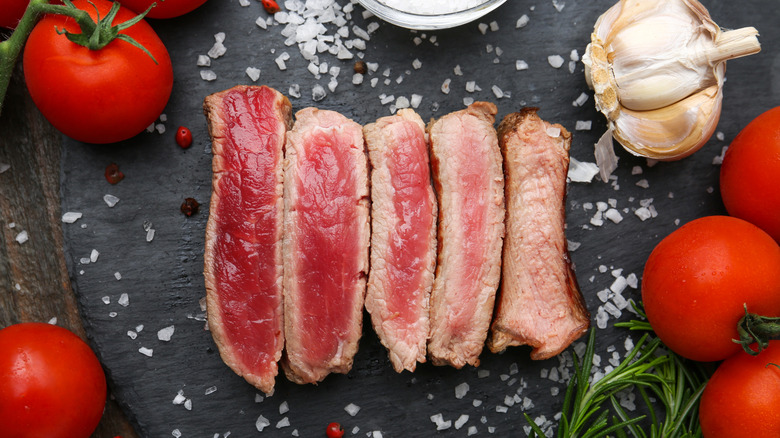
Another steak order that might not bother your server, but is famously known to irritate chefs, is asking for your steak well-done. Look, no judgment here. Some people simply don't enjoy seeing any pink or red in their meat, and at the end of the day you're the one paying for the meal. But to steak purists, cooking a quality cut well-done strips away many of the things that make steak appealing in the first place.
The longer cooking time can dry out the meat and render away much of the fat and juices that give steak its tenderness and flavor. That's especially true for premium cuts like Wagyu, which earn their high-price tag specifically for their rich marbling and buttery texture. Because of that, don't be offended if servers at higher-end steakhouses recommend ordering expensive cuts closer to medium or medium-rare so you can actually experience what makes them special to get the most out of your money. Most restaurants, of course, will still cook your steak however you like it without much pushback. But in some countries with deeply rooted steak traditions (yes, we're talking about France), chefs are notorious for refusing to cook steak well-done. And Anthony Bourdain said that those who order well-done get the worst cuts.
Alongside choosing how your steak is done, an equally important part of ordering is choosing the right sauce. There are classics like peppercorn or chimichurri, which are designed to complement the richness of the meat. But one common sauce request that could earn you an eye-roll from your server is asking for ketchup. There's nothing wrong with this delicious sauce, but the issue here is that its sharp sweetness and acidity can completely dominate the flavor of the beef rather than complementing it.