

The Sneaky Reason Subway Started Toasting Its Sandwiches
With more than 36,000 locations worldwide, Subway had to get creative with its offerings to create enough value to drive traffic. But when it started toasting its sandwiches, it wasn't just to provide better taste. Instead, it was part of how the chain chose to compete with another sandwich giant, Quiznos.
While Quiznos may not have many locations left, toasted sandwiches made up a major part of its brand value. Even its motto, "Mmm ... Toasty," focused on the idea of buying a hot, fast, affordable sandwich. Since 1965, Subway had largely focused on cold subs, though it had also offered hot fillings like meatball marinara before then. However, in an attempt to capture some of Quiznos' market share, Subway started stocking its stores with specialty ovens that could toast bread quickly.
While this alone didn't cause Quiznos' 2014 bankruptcy filing, it proved to be a successful gambit for Subway. It still dominates the fast-food sandwich market, while Quiznos has fewer than 400 locations. Factor in that Subway continues to bake its bread in-store daily and that its restaurants seem to be everywhere, and you get a convenient option with consistent products that customers can customize to their exact specifications.
Strategic flexibility and menu expansion secure Subway's industry position
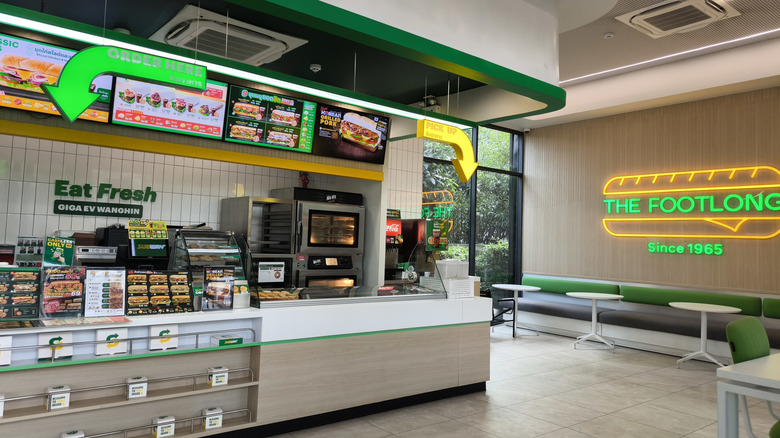
Since it opened in the 1960s, the fast-food industry has become almost completely unrecognizable. Burgers, sandwiches, and fried chicken used to dominate the landscape, but relatively newer entries like Chipotle Mexican Grill have popularized all sorts of in-demand options. Subway has remained competitive through innovation and by finding its niche, whether that's offering new food items or making itself available virtually anywhere.
Starting in 2010, Subway took a page from McDonald's playbook and diversified into breakfast. However, this wasn't just about cashing in on an early-morning crowd looking to grab something on the way to work. In 2018, the chain announced a waiver allowing franchisees to opt into the breakfast program and control their stores' hours. It also encouraged them to develop local marketing campaigns tailored directly to their customers, rather than relying solely on national campaigns that might not resonate as strongly.
Also in 2010, Subway began a major push into nontraditional locations, such as convenience stores and gas stations. While its wider range of products — from personal pizzas to high-protein bowls — can also be found at other chains, making them available wherever the customer is proved to be a major payoff. Subway now even operates vending machines that franchisees stock fresh daily, making getting a sandwich nearly as easy as grabbing a soda or candy bar.