

Make Prime Rib Like A Pro With This Common Condiment
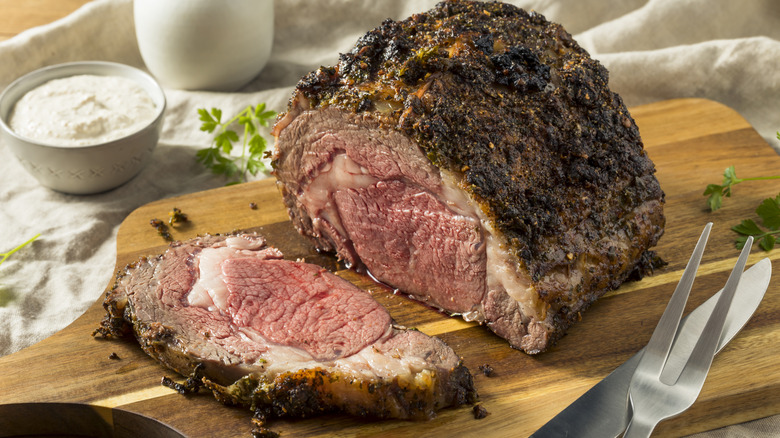
Despite being a bit on the pricey side, prime rib is always a solid crowd-pleaser because you can make huge amounts of incredible protein with relatively little effort. The secret is all in the cooking times and the seasoning, but no ingredient helps you execute both quite like a good slather of mustard.
Just like slow-cooking huge slabs of meat in a smoker, preparing a prime rib requires a binder. A good one keeps all the seasonings on your meat rather than in the pan, but a great one complements the flavor profile of your protein without overwhelming it. Mustard accomplishes this perfectly, providing a bit of sharp, sinus-clearing aroma to cut through rich marbling and intense meatiness while ensuring every last herb leaf and grain of salt adheres to the surface of your roast. It also works if you skip the oven and use a smoker, preserving your ingredients during even the lowest and slowest cooks.
A basic yellow mustard does the job while remaining affordable enough to give your roast a thick coating. Still, you can turn it into a DIY Dijon with just a few extra ingredients, like vinegar, horseradish, and sugar. Alternatively, mix mustards together like Ina Garten, finding your own custom blend that perfectly suits your palate. So long as you use enough to glue your seasonings to the roast and develop a beautiful, flaky crust, different levels of heat, acid, and spice can easily transform your entire meal.
Tips for using mustard when preparing prime rib
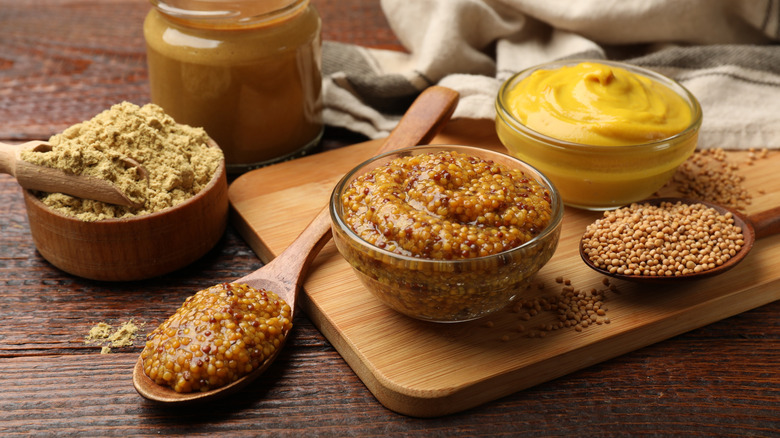
Applying and selecting the right type of mustard is a balance between using enough to get good binding action, but not so much that you overwhelm your beef's natural flavors. This becomes more difficult with more flavorful varieties, but you can achieve the right ratio by actually cutting the mustard with seasonings rather than just globbing on more.
While you should always salt and pepper the meat directly to help it soak in those flavors, you can actually mix all your other seasonings directly into your mustard. Rather than trying to sprinkle herbs, spices, and garlic evenly over the raw roast, this lets you simply take a rubber spatula and coat everything all at once. This is especially useful if you plan on using fresh herbs, as it lets you easily give them a good sheen of cooking oil to help prevent them from burning in the oven. Plus, you can take any leftover mix and add a few dollops to any jus you save, easily cranking up the flavor.
While you shouldn't be afraid to use a flavorful brown or even spicy Chinese mustard in moderation, you may want to avoid anything made with whole seeds. Not only do these tend to burn quite easily, producing an acrid, bitter taste, but they may also give your crust a crunchy, rather than flaky-crisp, texture. If you need that extra bump of mustardy flavor but don't want to use too much more condiment, grind the seeds and mix them into your seasoning paste instead.