

The 2017 Hash Brown Recall That Involved Golf Balls

Food recalls are nothing new, and the reasons behind them are wide-ranging. Many are triggered by biological hazards like listeria or salmonella, while others stem from undeclared allergens hidden in the ingredient list. More unusual — though far from unheard of — are recalls sparked by foreign objects turning up where they definitely shouldn't. Glass and metal fragments have appeared in recalled foods before, but one of the strangest cases came in 2017, when hash browns were pulled from shelves over contamination from golf ball fragments. While this may not rank among the largest potato recalls — or even frozen food recalls — in U.S. history, it certainly stands as one of the strangest.
In April 2017, McCain Foods — the world's largest manufacturer of frozen potato products — announced a voluntary recall of frozen hash brown products after "extraneous golf ball materials" were found in the products. Brands affected by the recall included Roundy's and Harris Teeter, which were distributed to various supermarkets across 10 states. The recall was issued because the golf ball fragments posed a potential choking hazard, while sharper pieces also carried the risk of mouth injuries. Fortunately, no injuries were ever reported, and this unique recall is remembered more for its bizarre circumstances than anything more serious.
As for how the golf balls ended up mixed in with the potatoes in the first place, the explanation was surprisingly simple. The golf balls had allegedly landed in or near the potato fields and were accidentally harvested along with the crop. While this sounds far-fetched, according to one Redditor, this type of mix-up is surprisingly common: "Having worked in potato processing, golf balls and rocks both come in with raw potatoes. Regularly," they explained.
Beyond routine errors, some food recalls are truly bizarre
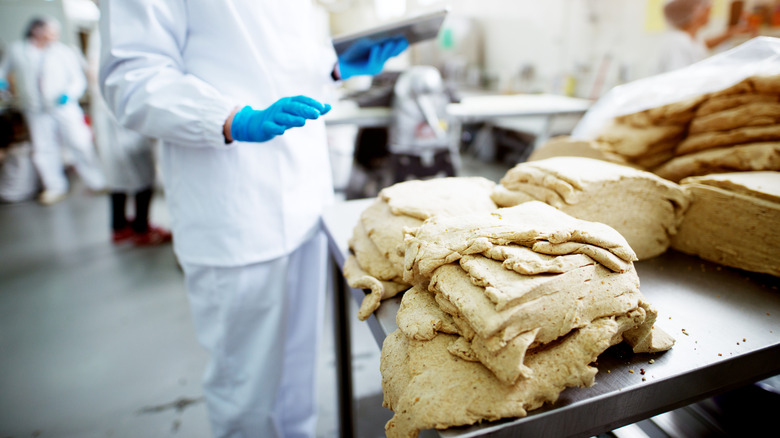
In the United States, food recalls occur practically every day. Most are fairly routine, but a handful have stood out for especially bizarre reasons. These strange cases have led to criminal charges, serious contamination scares, and even changes in how certain "food" products are classified.
When foreign objects turn up in food, it's usually the result of an accident somewhere along the supply chain — but not always. In 2020, customers at Hannaford, a major Northeastern grocery chain, began returning pizza dough after discovering razor blades baked into the product. The incidents initially appeared isolated, but after additional reports surfaced at stores in Maine and New Hampshire, the chain issued a wider recall. Investigators later uncovered that the contamination was not a mistake, but wholly deliberate. A factory employee had intentionally placed razor blades into the dough as an act of tampering. Following this disturbing discovery, all fresh dough and cheese products were pulled from shelves across multiple states. Thankfully, no injuries were reported, and the man responsible was later sentenced to nearly five years in jail.
In another strange case, a food recall was triggered because the product proved almost too effective. In 2011, the Arkansas Department of Health recalled "Lazy Cakes" relaxation brownies after reports that children became ill and fell into unusually deep sleep after eating them. The brownies were marketed to adults as a relaxation aid, but contained high levels of melatonin, a supplement commonly used as a mild sedative. Following the controversy, the Food and Drug Administration warned the manufacturer that melatonin was not approved for use in conventional foods, forcing Lazy Cakes to rebrand as a dietary supplement instead.