

Why Wasps Are Actually Good For Vegetable Gardens
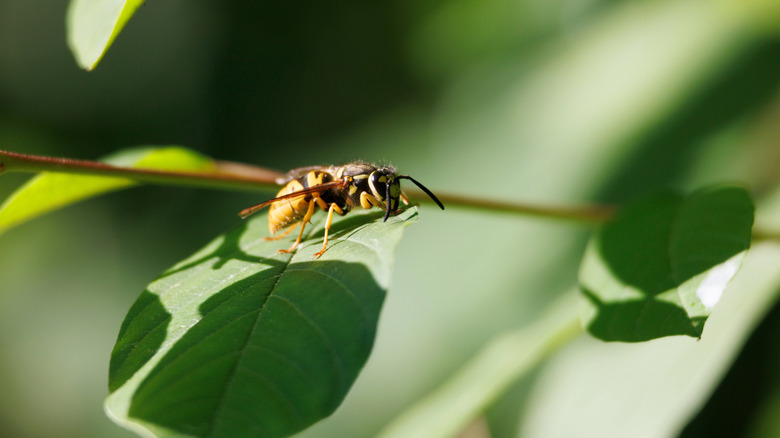
Gardeners tend to have a complicated relationship with wasps. You can divide most bugs into either the helper or pest category, but wasps tend to straddle the line between the two. Still, despite their capacity to sting, they're one of the most useful, multipurpose insects you can attract.
Wasps are a jack-of-all-trades garden helper. In the bug world, they're apex predators, feeding everything from aphids to tomato hornworms to their young. They'll even dispose of dead bugs in the same way, chopping them up into manageable pieces and carrying them off. While insecticides may be great at removing these pests, relying on wasps to do the heavy lifting prevents you from applying poisons that may kill off beneficial insect life.
As adults, they rely on nectar to fuel their own bodies, so they're great, if incidental, pollinators for many plant species. Still, while rare, some species of plants evolved to become completely reliant on them, like how figs aren't really fruit and need a teeny tiny variety of wasp to spread their pollen. While certain wasps might prey on or chase off other pollinators, like honeybees, it would take a huge number to hurt a strong hive, and they rarely maintain a large enough presence to get rid of them entirely.
How to manage and work with wasps in your garden
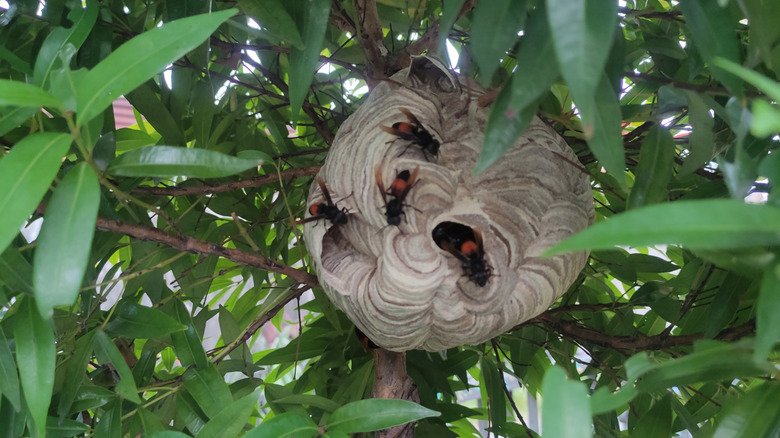
While you'll want to avoid disturbing aggressive social wasps, like yellowjackets and some paper wasps, that can sting with little provocation and make gardening a literal pain, solitary wasps are generally your best friends. Provided you don't swat them or step on their underground nests, they're extremely unlikely to sting you while they hunt pests among your vegetables.
Nests of social wasps are often easy to spot thanks to their size. These colonies can clock in at between a couple hundred to thousands of adults, so when you see a large dugout swarming with tiny bodies, or a gray, papery hive hanging off your roof, you'll need to decide if you want them removed or if you want to keep them around. While you can help deter wasps with citrus, these are the type that may invade nearby beehives and are most likely to sting you, so it might be best to remove them and leave room for more peaceful, solitary species.
The same way you can use K-Cups to attract hummingbirds, you can also provide a water feature that wasps love. Unlike mosquitoes, which are happy to raise their larvae in standing water, wasps are often attracted to sources of running water, making bubbler fountains with landing stones ideal. Just about anything that could attract butterflies works great on wasps too, from those overripe bananas you're thinking of throwing out to nectar-rich flowers like milkweed and bee balm.