

Why American Beef Meatballs Look Different From The Italian Versions
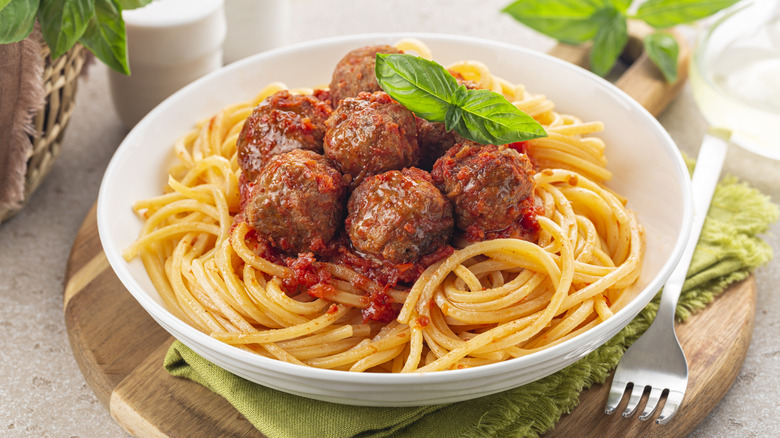
Food lovers everywhere owe Italy a huge debt. It's one of the top culinary destinations in the world, and thanks to huge waves of Italian immigration in the late 19th century, some of its best dishes were introduced stateside. But as the years went by, Italian and Italian-American cooking naturally began to take different paths. You might notice Italians use "mozzarella," whereas an Italian-American might say "muzzadell," or that American beef meatballs are much larger than the Italian version.
In the quintessential Italian-American staple dish, spaghetti and meatballs, large, seasoned spheres made from beef, pork, or veal are simmered in a rich marinara sauce and served over pasta. Prepared with milk-soaked breadcrumbs for softness and parmesan for depth, these savory icons are the undisputed stars of the plate.
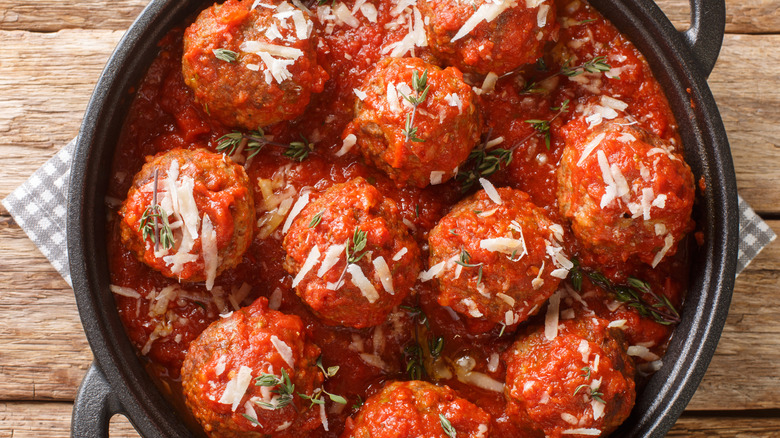
Italian meatballs — known over there as "polpette" — have a few surface-level similarities with America's version. They're also made with beef or pork, and often incorporate milk-soaked bread (known as panade) and cheese into the mix. It's the usage that sets them apart. In Italy, it's rare to find meatballs paired with spaghetti (or any pasta). Instead, they're typically served as a meat-based secondo (main course) following the primo dish, which is often pasta. But while you won't find spaghetti and meatballs on Italian menus, you can find polpette al sugo. This dish features much smaller meatballs slow-cooked in a tomato sauce. Then you've got more distinct dishes like polpette in brodo (meatballs served in a meat- or vegetable-based broth) or polpette fritte, which are meatballs coated in breadcrumbs and fried.
Tradition defines Italian dining, while adaptation shapes Italian-American plates
If you've ever visited Italy, you'll know Italian cuisine is built on a specific set of rules regarding what — and when — you should eat. For example, if you ever find yourself in Rome, make sure to never order a cappuccino after 11 a.m., or if you're by the sea, avoid asking for parmesan on your seafood pasta if you want to keep your waiter happy. Italian-American cuisine, on the other hand, is noticeably less fussy.
One of the most noticeable differences between Italian and Italian-American cooking is how meals are structured. Over in Italy, meals are thoughtfully divided into many courses designed to be enjoyed over a long period of time. You start with your aperitivo, a pre-meal drink and nibbles to get the appetite going. Then there's the antipasti — think cheese and charcuterie. This is followed by the primo, typically a small carb-based dish. Then the secondo, a meat or fish dish, is accompanied by the contorni (side dishes). The meal is then beautifully rounded off with a dolce (dessert) and either a coffee or a digestivo like limoncello or amari.
Over in the States, Italian-American cuisine often combines the primo and secondo plates (and sometimes even the contorno) into a single dish. Think of classics like chicken piccata, veal marsala, or chicken parm. While these are standard Italian restaurant fare in the U.S., you'll have a hard time finding this serving style at an Italian trattoria.