

Here's What Happens To Chipotle's Leftover Food
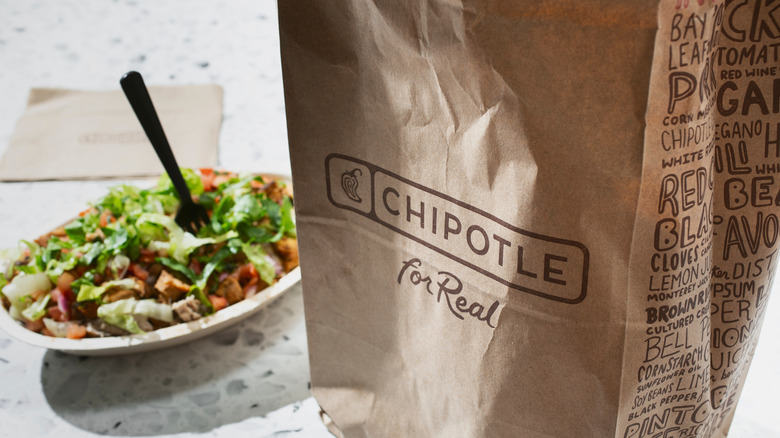
With its bold, flavorful Tex-Mex menu, Chipotle has become a leading force in the fast-casual food scene. What many people don't realize, however, is that the brand is just as powerful when it comes to sustainability. One area where it stands out in particular is its commitment to reducing food waste. Through a range of sustainable practices spanning its entire supply chain, Chipotle is setting a strong example for how restaurants can operate more responsibly without compromising on taste. Its leftover food? It often gets donated or composted.
In 2018, Chipotle shared its intention to halve the amount of waste it sends to landfills. Food waste remains a major issue in the United States, with more than 30% of the nation's food supply ending up in landfills each year. Restaurants are a significant contributor to this problem, generating large volumes of excess food on a daily basis. Beyond the sheer scale of waste, the environmental impact is even more concerning. When food decomposes in landfills, it releases methane, a highly potent greenhouse gas that accelerates climate change. This is why it's so important that major food chains take meaningful steps to cut down on food waste.
Chipotle manages leftover food primarily through the Harvest Program. Through a partnership with Food Donation Connection, over 455,766 pounds of food were donated in 2020. On top of that, it also uses composting to manage waste that cannot be donated. In 2020, 29% of restaurants had a composting program in place, and it continues to implement this in new locations. Alongside diverting food waste, Chipotle also aims to prevent it from occurring. Some examples include testing the Autocado to reduce avocado waste and tracking consumer data to avoid over-ordering certain products.
Chipotle's sustainability goals are focused on more than just food waste
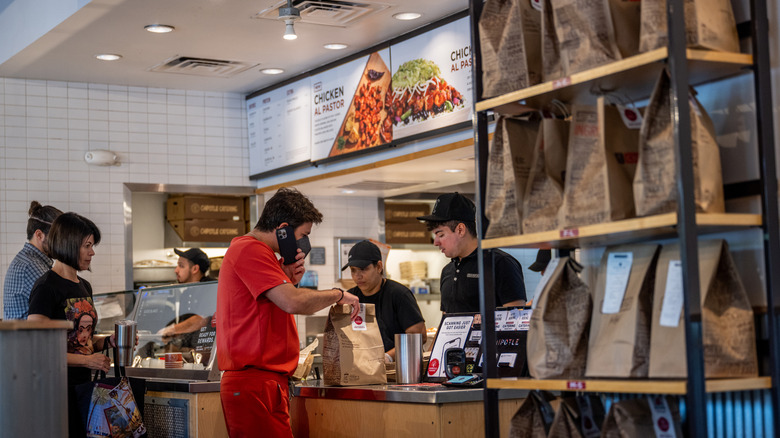
Chipotle has a long-standing commitment to sustainability that puts other restaurants to shame. Alongside policies to reduce food waste, it also aims to minimize all kinds of waste. For example, it has transitioned to compostable fiber bowls, bags, and napkins to reduce landfill waste, and in 2019, it partnered with Revolution Bags, which collected discarded gloves to recycle them into garbage bags. Its approach to avocados, one of its most iconic ingredients, is just as inventive. Rather than letting the pits go to waste, Chipotle found a way to give them a second life. In 2020, it introduced a clothing line dyed using avocado pits, using 10,000 of them that would have otherwise been sent to landfills.
Chipotle's commitment to sustainability is focused on its "Cultivate a Better World" ethos. This represents the company's commitment to reshaping the food industry by focusing on sustainability, ethical sourcing, and employee development. This commitment is reflected in practices such as sourcing 100% antibiotic and hormone-free beef and chicken, avoiding the use of freezers, and purchasing a record level of 47 million pounds of locally sourced produce in 2024. By 2030, it has also pledged to reduce its greenhouse gas emissions by 50%.
Chipotle is also putting money behind the future of sustainability. In 2024, the company invested $100 million into Cultivate Next, its venture fund focused on supporting early-stage startups that prioritize environmentally responsible innovation. Among its investments is GreenField Robotics, which replaces herbicides with AI-powered robots, as well as Meati Foods, a company producing plant-based meat alternatives using mycelium.