

Where Wendy's Sources Its Iconic Beef
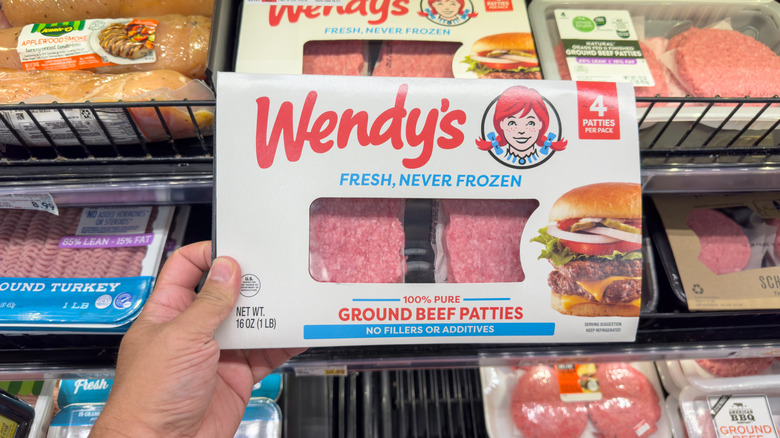
It goes without saying that beef serves as a foundational part of a burger chain. Subsequently, every fast-food brand relies on its own complex supply chain. For instance, In-N-Out Burger gets its iconic beef patties from its own processing facility, while Whataburger ensures fresh beef by working with a wide network. Wendy's — another large chain that sells never-frozen beef — also relies on a complex distribution network for its meat.
Bite into Wendy's iconic square burger, and you'll taste North American-sourced meat, upheld by several certifications. Starting in the late 2010s, Wendy's has increasingly incorporated quality and sustainability measures into its beef sourcing program. In 2016, the chain established the aim of phasing out medically important antibiotic use for all of its protein sources by 2030. In 2018, Wendy's joined the nationwide Beef Quality Assurance program run by the National Cattlemen's Beef Association. That same year, Wendy's became the first chain restaurant to be an American Progressive Beef partner, further committing to regulated beef practices. Additionally, Wendy's joined the U.S. and Canadian Roundtables for Sustainable Beef, another organization united by several corporate sustainability partners.
Together, such measures ensure the beef is fit for Wendy's standards — yet the organizations don't actually reveal the precise suppliers. This stringent sourcing applies to all Canadian and American Wendy's (excluding Hawaii), but standards may differ for international locations. So if you're stopping by the world's largest Wendy's in Tbilisi, Georgia, for example, the beef likely doesn't come from North America.
Wendy's sources beef via a complex network
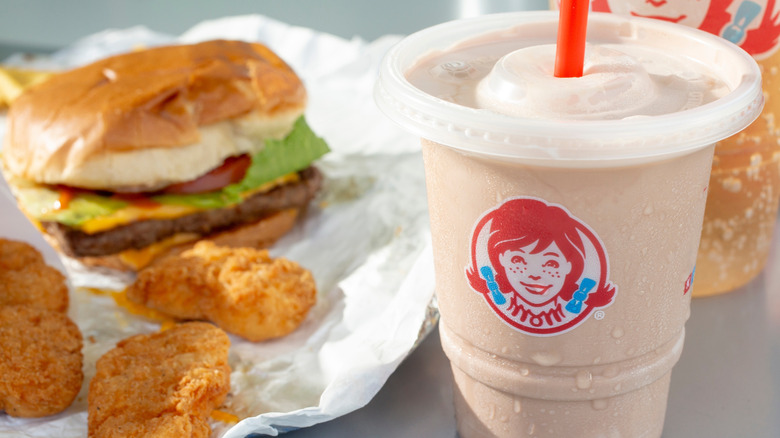
Order one of Wendy's over two dozen burger options – like the surprisingly high-protein Dave's Triple – there's still lots of mystery surrounding its origin. Unlike McDonald's, the chain does not transparently list its entire partnering supply chain. The partnership with Progressive Beef points toward sourcing via Tyson Fresh Meats, a longtime major participant in the program. Yet the massive food company isn't the sole processor involved with Progressive Beef, making the link uncertified.
Furthermore, ever since joining the Progressive Beef initiative, not all of Wendy's beef has passed through the program. For instance, Cargill – another massive beef processor – plays a major role in the U.S. and Canadian Roundtables for Sustainable Beef (another organization partnered with Wendy's). It's entirely possible, although unconfirmed, that some burgers are sourced via this business route as well. Ultimately, large meatpacking companies purchase huge quantities of cattle from a large array of farms. Tracing the genuine geographic sources of Wendy's beef is a complex matter, regardless of the companies involved.