

The DIY Soil Mixture For A Better Berry Harvest
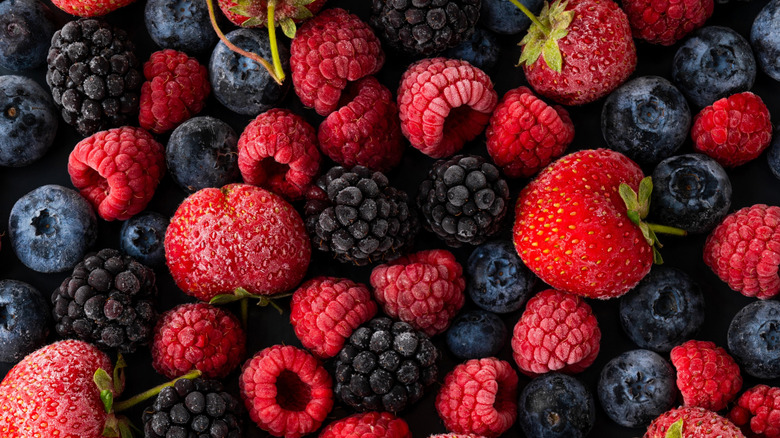
Berry bushes are prolific, hardy growers that can flourish in poor soil. However, the same way soil matters when growing tomatoes, it also dictates whether your plants produce fruit or just a bunch of foliage. Fortunately, you don't have to hunt for a specifically labeled bag and can make your own mixture using equal parts peat moss, composted cow manure, and pine bark mulch.
While you can take a rocky, undeveloped plot and nurture it with cycles of compost, aeration, and cover crops, it can take years to reach the right nutrition and pH levels. But the aforementioned combination checks every box you need, balancing great drainage with water retention, nutrients with acidity, and providing a firm enough ground to not erode but soft enough to allow your plants to spread and establish new growth. The peat moss retains water and helps amend even the sandiest soils. The cow manure provides tons of nutrients while also adding a bit of roughage to the soil that prevents dense clay from clamping down on roots. Pine bark mulch fulfills many of the same functions as manure, but is also great at lowering soil pH, which berries prefer.
All you have to do is mix them thoroughly together and give it a good soaking to ensure the dry ingredients aren't hydrophobic. While great for containers, this mix is also fantastic for in-ground growing. Since berries have such shallow roots, you shouldn't need to provide more than a foot-thick layer of new growing material.
More improvements and considerations for berry soil
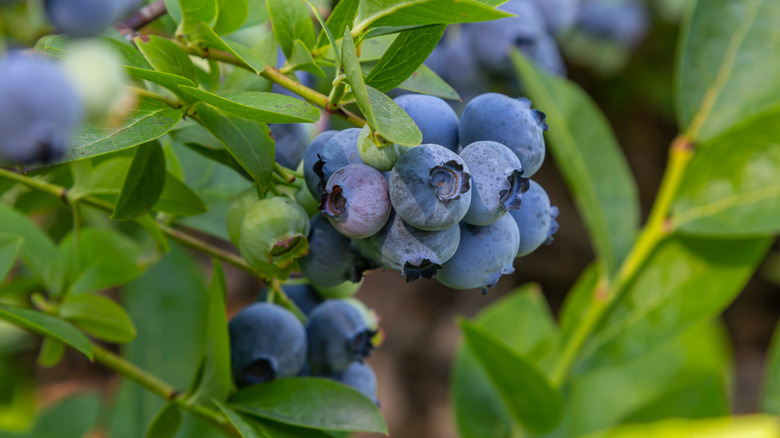
Most popular berries that are in season during the summer, such as blueberries, raspberries, blackberries, and strawberries, have similar needs, despite appearing so different. Capitalizing on your new soil and providing some extra protection gets the most out of not only it, but also your seasonal harvest.
Most berries have fairly shallow roots, meaning you'll want to water frequently rather than deeply. But while your soil mixture is great at holding onto the moisture they need, and letting the rest flow away, they're still prone to drying out. This is especially true if you stick them in a bright patch that gets sun all day or live in a particularly hot climate, as ambient summer temperatures can quickly evaporate all that surface-level water. However, a nice blanket of mulch, pine straw, or even cardboard for weed control keeps the rays from baking the soil, helping it retain the shallow water your plants need to thrive.
All this work won't mean anything if you let pests swarm your patch, but fortunately, some of the best bug-repelling companion plants love the same soil that berries thrive in. If you want to let your berry patch expand, avoid planting perennial bug repellers, as they'll quickly become overtaken by new growth. Instead, look to some of the annual classics that thrive in slightly acidic soil, like marigolds and basil, that you can keep growing all summer long with proper deadheading and pruning.