

The Kitchen Sink Frog That Sends Boomers Back In Time

We may receive a commission on purchases made from links.
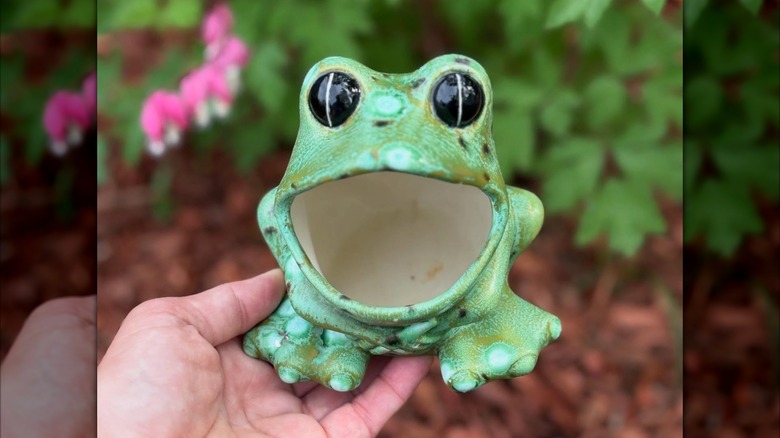
Under practical aspects, the ceramic frog of the 1970s wasn't a good fit to serve as a sponge holder by the kitchen sink. It could easily crash into the sink and shatter. The frog also lacked drainage holes, so the sponge was sitting in moisture, a breeding ground for bacteria (today we know the secret to keeping our sponges cleaner). However, when a Redditor posted an image of a retro ceramic frog, it not only sent Boomers down memory lane, but younger generations also remembered it fondly from mom's or grandma's kitchen.
The frogs came either in solid, very frog-unlike but very 1970s colors like orange or brown, or they were speckled. Some had intricate details, such as a bee or a butterfly resting on the frog's nose. About 4.5 inches tall and wide, the frog had just the right size to fit a sponge, or a scrubby Brillo, in its wide, gaping mouth. Many of the trinkets later became receptacles for odds and ends such as orphan screws (those that you knew had fallen off something, but you could not figure out what), pennies, and paperclips.
In the 1970s, the frogs were so popular that they were even made in ceramics class. Whether they were produced commercially or by hobby potters, what many of these frogs have in common is that, over time, they developed crazing. These superficial hairline cracks in the ceramic glaze layer mostly become prominent on the inside when moisture and dirt get trapped, making them more noticeable. For people who love those frogs because they catapult them back into the 1970s, this is not a deterrent. And the love affair hasn't ended; the ceramic frogs are still being made as sponge holders today. You can buy them online on places like Amazon.
Other 1970s kitchen items with high nostalgic value
In addition to knick-knacks like the ceramic frog of the 1970s, every decade has its signature tools, gadgets, and other kitchen items. The 1970s were the decade when Boomers, people born between 1946 and 1964, transitioned into adulthood and equipped their first kitchen. They installed counter-mounted can openers and used old-school electric knives to slice the Sunday roast or Thanksgiving turkey. Fondue was all the rage, so throwing a dinner party where you showed off your own fondue set was a sign of a well-appointed kitchen. The melon baller, used for salads and cocktails, was equally a sign of culinary sophistication.
The cookie press, an old-school cookie kitchen tool boomers love, was as much part of that era as Corning baking dishes that could go from the oven directly to the table. The Spice of Life series, launched by Corning in 1972, was unmistakably recognizable with the French names below the vegetables and herbs (the 1970s was also the time when Julia Child was introducing Americans to French cuisine).
Stained handwritten recipe cards and church or community cookbooks also have a high sentimental value, and not just for the Boomers who acquired them but also for their kids and grandkids. In them, you might find vintage dishes that your grandparents probably made all the time and that you actually loved as a kid, and might give a try sometime.