

8 Old-School Deli Orders You Rarely See Anymore
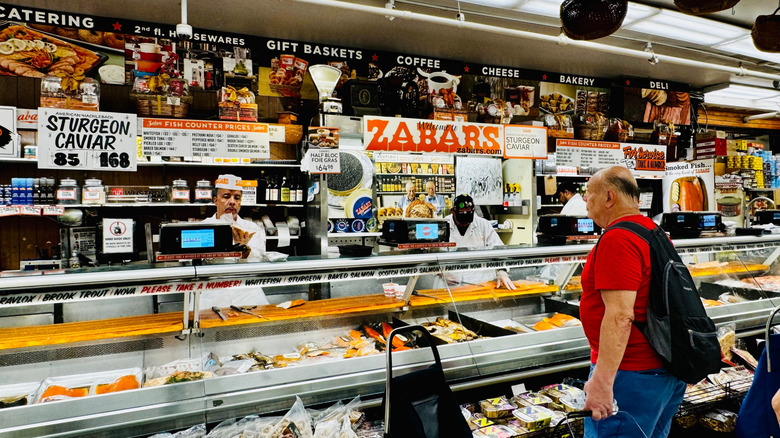
The late 19th and early 20th centuries saw a massive influx of immigrants to America. These immigrants, largely European and often Jewish, brought with them the unique culinary traditions from their home countries. Some of them would go on to open stores that demonstrated these traditions proudly: Delicatessens.
In Europe, delicatessens only focused on selling high-quality meats and cheeses. In America, they evolved over the decades to also serve sandwiches, soups, baked goods, and other prepared foods with deep roots in their original European and Jewish cuisines, acquiring the shortened name "delis" in the process. Hungry customers lined up to place their favorite orders at the counter and walked away with a hefty, meaty lunch.
Some of these orders are pretty old-school; you would be hard-pressed to find them on your typical menu nowadays. To modern tastes, many might even seem unpalatable. But, even as tastes have changed and once-classic deli orders disappear from the mainstream, you'll find defenders for each of these distinct dishes. Who knows, maybe you'll even find an unexpected new favorite here.
Sardine sandwich
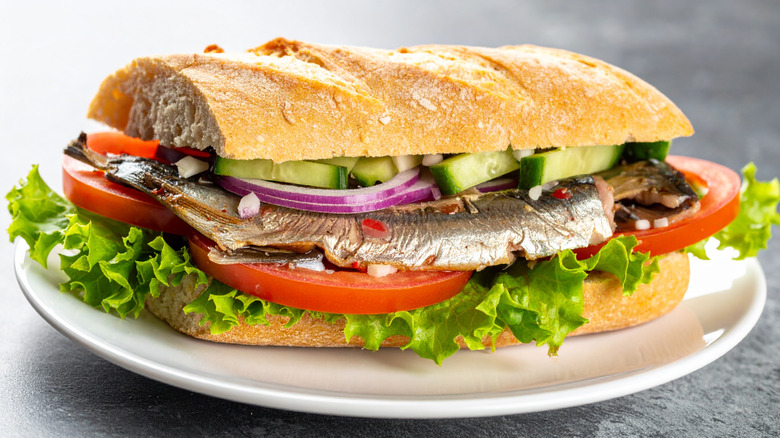
There are a lot of facts about the history of sardines that are fascinating. As far back as the time of the Ancient Romans they were used as the primary ingredient in their favorite sauce: Garum. And, they have a surprisingly long history in America too; New Yorkers alone once ate five million tins of sardines every year. Part of this popularity was due to availability and affordability; you could find a tin of sardines at almost any grocery or food store, they were rather inexpensive, and they required almost no preparation to eat.
So, naturally, sardines ended up in old-school deli sandwiches, serving as America's sandwich-fish of choice for decades. People just seemed to like the briny taste, especially when paired with juicy vegetables, like tomatoes, for contrast. In the mid-20th century, however, the tides began to turn. There was a huge advertising push by tuna conglomerates, including giving away cans of the fish with coffee purchases at grocery stores, as well increasingly modernized canning operations, which bolstered the sale of this pink-fleshed seafood.
Tuna was (and is) considered less fishy, less salty, and overall tastier than sardines, and the latter never regained the upper hand in the public eye (or mouth), despite experiencing something of a renaissance on social media of late. But, you'll still find some dedicated sardine lovers that reminisce about and recreate the once ubiquitous deli option.
Liverwurst sandwich
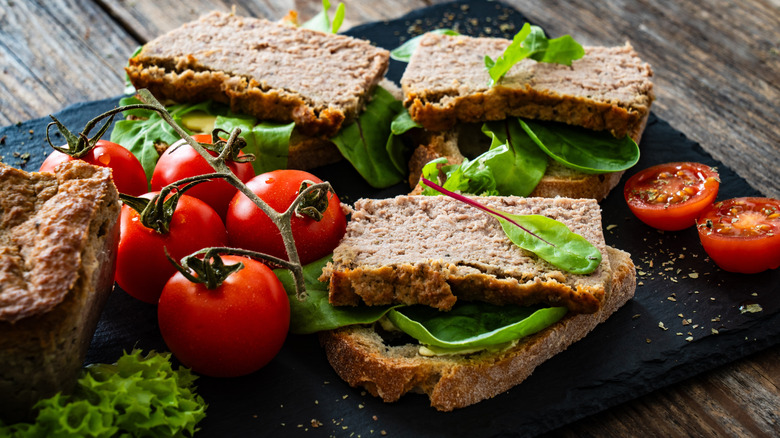
Let's address the big question first: What even is liverwurst? Similar to pâté, liverwurst is a soft sausage made with ground meat, fat, spices, and at least 30% liver (hence the name). It's a close cousin to the more highly-regarded pâté, although unlike this elegant spread, liverwurst can be sliced and served in sandwiches, rather than smeared, like cream cheese or butter. Indeed, it often was served in sandwiches at the German and German Jewish delis of the early 20th century.
Liverwurst has a smooth texture and a deeply savory flavor that its defenders espouse on a regular basis. On sandwiches it often pairs well with strong flavors, like mustard and onions, that can cut through the richness. It can even appear on a charcuterie board, like a pâté.
So then why has it fallen out of favor? Partly, it's an American revulsion to liver as a culinary option. The name might not be doing it any favors, either, despite it just meaning "liver sausage." Regardless, it's now quite rare to see this on deli menus.
Olive loaf
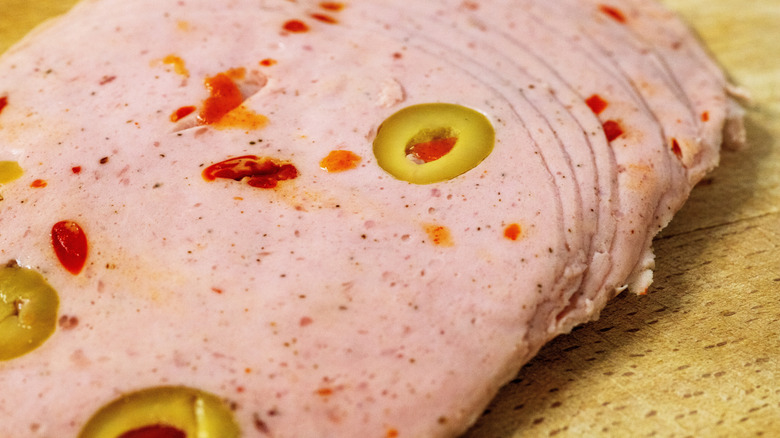
The name "olive loaf" may invoke thoughts of rustic breads filled with tangy olives. However, these breads happen to share a name with a once-popular deli meat that has seemingly vanished from popular consciousness.
A bologna stuffed with olives and pimento peppers, the olive loaf (the meat version) is made with varying combinations of beef, pork, and sometimes chicken or turkey, and was a beloved staple starting around the end of World War II. Affordable, easy, and much more interesting than regular bologna, both visually and flavor-wise, it made regular appearances in school lunches around the country, and is still remembered fondly in some corners to this day.
Unfortunately for the olive loaf, the same qualities that made it popular to begin with, ended up causing its downfall. Its ultra-processed nature made it inexpensive and quick, but also turned people off over the decades as customers demanded organic and healthier food options. Few delis still sell olive loaf by the slice, but you can sometimes find it in grocery aisles — if you get lucky.
Beef tongue sandwich
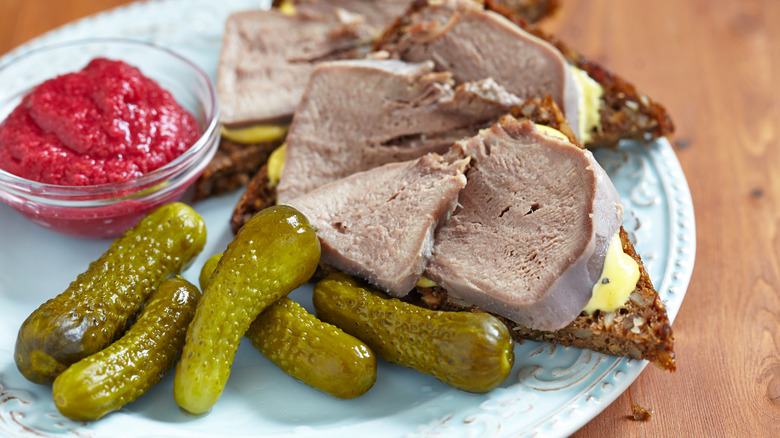
This old-school deli order immediately turns off lots of eaters just from the core concept; it's why it's so rare to see it in the culinary wild. And, yet, this sandwich has hung on in some places because those who eat beef tongue really love it.
Especially common in the Jewish delis of yore, beef tongue is a very affordable cut with a surprising amount of versatility. It's quite rich in both flavor and fat, with some even likening it to ribeye steaks. It also has a lot of nutrients when compared to the more typical cuts of beef, including vitamin B12, zinc, and choline.
Served sliced in a sandwich with mustard on rye, or with chopped liver and a pickle, tongue makes a strong (and often favorable) impression on first-time tasters. However, getting Americans to get past their reservations about eating tongue proved too much for this once-beloved staple. That and it can also be very hard to prepare correctly without a lot of time and know-how.
Phosphate soda
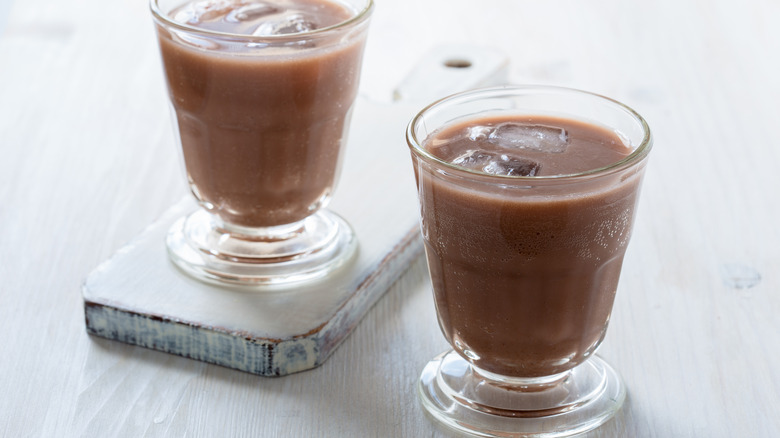
Phosphate sodas, which once appeared on deli menus across America, are close cousins to the somewhat obscure, but still respected, egg creams of New York fame. Both use seltzers and syrup in their foundations, but, while egg creams use milk, phosphate sodas use a somewhat different primary flavoring ingredient: Phosphoric acid.
That's actually part of the reason they were such a large part of the Jewish deli experience; the absence of milk helped ensure they fit within a kosher menu. But, the other part was the phosphate's natural sour taste; it brings new life to citrus and fruit-flavored sodas and helps cut through the richness of a chocolate soda.
Phosphate sodas populated soda fountains menus as well as deli menus in the late 19th and early 20th centuries, but as ice cream-based concoctions started to dominate the non-alcoholic drink market, this delicacy lost its edge. There is a lot of nostalgia for the brew that lingers, however, particularly in Jewish communities, where they are often served as a novelty.
Head cheese
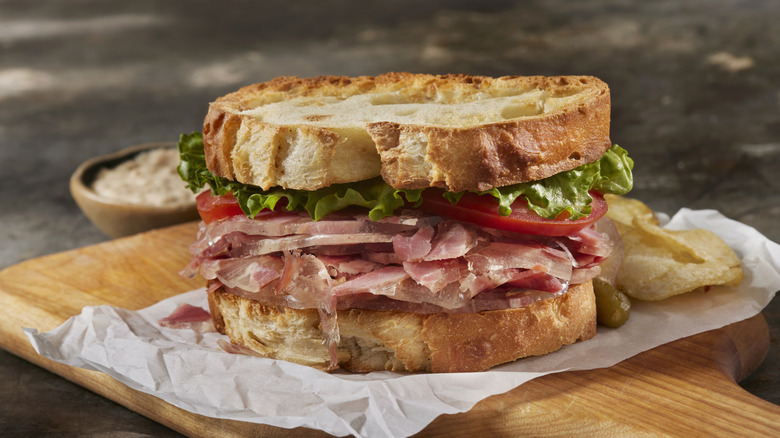
Head cheese is a bit of a misnomer. It's not made from cheese, at all. In fact, there is no dairy whatsoever in it. The "head" part, on the other hand, is incredibly accurate, at least some of the time.
Also referred to as hog's head cheese, this deli favorite of the past took the discarded scraps from a butchered pig, most notably the head and feet, and boiled them until the ingredients produced a natural gelatin. Add in some seasonings, pour it into a mold, and let it solidify into a jiggly mass. Then you can slice and serve it in sandwiches to your heart's content or spread it on crackers.
Thankfully, head cheese almost never contains brains anymore, although sources disagree on how common adding brains was in the first place. Head cheese predates the deli by centuries and was a staple for its affordability. But something about its unique composition was basically destined to be relegated to obscurity by American consumers. It still has a dedicated following in New Orleans, however, so if you're in the Big Easy you can add it to your culinary itinerary, if you're so inclined.
Kishke (stuffed derma)
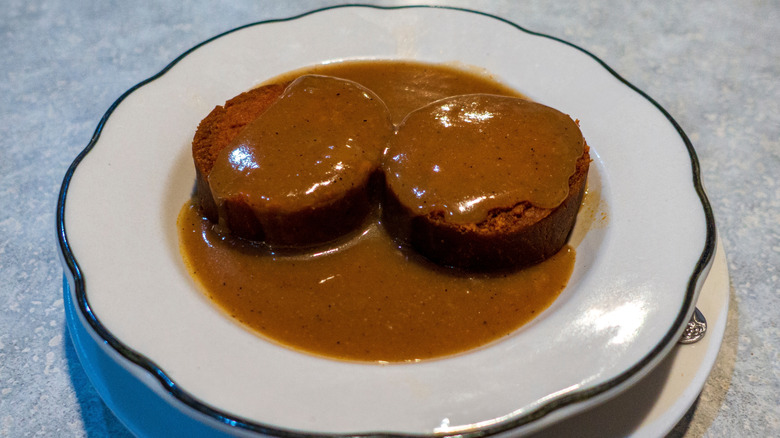
Kishke, also known as stuffed derma, is essentially Jewish haggis, or perhaps a sausage, depending on your perspective. Beef intestines are stuffed with matzo meal, spices, seasonings, and chicken fat and roasted until the filling becomes something akin to a Thanksgiving herb stuffing. It might also be stuffed with ground meat, but that depends heavily on the recipe (a meatless filling is far more common). Kishke with artificial casings and vegetarian versions abound.
Once upon a time, kishke could be found in every Jewish deli and butcher's shop, but it has basically vanished down the culinary memory hole in the last few decades. Partly it suffered from that classic American distaste for offal, but also from health concerns about eating intestines, some of which persist to this day. You can still find it in the frozen section in supermarkets in Israel, but in the States it's the picture of old-school.
Braunschweiger sandwich
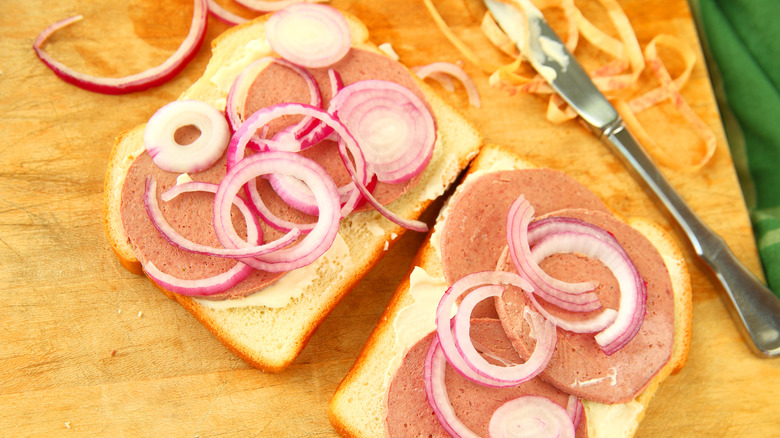
In the city of Braunschweig in Germany, the local sausage makers looked at the traditional liverwurst and said "we can do better." And, so they developed the braunschweiger sausage, which arrived in America with German immigrants in the 19th century. Thanks to the tireless work of those early deli owners, this delicacy ended up in sandwiches that were snatched up in a hurry. But, what exactly is it?
In the lexicon of well-known German sausages, Braunschweiger is a cousin to liverwurst. It is made with pork or beef liver and spices, but it differs in both preparation and additional fillings. Braunschweiger can be smoked, unlike traditional liverwurst, and it often contains smoked meats, like bacon. The result is a similar smooth texture, but with a smoky, salty depth that makes it irresistible to its fans.
In recent years, those fans have become rather thin on the ground. At least a few people have compared it to cat food. Yet, plenty still find this to be a delightful lunch option. You can still find it in traditional German delis if you want to try it for yourself.