

Keep Squirrels Out Of Your Garden With This Fragrant Herb
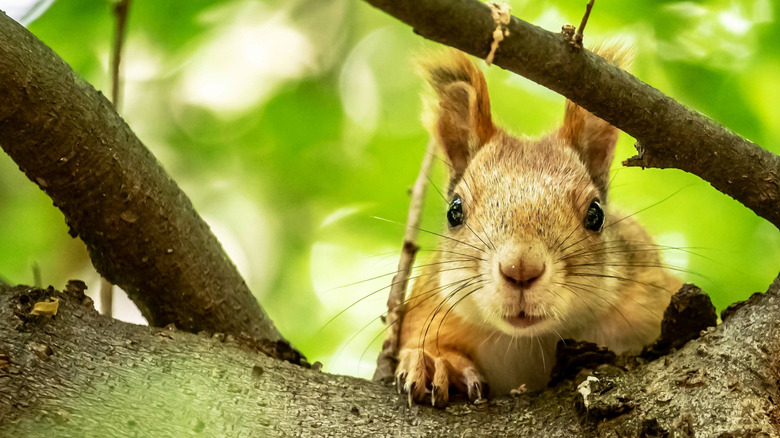
We're not here to drag squirrels, but let's be honest: Any home gardener knows that they're a nightmare to have hanging around. They dig up seedlings, nibble on your vegetables, and are notoriously messy. At the same time, though, we should always acknowledge that it's their home too, and that they don't deserve to be harmed just for existing. Luckily, one common household herb may be a helpful deterrent to your squirrel troubles: mint.
Mint contains the aromatic compound menthol, which is what makes it so refreshing, aids digestion, and helps relieve congestion. On top of that, squirrels tend to steer clear of it because of its strong aroma, helping to keep your garden safe without hurting them. There are many different varieties of mint, including peppermint and spearmint, but if you want to keep squirrels away, peppermint is the best choice thanks to its higher menthol content.
An easy way to incorporate peppermint is by placing the plants around the produce you want to keep squirrels away from. While mint is incredibly easy to grow, plant it with caution: It's notoriously aggressive and invasive in home gardens, so it's best to keep it in a pot to avoid it spreading out of control. One upside, though, is that you can move the pot around to suit your needs. Aside from keeping your garden squirrel-free, having a supply of mint leaves to harvest and store is an easy way to keep all your digestive-friendly teas, refreshing summer salads, and cocktail needs covered.
How to use mint to keep squirrels away from your garden
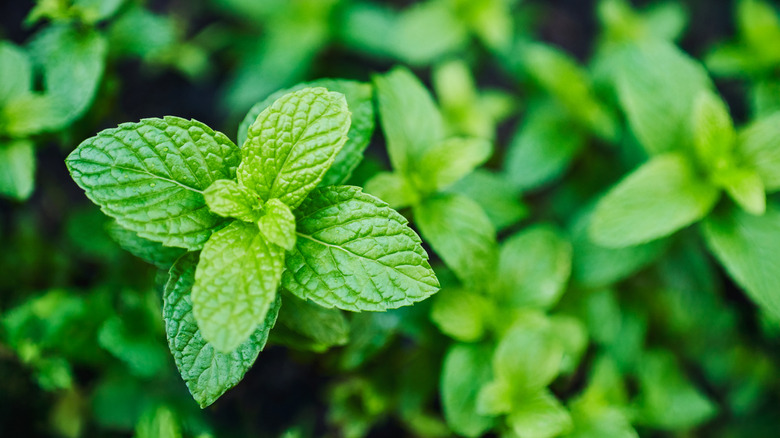
While using a whole mint plant in your garden can deter squirrels, it might not be a permanent solution. But have no fear — for those looking to get the most out of their mint leaves, they need only craft a simple infusion using just mint and water.
To make a highly concentrated peppermint spray, swap out mint leaves for essential oils. You could buy some from the store, or create your own infused oil by soaking fresh, crushed mint leaves in a carrier oil and storing it in a sealed glass jar for around four weeks (just note that homemade infused oil is much weaker than store-bought essential oil). To use this in your garden, you just need to spray it onto your plants and the surrounding area. This will also provide much more comprehensive coverage than the plants alone. Just make sure your solution is very well diluted, as concentrated oils can be damaging when applied directly to plants.
Aside from squirrels, mint is also a great natural deterrent for certain pests, like spiders, maggots, and ants. You could also pair mint with a small sprinkle of cayenne pepper to deter pests, which acts as an irritant should the mint fail to deter them. Or, you could combine the mint with other herbs such as basil, rosemary, thyme, and sage, all of which can help ward off specific pests. While mint plants alone might not be a strong enough deterrent, a tactically planted herb garden around your vulnerable seedlings and plants can reduce the appeal of your garden enough to keep unwanted visitors at bay.