

This Type Of Alcohol Will Go Bad In Your Liquor Cabinet
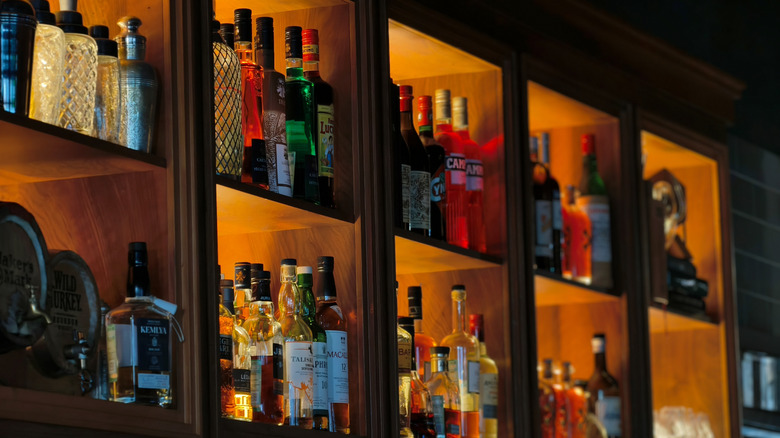
It goes without saying that not all alcohol is created equal. You have your budget boxed cabernet wines and your Kirkland Signature vino versus some of the most expensive champagnes in the world. There are also clear liquors and amber-hued, as well as cream-based. Some liquor you can keep safely in or on a devoted cabinet for years, and others, well, they require slightly more thoughtful storage. Sugary liqueurs, also called cordials, can spoil a lot faster than their non-sugary liquor counterparts, especially if they're kept in a less-than-ideal environment.
The reason for this is the sugars themselves. Added at the end of the creation process, these sweeteners actually feed any bacteria that might be present (or introduced) in the liqueurs, causing accelerated spoilage. This is especially true if the liquor contains both high levels of sugar and lower alcohol content – because there isn't enough alcohol in it to act, essentially, as a disinfectant.
So liqueurs like Grand Marnier, but also and especially Kahlúa, St. Germaine, and Midori, which contain 20% alcohol or less, are going to last anywhere up to about a year after opening. This is in contrast with non-sugary, higher-proof liquor, which can last up to two years (and remain drinkable beyond that, though the quality might start to dim).
Liqueur storage best practices (and how to tell if it's spoiled)
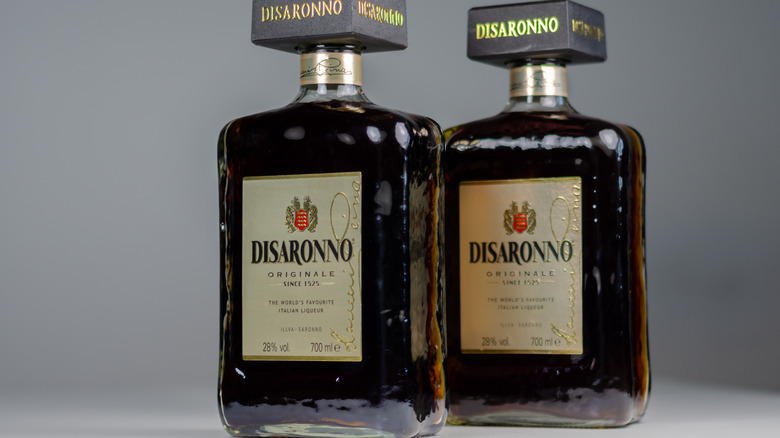
You can help extend your liqueurs' shelf-life by storing them properly, which very well might mean keeping them out of and away from your liquor cabinet. It's best in a consistently cool and dark location, so if your liquor cabinet is in a sunny room and it receives any direct light, you're better off keeping liqueurs in a pantry or cupboard. It's also important that you screw the lid on tightly when not using it, to limit the amount of oxygen that touches the liquid, and also to help keep out anything that might creep its way in (including small flies, which are drawn to the sugar).
If you're digging around your liquor bottles and happen to find a liqueur that you're unsure of, there are a few indicators that it has spoiled. The first is simple: If the liquid looks darker than it did the last time you saw it, it may have turned, especially if, when you sniff it, it smells funny, too. If you're dealing with a cream liqueur (which doesn't necessarily have to be refrigerated, but it does help preserve it), any separation, curdling, or sedimentation is not a good sign, either.