
Why Bartenders Roll Their Eyes When Customers Order 'A Beer'
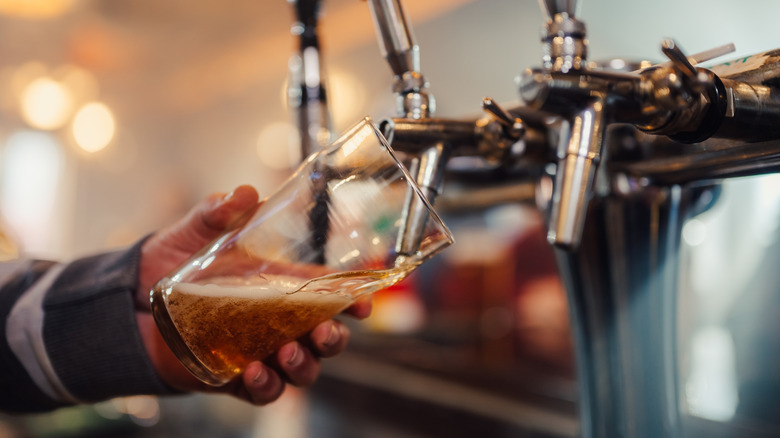
Different drink orders can tell a bartender exactly what a customer is like — whether you're looking for a specific cocktail or trying to get a wine recommendation. But when it comes to simple orders that enrage them, there's none quite so infuriating as "a beer."
A bartender's job basically boils down to dealing with potentially hundreds of customers a night and pouring or mixing even more drinks, all while juggling other duties like keeping ice chests full, restocking fridges, changing kegs, and keeping their space clean. When someone orders "a beer" and doesn't patronize the place enough to have a firmly established regular drink, all they're doing is creating more work. Now, instead of just grabbing the desired beverage, the bartender has to take the extra time to narrow down exactly what they want.
While it may seem innocuous, ordering "a beer" disrupts workflow and forces the bartender to start guessing at relevant questions that help whittle down what exactly you want. Now imagine this happening multiple times a night, and add up all the time spent dealing with this vague request that could have been used elsewhere. Since a bartender's job is so time-sensitive, it's enough to make any seasoned vet roll their eyes.
What to say instead of ordering a beer
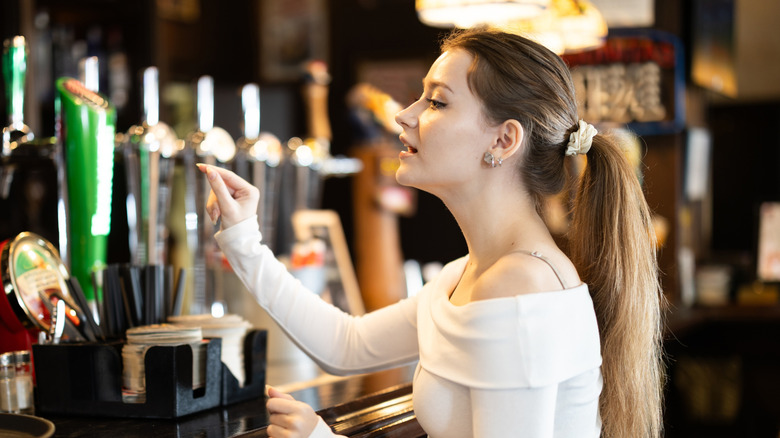
Most bartenders have no problem answering questions about what's on offer, and starting an interaction with one saves them the trouble of having to guess. Plus, this also saves you from having to send a drink back, and while there are acceptable reasons to do so, every bartender has their limit if they think you're just guessing at what you'd like.
If you truly just want a beer and don't have any specifications outside of that, it helps a bartender if you add some arbitrary modifiers to your order. Even something as simple as "whatever you have on draft" or "something light" gives most of them enough confidence to just pour you something. Even more helpful, request a type of beer, such as "whatever lager you'd recommend" or "something dark like a Guinness." If all else fails, just pick a general beer you feel confident most bars would have, like Budweiser or PBR in America, and make that your typical order.
If you're more particular about your drink but want to try something new, tell the bartender what you typically like and ask if they have anything local or similar. Providing examples is always a solid way to get a great recommendation, — plus it's an excuse for a bartender to apply their wealth of alcohol knowledge. You can also ask about seasonal options, what's been selling well, or what they may have just acquired.