

Stop Making These 9 Common Mistakes At Steakhouses
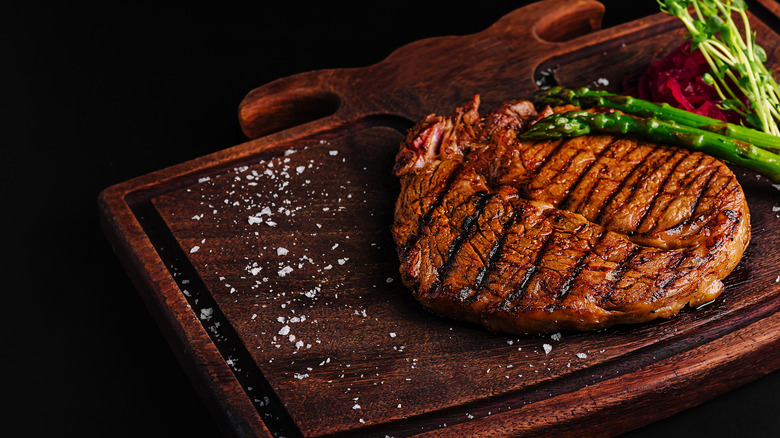
Dining out is often a treat for special occasions, and steakhouses are a popular choice for those wanting to enjoy a night out. Commercial cooking equipment, the chef's expertise, and resting the meat before serving combine to create strong sears and tender textures that can be difficult to achieve at home. The establishments range from upscale to hole-in-the-wall places, with every iteration having its own charms, like white tablecloths and table-side service, or a menu of five items and artwork that's remained unchanged for 50 years.
However, this style of restaurant can be intimidating for those who aren't familiar with it. We get it: The variety and amount of cuts of beef and the levels of doneness can be overwhelming when all you really want is a good meal. To remove some of that uncertainty, these tips will definitely help you have the best experience possible, no matter where you go.
Not knowing how you like your steak
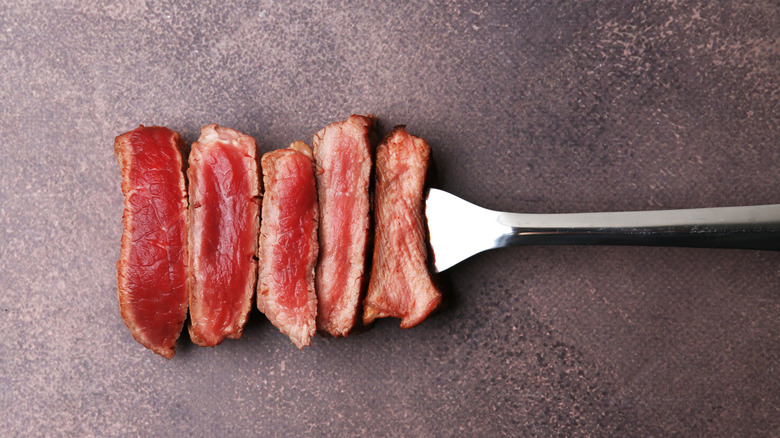
The various degrees of doneness for steaks ranges from rare to well done, although some people will add "blue" to that list. The differences in doneness can be subtle, but, in general, the more pink a steak is, the more tender it, well, tends to be. This is why many people find well done steaks, which have no pink in the middle, to be dry and tough. Levels of doneness can be hard to tell apart without a thermometer, because just the level of pink you see isn't definitive. That's why it can be confusing if you've thought you liked your steak medium rare your entire life, only to find out you actually prefer it medium well.
If you're not quite sure which level of doneness you prefer, the USDA recommends that steaks be cooked to a "medium" level, which is 145 F. This ensure the meat is hot enough to destroy any bacteria, such as E coli. Don't worry if you prefer a rarer steak, because unless you have a compromised immune system, the odds of contracting a food-borne illness are low.
Not reading the menu carefully
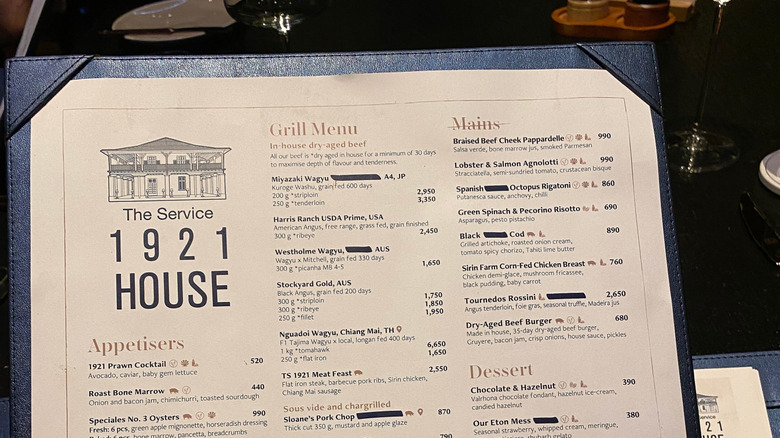
Steakhouse menus can often be extensive, with plenty of different steaks and sides. It's important to carefully read the menu due to this, otherwise you might end up with a steak that's been prepared in a way you don't care for. There's also the issue that if there are too many options, the food will likely not be as good as a place that hones in on a few excellent dishes.
When a menu is extensive, it's hard for the kitchen staff to keep everything prepped for a meal. This leads to many items being frozen and quickly reheated, something that few people enjoy. An overly large menu can also be overwhelming to customers and make them give up reading halfway through. Not only could someone miss their next favorite dish this way, but it can reduce the customer's confidence in the restaurant. Large menus can indicate a steakhouse doesn't have a clear concept or direction and is trying a "throw everything at the wall to see what sticks" approach. But even if the menu is large, do your best to read through it carefully so you don't miss anything.
Failing to research the restaurant beforehand
Even if you've heard rave reviews about a place, it's a good idea to do some research before booking your reservation. Things like the dress code, price range, and general availability can typically be found on a restaurant's website or through a quick internet search. A little preparation beforehand will help make the experience less overwhelming.
It can also help you decide if you'll be having seafood with your steak. If a restaurant has a reputation for all-around great food and the kitchen is moving seafood through regularly, it's a good bet the steakhouse makes great seafood. If, however, there are no items mentioning that the fish is fresh caught, you'll likely be getting something frozen.
Another plus to doing a quick check of the restaurant's website is finding out if there will be a special event, such as live music, when you plan to go. Some people love finding a jazz trio when they arrive for a reservation, but others prefer a more low-key dining experience. A quick phone call or glance at the establishment's social media can help ensure you have the evening you planned for.
Not sharing with the table
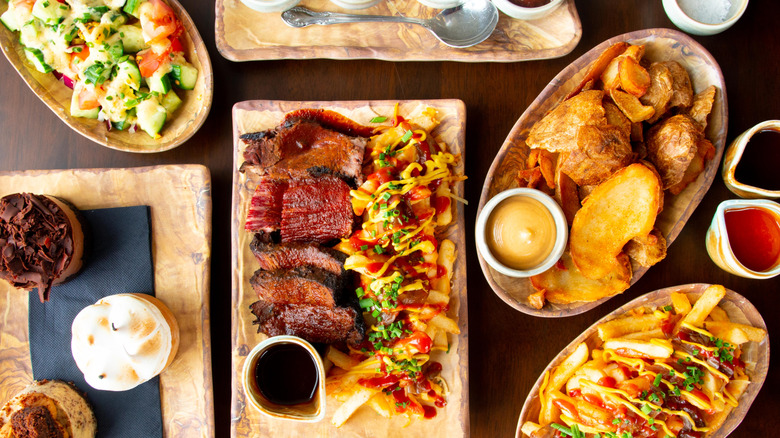
Sharing at a restaurant is a tricky thing. It's generally looked down on to share an entrée, but sharing appetizers and sides is common. All of these things are true at a steakhouse. When someone orders a massive tomahawk steak, they often want to share, but not everyone does. To avoid awkwardness and to build a spectacular meal for everyone, each person should choose their own entrée and how to prepare it. But after that, all bets are off. Getting a variety of appetizers and sides for everyone to share allows you to try new things while ensuring you still have what you want.
Many restaurants have shareable plates, but even if they don't, you and your party can still build the perfect meal for the table. First, make sure that everyone wants to share, as some people just don't care to do so. If everyone is on board, ask your server how many pieces come in the portion so you'll know how many plates to order. After the dishes arrive, everyone can take their part off the serving plate onto their own. This not only lets everyone try different menu items, but it can also be a bonding experience that makes lasting memories.
Expecting to be in and out quickly
Many customers going to a sit-down restaurant want to take their time while they eat, instead of rushing in and out. And mid to upscale establishments expect customers to stay a while. In fact, the average dining time for most restaurants is around an hour for a table of two and between an hour-and-a-half and two hours for larger parties. So if you expect to be seated, eat, and leave any sooner than that, you might want to skip the steakhouse for that meal.
Restaurant kitchens are marvels of timing and efficiency, and steakhouses take those concepts to the next level. It takes a lot of experience to know how to plan for everyone in a party of 10 to get their meals at the same time. Chefs can't put a 2-inch porterhouse and a filet mignon on at the same time and expect the latter not to be ready first. Instead, the line cooks and grill masters work together to ensure every entrée and side dish is plated and carried out together. That level of teamwork and awareness is part of why the steakhouse experience is so prized. It's also why the meal takes a little longer to prepare than at some other places.
Pouring sauce on immediately
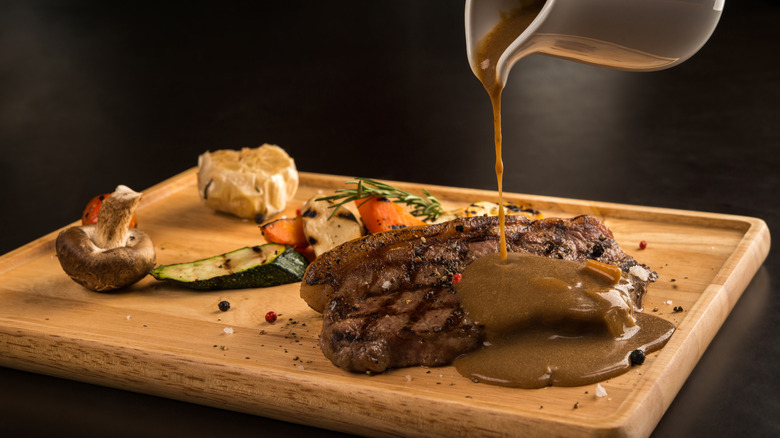
Great steakhouses are known for carefully selecting, sourcing, and aging beef, all of which play a role in how the steak will ultimately taste. The restaurants take pride in providing an incredible experience with well-prepared beef. This is why pouring bottled sauce onto your steak before tasting it is considered poor etiquette in a steakhouse. This isn't because they want you to have dry steak; it's because they want you to taste the steak you paid for. The richer the sauce, the less you'll taste the meat, so give the steak a try before reaching for the Worcestershire.
Besides, the chefs at steakhouses will have options for sauces like peppercorn or béarnaise that are specifically designed to complement the meat. Ignoring a reduced red wine sauce in favor of ketchup is seen as insulting to the cooks, but it's ultimately up to the guest to decide how they'll enjoy the meal. Just be prepared for some bombastic side-eye from the other patrons if you immediately grab the A1.
Not understanding why different steaks are priced differently
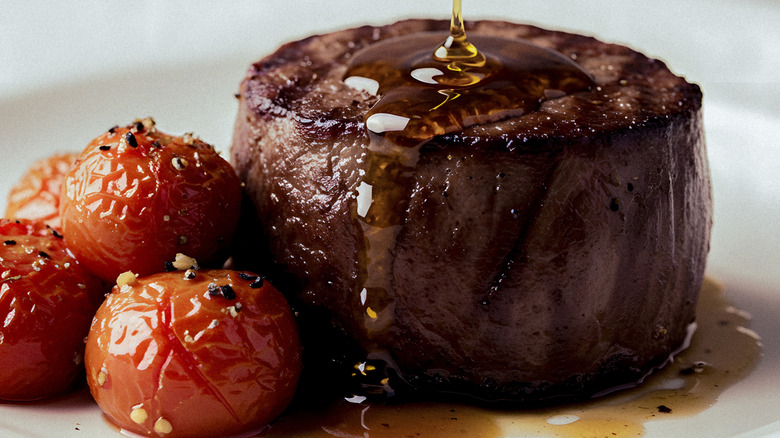
Steakhouses are often pricey due to a variety of factors, such as sourcing the beef, the expertise of the chefs, and more. But that doesn't mean that the most expensive is the best. For instance, filet mignon steaks are a well-known cut that's famous for being costly. But that cut is expensive because of the tenderness, not because it's particularly flavorful on its own. Instead, a lot of what you're paying for at a steakhouse is aspects of the beef, such as its marbling, age, and grade.
Well-marbled meat is a sure sign of quality. Types of beef, like Kobe or Wagyu, are known for being exceptionally tender, primarily due to the fine streaks of fat, known as marbling, throughout the meat. Fat melts as the protein cooks, creating that longed-for melt-in-the-mouth sensation. Then, there's the age of a steak. Dry aging beef removes moisture and concentrates the flavor while helping to tenderize the cut. This process is carefully controlled to ensure quality and food safety, and both those aspects increase the cost. Finally, the grade of the steak determines quality, too. If the beef is USDA Prime, it's the highest grade the American government awards, and it'll be one of the more expensive choices on the menu.
Only focusing on familiar cuts of beef
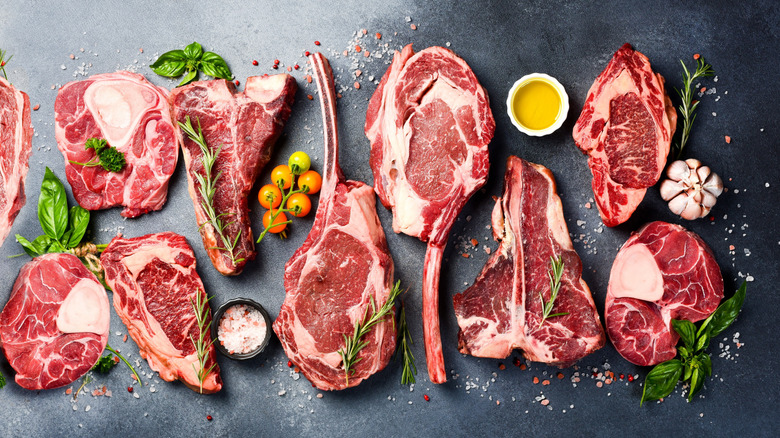
It's easy to fall into a routine when you find something you like on a menu, especially when you're dealing with a pricier meal at a steakhouse. But neglecting to try lesser-known cuts, like a tri-tip, could mean missing something you'll like even more. There are dozens of different cuts of beef, and not all are as instantly recognizable as something like a New York strip or T-bone. Each cut has its own degree of marbling, which affects how tender the beef will be.
If a steak has a lot of cartilage, it's a cheaper cut from one of the cow's larger muscles. Movement makes muscles tougher, which means those cuts have to be marinated and cooked differently to make them tender. But muscles that don't move much, like the tenderloin or short loin, are naturally softer and have more fat.
Cuts like the bone-in filet might not be the first thing you look for on the steakhouse menu, but it's worth checking if it's there. Bone-in filets are like the older sibling of filet mignon. The bone-in cut is still incredibly tender, but leaving the bone attached adds a shocking amount of flavor. A Denver cut steak won't appear on every menu, but if you can find it, it's well worth a try. This cut is special because it's a more tender version of the chuck steak it's taken from. Denver cuts are still well marbled and flavorful, just without extra fat.
Not asking your server questions
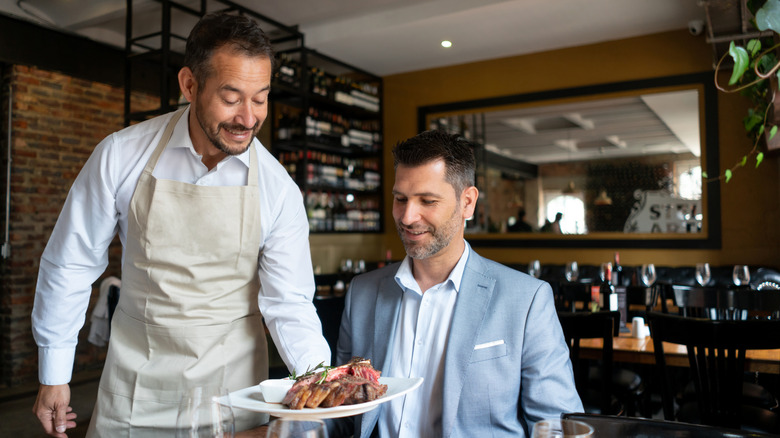
Asking questions can be intimidating, but it's always better to get a clear answer than to guess when it comes to your food. Don't be afraid to ask your server about different cuts of steak, what sides might accompany it best, and, of course, the best temperature for a particular cut of beef. Your server is there to do more than bring out the meal when it's ready. They are trained to know the menu and to answer any questions you might have. Take advantage of their knowledge to get more out of your dining experience.
For instance, your server will know the restaurant's signature dishes, as well as any new additions. So if you tell them the kind of meals you usually enjoy, the server will be able to suggest similar items for you. Servers are also the best line of defense for customers with any food allergies. They should've learned what ingredients each dish has, so they can inform guests who ask about them.
Static Media owns and operates Food Republic and The Daily Meal.