

The 10 Biggest Mistakes You're Making On An Induction Stovetop
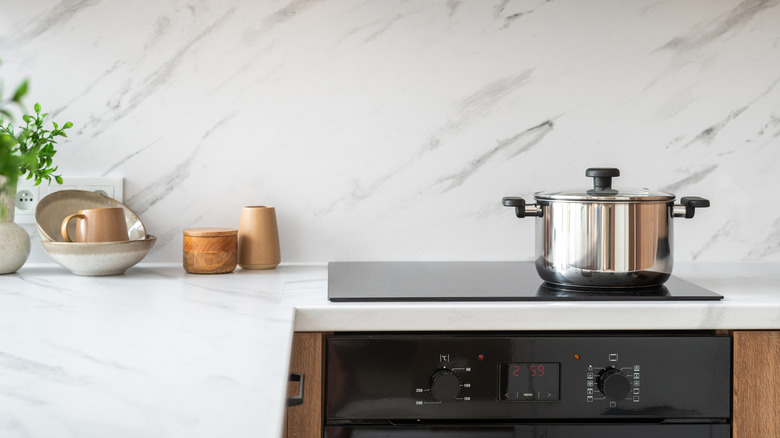
An induction stovetop is a scientific marvel. It's able to cook quickly, evenly, and without heating up your kitchen. The stovetops use copper coils to create electromagnetic energy that quickly heats pans and cooks food without the risk of working with open flames. The current only moves from the stovetop through the cookware, so when the pan is lifted, the current stops, another great safety feature.
Once thought to be unaffordable, induction hobs might take a higher initial investment than other cooktops, but they pay off in the long run with lower energy bills and no gas line. Home renovators and HGTV stars The Property Brothers prefer induction hobs, and even some vintage stove companies are bringing induction into their products. Whether you're new to induction cooking or just want to find ways to use your stovetop more efficiently, avoiding these mistakes can keep your cookware and induction hob in great condition.
Not using compatible cookware
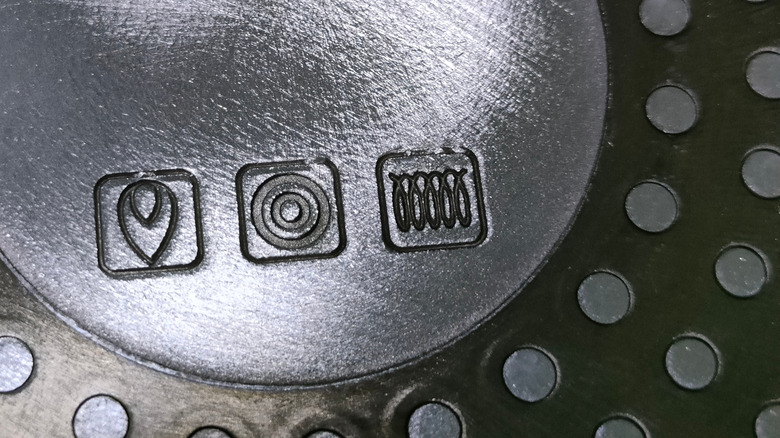
Induction cooktops work through electromagnetic energy, meaning that the cookware you use needs to have enough iron or steel in it that a magnet will stick to its base. If your cookware doesn't pass this test, odds are it won't be able to conduct the current needed to heat the pan and cook your meal. Induction-compatible pans will also have an icon of a spring or coil on the bottom to let you know they'll work on the hob.
Metals like cast iron, carbon steel, and many stainless steels work well on the cooktops. Don't worry if you don't want to replace your copper or aluminum pans, though — induction interference disks will allow you to use cookware not meant for the hobs. The disks sit between the pan and the burner, transmitting heat between them. If you'd rather have a few all-purpose pieces for induction, Ina Garten is a fan of Lodge cast-iron skillets.
Trying to follow usual cook times with it
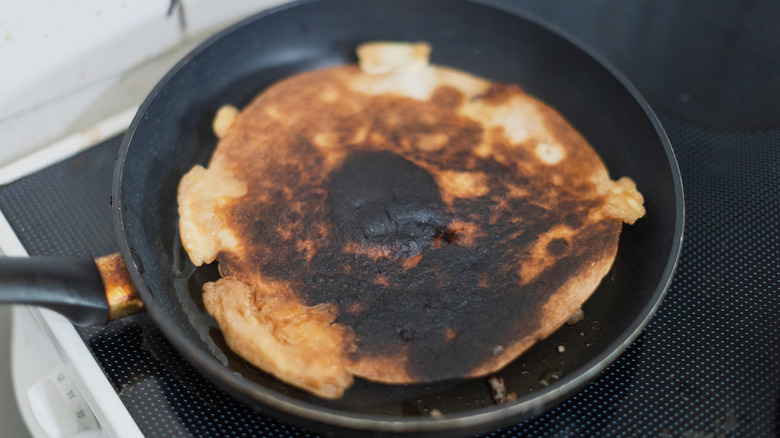
Induction burners are powerful and can greatly reduce the cooking time for most dishes. For instance, water boils twice as fast on an induction hob as it does on a gas stove. The burners heat almost instantly and have precise temperature control, keeping the heat consistent the entire time you cook. If you're not used to the difference between induction and gas or electric stoves, there can be a fine line between a beautiful sear and a burnt steak.
The burners react immediately when you turn the heat up or down, so you can stop boiling water in seconds and have it return to a boil just as quickly. If you want to keep a dish warm while you finish the rest of the meal, turn the induction burner to its lowest setting. The gentle, consistent heat will do the job without burning the food.
Using the wrong size pan
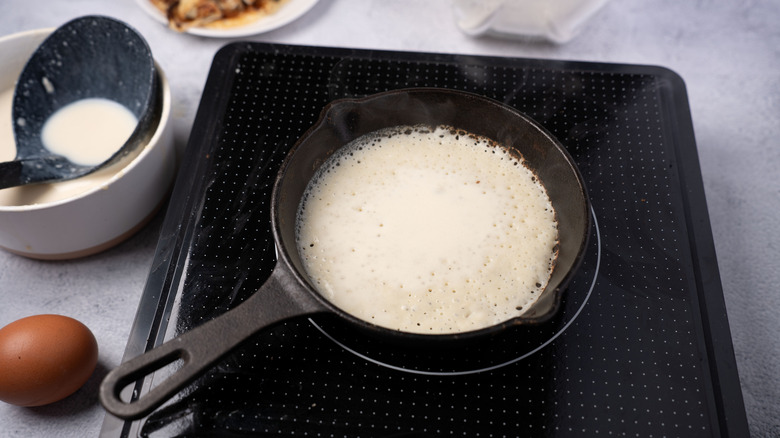
If the base of your cookware and the diameter of the burner don't match, the pan won't heat properly. If the pan is too small, the burner might not sense it and won't turn on. But if the pan is larger than the burner, it will heat unevenly and possibly scratch the cooktop. This is because the burner only heats where it connects with the pan. When the pan is larger than the burner, the extra metal isn't receiving direct heat, meaning there will always be part of the pan that's cooler than the rest. Trying to sear a burger on an inconsistently heated surface is frustrating and takes longer than it should.
These might sound like minor issues, and for a cooking session or two, they could be. However, uneven heating is one of the major reasons pans warp, along with overheating for long periods of time. Using a pan that doesn't fit the burner will eventually hurt either your cookware or the induction stovetop, and neither is a particularly cheap fix.
Not starting low and slow
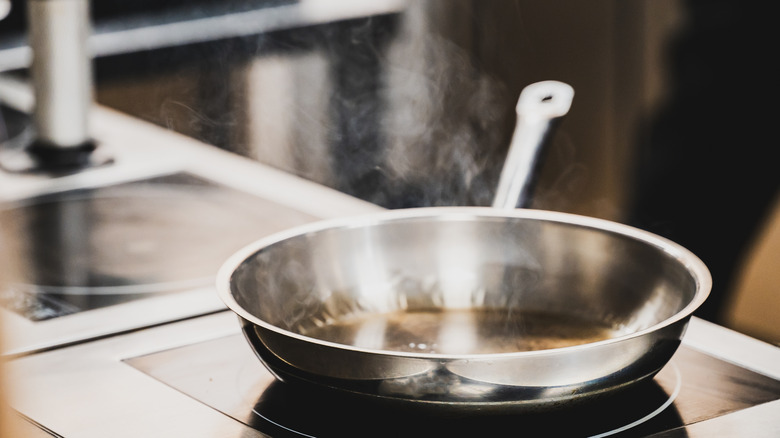
The average induction burner can produce more heat than the average gas burner. Because of that, it's incredibly easy to overheat a pan. To avoid warping your cookware or damaging the stovetop, start your pre-heat low and slow to ensure the pan is evenly heated.
Induction cooktops are immediately responsive to changes in temperature. Dialing the heat up or down too quickly can cause the pan's metal to expand or contract too quickly, leading to it warping or cracking. Overheating the cookware can also deform the metal, especially when the pan is thin or made of poor-quality materials.
Finding cast iron, carbon steel, or induction-specific cookware reduces the risk of this happening. The pots and pans tend to be made of thicker metal that's heat-treated to reduce thermal shock. Heat treating cookware also increases its durability and helps create nonstick layers on cast iron and carbon steel.
Keeping things on the stovetop when it's off
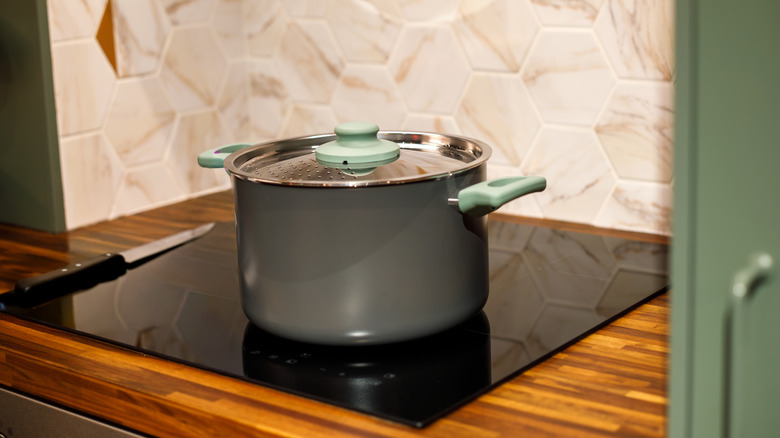
It's common to keep a kettle or skillet on the stovetop even when it's no longer on. That's fine for gas and electric cooktops, but not for induction hobs, which are made of a glass/ceramic mixture that's easily scratched. Storing pans on the induction hob can also cause the coils to think it's time to cook and heat the empty pan. If you don't catch it quickly enough, you can be burned from an unexpectedly hot pot, or even worse, crack the stovetop from excessive heat.
There are several ways to avoid damaging the stovetop if you want to use it for storage between meals. Silicone mats keep the rough surface of pots and pans from scratching the glass and can help stop the hob from accidentally heating pans. Just don't try to use the mats while you cook. That will dampen the heat your skillet needs to make your next grilled cheese.
Using a noisy induction surface
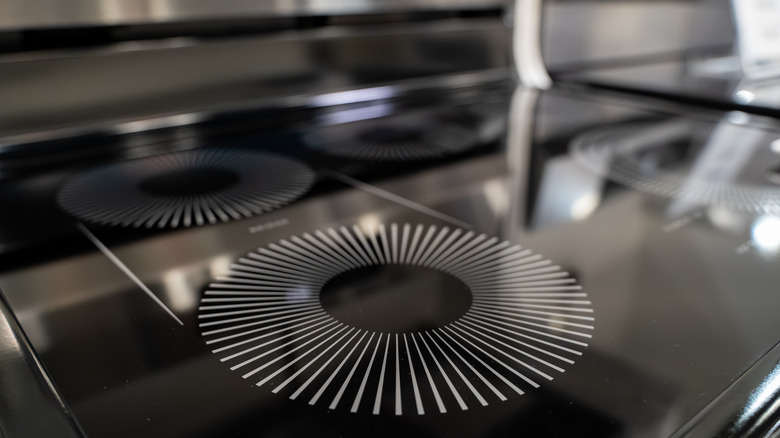
One difference between gas and electric stoves and induction hobs is the amount of noise they make. Gas and electric cooktops are generally silent, but induction burners create a humming sound when they're turned on. While a low-pitched buzzing sound is normal, especially when using thinner cookware on an induction stovetop, loud or unusual noises, such as rattling, can be a sign that something isn't right.
The buzzing comes from the copper coils that create electromagnetic energy in the stovetop. The coils vibrate as power is generated, and those vibrations can shake the cookware. So, a little humming from the burners is common. However, a loud rattling or high-pitched buzz can mean that the coils or burner are damaged and are having trouble creating electromagnetic energy.
If the hob is rattling while you cook on high heat or with a thin pan, changing out the cookware or reducing the power can stop the problem. Checking to ensure the stovetop's internal cooling fan is working properly can also help. However, if the odd noises continue after the heat has been reduced, and the fan is fine, it's best to have the hob looked at.
Trying to cook with uneven pot bottoms
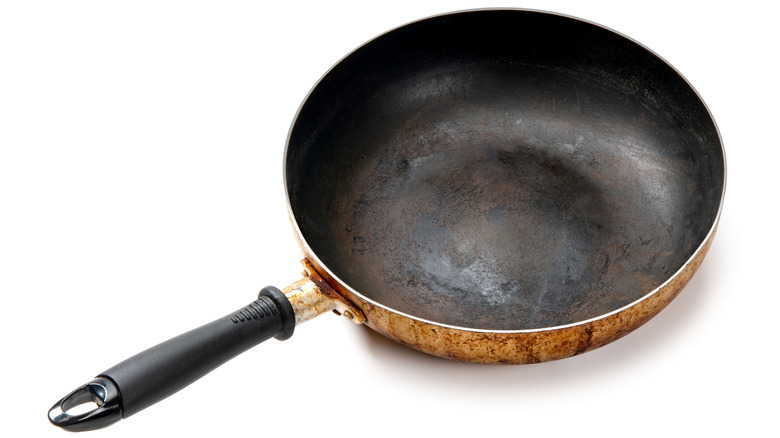
Attempting to cook with uneven or warped pots and pans can damage them even more. This is also true on gas and electric burners, but it's even more pertinent on induction — to conduct the current properly through the pan, the entire bottom has to be in contact with the burner surface. Any gaps between the two will lead to uneven heating, which can warp the pan even further.
Luckily, if you have the right tools and a bit of patience, you might be able to fix your warped pans instead of having to buy replacements. Please note, though, that whether or not you'll be able to work with the metal relies on several factors, including the type of metal and the size of the pot. There are two popular methods for straightening an uneven pan: a hammer and a wood block.
To fix a light warp, gather a hammer and two towels before gently heating the pan to make it more malleable. Take the pan off the heat and place it on a hard surface, with one towel under it and one towel over it. Carefully begin hammering the warm pan to even out the bottom. If the pan is more noticeably warped, the wood block method could help. This follows the same steps as above, but adds a wooden block between the hammer and the metal to absorb the blow. This helps flatten out curved metal because you can swing harder without as much fear of further damaging the pan.
Not cleaning the stovetop properly
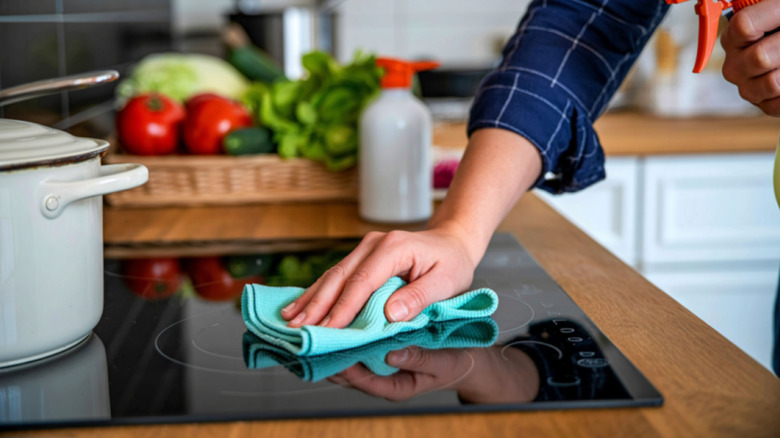
One advantage of using an induction stovetop is how easy it is to clean. Instead of having to lift the cover and carefully work around gas burners, induction hobs can be cleaned with a soft cloth or scraper. However, harsh chemicals and abrasives can damage your induction hob in the blink of an eye. So caution is needed before you give it a good scrub.
It's important to wipe up any spills as quickly as possible to keep them from hardening. If the spill does dry, don't panic — a gentle cleanser and a soft cloth or sponge can remove it without damaging the hob. There are also specialized scrapers that can get rid of tough stains, but you have to be aware that digging in with it will scratch the stovetop.
The best way to clean your hob is to wait until it's cooled after cooking (which, as we know, happens fairly quickly). Use a gentle cleanser and a soft sponge or cloth to remove any food debris and stains. Wipe away the soap with a wet cloth, and finish drying the hob with a paper towel or dry dishcloth. This process will remove any grease and stop the cooktop from streaking. Grease doesn't allow the induction hob or the controls to detect pressure properly, making it essential to clean the hob thoroughly every time it's used.
Trying to use a damaged induction burner
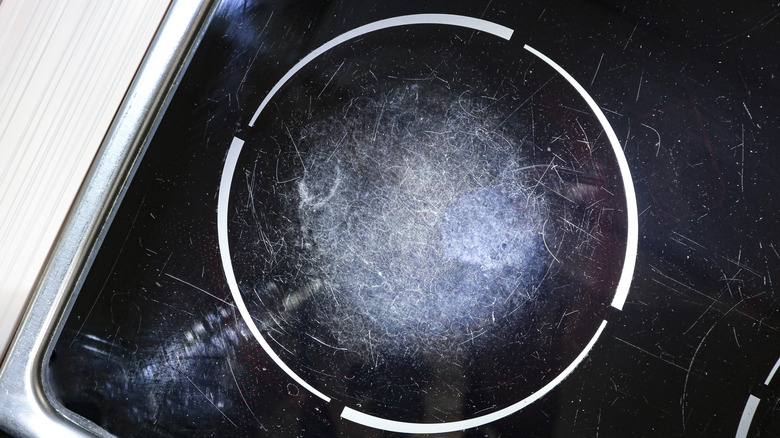
Attempting to cook on an induction stovetop that's cracked and damaged isn't just frustrating; it can also be dangerous. The glass layer of the stovetop protects the delicate copper coils lying just beneath. When the glass is heavily scratched or cracked, the current can't pass through to the pans effectively, if at all. If there is a bit of current going through, it can overheat because of the damage and cause the glass to catastrophically crack. That's dangerous for the cook and anyone else in the area, not to mention very expensive to replace.
Luckily, there's plenty you can do to keep that from happening. Picking up pots and pans instead of sliding them is the easiest one because textured or uneven cookware bottoms can easily scratch the hob. Wiping off the surface before you start to cook will help too. This gets rid of anything rough that could damage the stovetop. Some people also like to use protective silicone mats or hob covers to keep the cooktop safe when not in use.
Overloading the stovetop
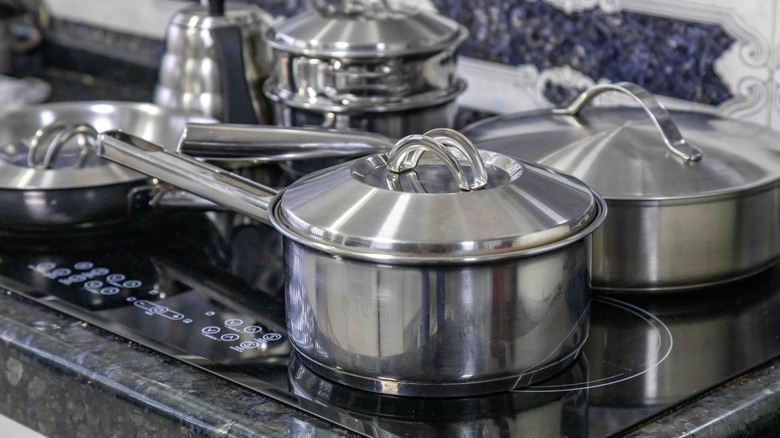
Cooking on an induction stovetop is quick and energy-efficient. However, the cooktops aren't built for making meals involving all the burners several times a week. Doing so can cause long-term issues with the stovetop. For instance, attempting to cook with too many pots and pans on the induction hob can cause the cookware to heat (and cook) unevenly. Overloading the stovetop with weight and heat can also overload the electrical system and trip your kitchen's breaker. It's a major disadvantage of the cooktops, but fortunately, it doesn't happen very often.
Some induction stovetops have safety features that will automatically lower the burner's temperature before the range turns off. This helps to avoid tripping breakers, but naturally it will take longer to finish cooking the meal. If the hob is often overloaded due to high-temperature cooking with multiple pans, it will likely damage the cooktop and cause it to be replaced sooner than necessary. Considering the cost of an induction stovetop, that's definitely something you want to avoid.