

Cookware Recalled? Here's Exactly What You Should Do
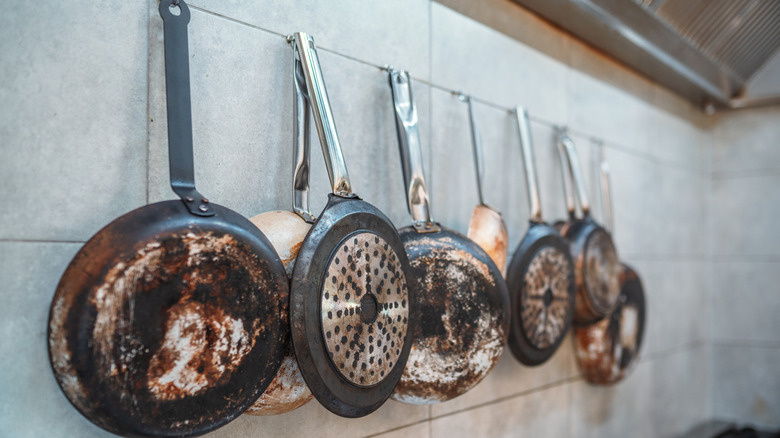
Food recalls are common enough; there have been terrible cereal recalls over the years, hard-to-ignore warnings about ham, and even spuds have been subject to FDA-issued alerts on a massive scale. Whenever the news breaks that there's yet another food recall, we all know the basic drill: Dispose of the food, clean any surfaces it might have touched, possibly get a refund, and monitor for any symptoms of food poisoning, if applicable. But what about when it's not what you cook, but what you cook on that's been recalled? It is a whole different ballgame when it comes to cookware recalls, and the first thing you should do is check to see if any of your pots or pans fall under the warning, carefully examining the list of affected items to see whether it matches anything in your kitchen.
Then, if you find a piece of cookware that has been recalled, it's important that if you can't throw it out right away, you at least remove it from the kitchen, or anywhere that someone — even you, if it's been a long day and you're not thinking — might accidentally use it. Be sure to toss it in the garbage as soon as possible, though. Don't use it to store food (like a stock pot where you might keep bags of rice under your cabinet), and do not, under any circumstances, try to do the charitable thing and donate it.
A leading reason for FDA cookware recalls is lead

While large-scale cookware recalls aren't super common, there is a common reason for them, and that is the presence of lead in the materials that may make up pots and pans and which can, in turn, poison the food you consume. That poison can then wreak havoc on our bodies, especially in children, whose smaller frames may not be able to withstand even a little bit of lead toxicity; even small amounts can lead to stunted growth, and neurological and nervous system issues. In adults, exposure to lead may be revealed through symptoms like loss of appetite, fatigue, pain in the stomach, vomiting, and even numb or tingling extremities. If you find that you have a piece of recalled cookware that has been in use in your kitchen, monitor for these symptoms, and if any arise, be sure to contact your healthcare provider.
Luckily, the FDA regularly tests for this toxin, and in fact, between 2024 and late 2025, it identified at least 19 pieces of cookware made from a variety of materials, like aluminum and brass, which could potentially leach lead into food. These specific products were mostly sold in states like New York, California, New Jersey, Illinois, and Maryland, and were imported from international markets.