

This Boomer Kitchen Habit Confuses Younger Cooks
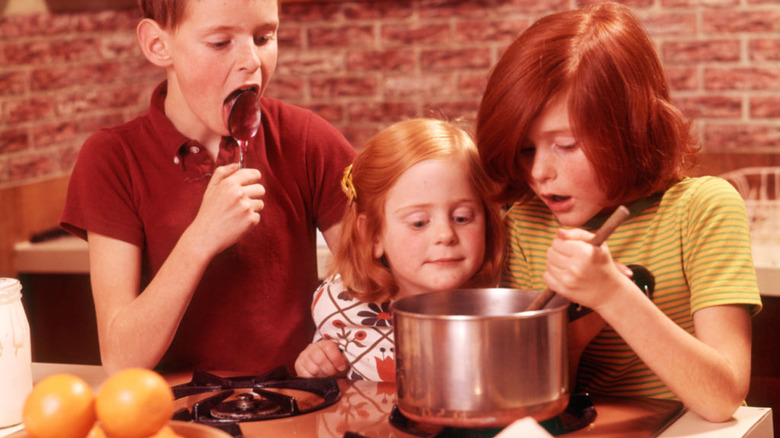
Tension and confusion between the generations? Who'da thunk! Now, before we go denouncing every Boomer kitchen habit we may not understand, let's first establish who we mean: Boomers were born between 1946 and 1964, so they likely grew up experiencing 1950s culinary trends that don't make sense — think encasing everything in either gelatin or mayo. Before you judge what Boomers were eating (and the traits they picked up from their parents), you have to remember that home education regarding food safety wasn't really a thing yet, and people relied on emerging convenience products quite a bit. It's little wonder that one thing Boomers didn't really grow up with (and so didn't do themselves) was seasoning their meals.
Sure, a 1950s food revival might be on the horizon, but we're not going to be eschewing our spices the way Boomers seem to routinely do. But how did they get like this? Probably their parents, the Silent Generation (1925 to 1945 ... ish) and the so-called Greatest Generation (1900s to roughly 1925). Both of these generations lived through the Great Depression and then the two World Wars — which had lingering consequences for food availability. True, WWII in particular brought about many new preservation techniques and other innovations (as well as brands we would learn to love, like M&Ms), but even after rationing ended, it was often difficult to find a wide variety of perishables. Let's maybe not judge them so harshly, given what their parents likely lived through, and how that impacted their culinary habits.
Mid-century Boomer fare balanced necessity with heavy richness
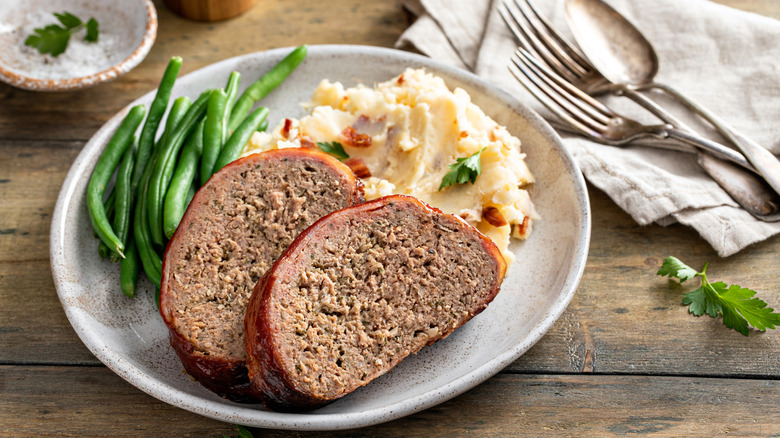
My mom is technically a Boomer (though she would argue she's Generation Jones), and growing up, she would often recount to me how her own mother was born during the Great Depression — how they had to make do with very little, and how innovative they were in the kitchen. I remember what a big event it was when she branched out of our normal routine of roasted chicken and basic meatloaf to make Greek pastitsio — a ground beef dish seasoned with cinnamon and topped with noodles and cheese.
That theme of having to make do with very little explains why younger generations might dislike some retro Boomer faves — but learning to love whatever was on the plate was likely a necessity born from years of genuine shortage. Of course, there were plenty of dishes that went in the other direction: They were incredibly rich, heavy in meat, butter, or cream, in response to the austerity of rationing. Things like gravy-heavy Swedish meatballs, decadently layered beef Wellington, pork chops simmered in cream-of-whatever canned soup, or creamy chicken à la king were staples. It was a heady mix of less-wanted cuts (like offal), processed and convenience goods, and the flush of meat and fat people so craved during harder times.