

5 Of The Most Influential American Food Brands Of The 1980s
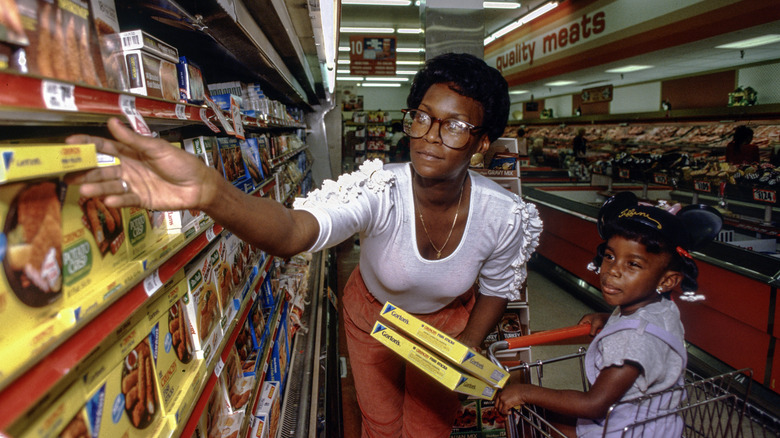
Madonna summed it up well in 1985 when she sang "We are living in a material world," as the 1980s were a big era for status-driven consumerism and extreme brand loyalty. Various iconic brands made their mark during this colorful decade through flashy ad campaigns characterized by celebrity endorsements, catchy slogans, and mascots that became pop culture icons. Many '80s consumers felt defined by the brands they bought, used, wore, and ate. For kids, collecting the coolest McDonald's Happy Meal toys and the best cereal box prizes that made breakfast fun were absolute marks of distinction on the playground. For adults, a pair of Calvin Klein jeans and Nike sneakers was the height of "it factor" fashion.
In the decade's frenzied battle of the brands, buying hip food products was just as important as wearing trendy, designer-marked clothes. Various companies scrabbled for prominence as the most influential food makers of the decade. The average 1980s kitchen had certain things in it, and products from these companies figured big in refrigerators and on pantry shelves. These brands not only defined dining in the 1980s, but many are still huge presences in the food market today.
Coke emerges victorious in the battle of the soda brands
In the 1980s, a fierce battle ensued between longstanding cola purveyors The Coca-Cola Company and PepsiCo, which came to be known as "the Cola Wars." Coke emerged as the clear winner, demonstrating its huge brand power and mighty influence in consumers' lives.
Coke had long held marketplace dominance over its rival, but Pepsi started catching up in the '80s, forging multimillion-dollar endorsement deals with pop superstars Michael Jackson and Madonna and waging its ongoing "the Pepsi Challenge" campaign, urging consumers to choose between Pepsi and Coke based on taste alone.
Coke fought back with its own celebrity endorsements, the creation of a CGI-imitative mascot called Max Headroom, and new product releases, including Diet Coke, Caffeine-Free Coke, and Cherry Coke. The launch of a product that came to be known as New Coke, however, brought a horde of Coke consumers out of hibernation. The company announced it was changing its classic recipe, including sweetening the drink with corn syrup rather than sugar, and the sensation was immediate — but not in the way Coca-Cola had envisioned. Enraged petitions and protest groups emerged, demanding restoration of the century-old original recipe. The outcry was so fierce that Coke relented in just a few months and announced the old formula would be restored as "Coca-Cola Classic."
Far from damaging the brand, this controversy became hugely lucrative, spurring consumers who had become passive Coke fans to start actively buying it once again. The debacle also demonstrated just what a powerhouse brand Coke was — and still is. It has consistently bested Pepsi in yearly sales ever since.
Hershey wins the 1980s candy contest
Another 1980s battle for brand dominance was waged between candy makers Hershey Foods Corporation and Mars, Incorporated. While the two companies traded top spots many times over the years, the 1980s ended with Hershey as the decade's defending champion. After all, how could you possibly defeat the company that produced E.T.'s favorite candy, Reese's Pieces?
Each company experienced huge wins during the '80s. Mars successfully campaigned to have Snickers and M&M's featured as the official snack foods of the '84 Olympics — to the tune of a $5 million payout from Mars to seal the deal — and M&M's became the first candy in space when space shuttle Columbia astronauts requested inclusion of the treats among their food supplies. But these milestones weren't enough to defeat Hershey.
Scoring that key "E.T. the Extra-Terrestrial" product placement ultimately saved the Reese's Pieces product line and made it the most popular candy of 1982. Hershey also pursued an aggressive diversification and acquisition strategy throughout the decade, and its product line grew significantly, including the launch of its own branded chocolate milk. Candy products the company brought under its umbrella during the '80s — either through invention or acquisition — included 5th Avenue, York Peppermint Pattie, Almond Joy, Symphony, Mounds, SKOR, and the Cadbury family of chocolates. By the end of the decade, the likelihood of finding some Hershey product or other in any given kitchen pantry or kids' backpack was high. Hershey's acquisition of Peter Paul/Cadbury was the winning shot that put it far ahead of Mars and made Hershey the biggest candy maker in the United States.
Campbell's dominates the soup aisle
When you were hungry for soup in the 1980s, Campbell's was it. While the Campbell Soup Company sells many products, soup has always been the cash cow. This was certainly true in the '80s, when Campbell's annual sales topped $3 billion and the company's stock was one of the best performers in the market. The brand unquestionably dominated the soup space, and its soups brought in a large percentage of the company's overall profits.
Campbell's soups held a front-and-center position in supermarkets and household larders, with the product line offering something for virtually every demographic. Homemakers kept pantry staples stocked, like Cream of Chicken and Cream of Mushroom soups, commonly used in casseroles and other recipes. There were the soups marketed specifically for kids, like Curly Noodle and Chicken & Stars, and Campbell's line of Chunky soups was targeted specifically at male consumers. No matter your age, gender, income, or geographic location, you probably ate some Campbell's soup during the 1980s. At the end of the decade, Campbell's reached a milestone of having manufactured 20 billion cans of its iconic tomato soup. If that's not brand power, what is?
Kellogg is the king of cold cereal
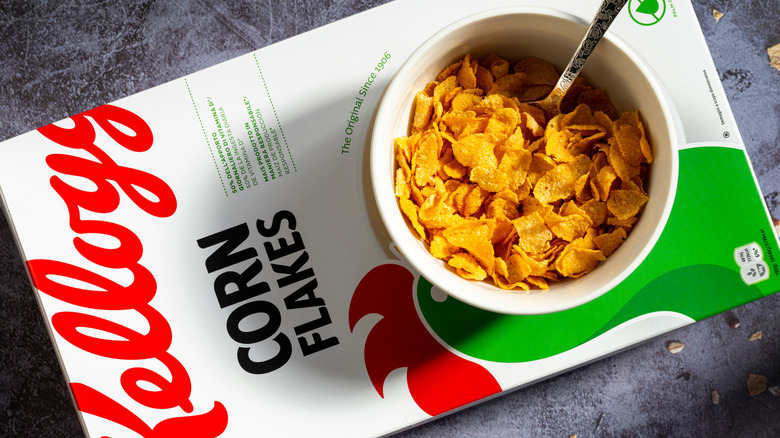
This was a big decade for sugary breakfast cereals, promoted by cartoon mascots and pop culture figures. The "big three" of the cereal market in the 1980s were the Kellogg Company, General Mills, and General Foods, but Kellogg reigned as the decade's dominant brand, holding about 41% of the market share as of 1987.
Kellogg had — and still has — a varied mix of breakfast cereals that appealed to a wide variety of consumers. There were the mainstay products, like the one that started it all, Corn Flakes, which dates back to 1894, and Rice Krispies, which dates back to 1928. There were cereals targeted at health-conscious eaters, like Special K and All-Bran; there were the middle-of-the-road products, still geared toward adults but with enough sugar content to keep things interesting, like Raisin Bran, Frosted Mini-Wheats, and Cracklin' Oat Bran; and there were the unabashedly sugar-loaded, kid-targeted cereals like Frosted Flakes, Froot Loops, and Sugar Smacks (renamed Honey Smacks during the '80s to minimize focus on its sugar content). Regardless of what age you were, your breakfast — snacks, too — likely consisted of a Kellogg's-branded cereal at some point.
Outlier brand Ralston Purina, with only a small fraction of the market share, pumped a host of pop culture-inspired cereals into the marketplace during the '80s in an effort to expand its footprint, ranging from Rainbow Brite to Batman products. Other Kellogg competitors rolled out character- and franchise-branded cereals, too. Kellogg didn't get hugely into the kitsch, merely dipping its toe in with offerings like C-3PO's, showcasing the popular "Star Wars" character. The top dog didn't need pop culture sensationalism to get its products on America's tables — it was already there.
Jell-O bounces back
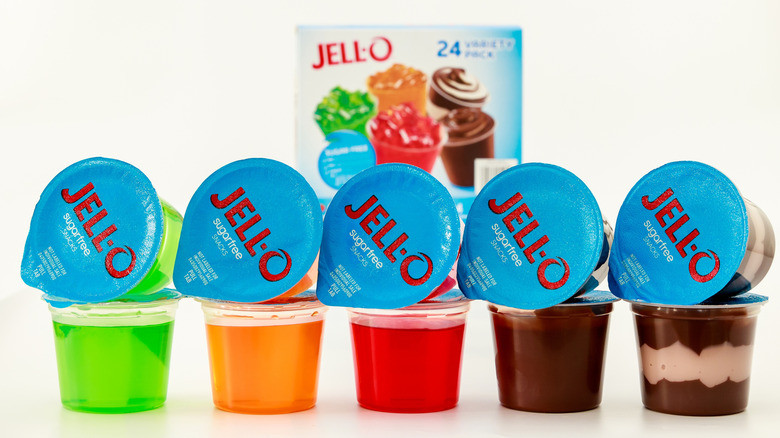
Once dominant as America's favorite dessert, Jell-O was slumping by the 1980s. Common '50s Jell-O dishes like Crown Jewel Dessert and similar Jell-O salads had fallen out of popularity, and the brand's products were no longer seen as convenient or upscale (qualities that had once made them must-buys). To bring Jell-O back to life, General Foods, the company that owned the product line at the time, pivoted from targeting housewives with its advertising and started going after kids instead — the true crown jewels of marketing. Children influence household buying decisions and spend billions of dollars of their own money every year. The move worked, and Jell-O resurged to become one of the most influential brands of the 1980s.
Bill Cosby was America's TV dad in the '80s, and his partnership with Jell-O was instrumental in the brand's revitalization. As Jell-O rolled out products and campaigns to appeal to young consumers, treats like Jell-O Pudding Pops and Jell-O Jigglers became synonymous with the actor. Pudding Pops became a popular frozen treat in the '80s, reportedly bringing in $300 million dollars in annual sales.
The company also inadvertently found other new audiences in the 1980s. Jell-O shots became widespread party staples, with both college students and older adults adding alcohol to the gelatin to create intoxicating versions of the treat. A controversial sporting event known as Jell-O wrestling also gained notoriety in the '80s, with folks engaging in wrestling matches inside huge vats of Jell-O. While the company certainly didn't endorse these practices, it nonetheless helped boost Jell-O's sales.