

San Francisco Vs New England Clam Chowder: The Difference Between These Quintessential Comfort Foods
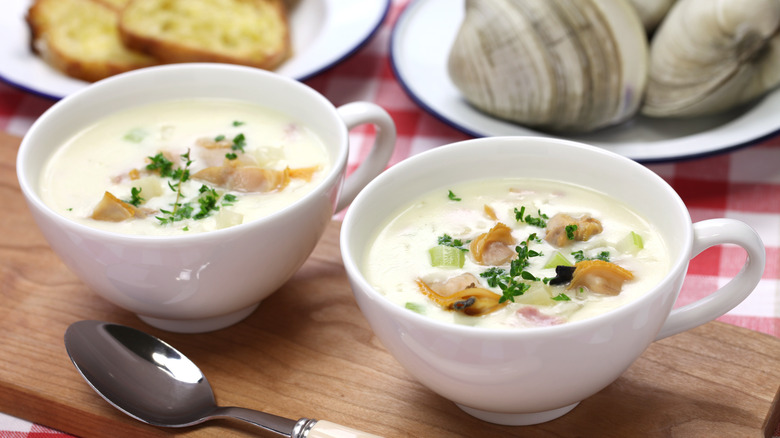
No list of quintessential New England staples would be complete without clam chowder. This thick, comforting soup comes in many regional variations, including the white, milk-based New England style, the tomato-based Manhattan version, and the clear-broth Rhode Island take. Yet far away from the Atlantic coast, San Francisco has carved out its own iconic place in the history of this hearty dish.
Interestingly, San Francisco and New England clam chowder resemble each other in many ways. For starters, both are rich, creamy soups built around fresh clams, potatoes, and savory seasonings that give them a cozy profile and briny depth. At face value, the New England style more closely resembles San Francisco than its closer cities, and while there are many ingredients you can add to clam chowder, it's instead the way that it's served that puts San Francisco in a league of its own. Skipping the bowl, the Bay Area version instead opts for a hollowed-out sourdough bread bowl to soak up all of the soup's creamy goodness.
San Francisco clam chowder brings together two local icons
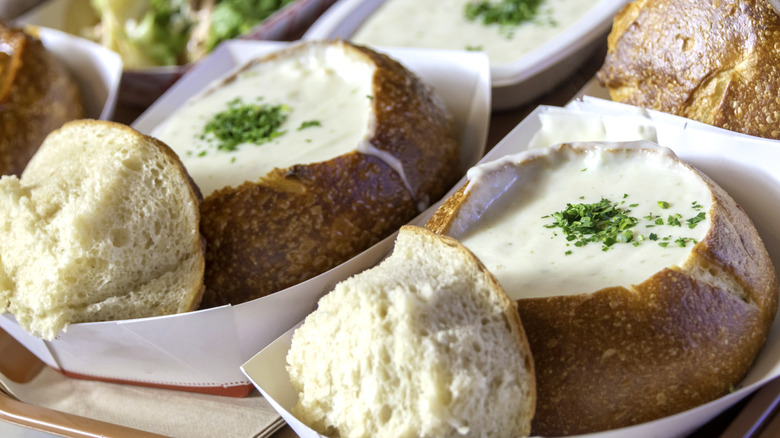
The reason that San Francisco clam chowder and New England clam chowder are so similar is that the dish was brought by New Englanders during the California gold rush. Along with clam chowder, they also brought the ancestor to its future vessel — sourdough starters. Back then, it was just a mixture of naturally fermented flour and water, as store-bought yeast was expensive and hard to obtain. Unknown to them at the time, however, was that a local bacterium (appropriately named Lactobacillus sanfranciscensis) gave the starters the unique, tangy flavor that eventually put San Francisco sourdough on the map.
With both clam chowder and sourdough introduced to the Bay Area, it was only a matter of time before they were paired together, and Boudin Bakery is widely credited for making that happen. Established in 1849, you can still visit this bakery serving the iconic dish in the tourist hotspot, Fisherman's Wharf. While it may not be as old as New England clam chowder, the dish still has a century of history under its belt and is even served at The Old Clam House, one of the oldest restaurants in the city.
Compared to New England, California is often associated with sunshine and beaches, while clam chowder is generally known to be a comforting cold-weather dish. However, San Francisco's constant blanket of fog keeps the city cool and gray, making a warm bowl of clam chowder feel just as fitting there as it does in New England.
New England clam chowder is timeless coastal classic
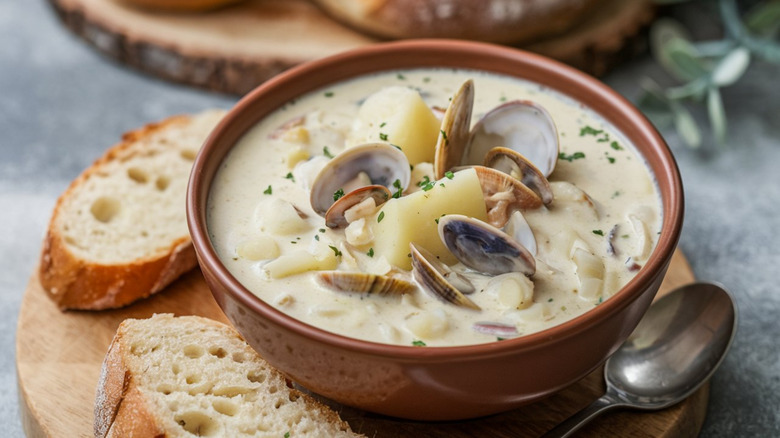
If San Francisco has New England to thank for its clam chowder, New England has got 18th-century European sailors to credit for its beloved dish. Clam chowder is derived from European fish stews, with the word chowder being derived from the French word chaudière, meaning cauldron. It wasn't only the Europeans who were enjoying clam chowder, either, and it's known that the indigenous tribes of the area had been making their chowders for centuries using native ingredients like quahogs and corn, which likely influenced the modern version.
Similarly to how lobster rolls became a quintessential New England fare, clams are historically abundant in the region. The first written recipe for clam chowder can be found in the Boston Evening Post, published in 1751, making it over a century older than San Francisco clam chowder — although this version had not yet discovered the joys of a creamy base. The most recognizable version of New England clam chowder can be traced back to 1836, being served up at Ye Olde Union Oyster House in Boston, one of the oldest restaurants in America that you can still visit today, beloved by JFK himself!
New England clam chowder is for sure one of the classic seafood dishes you've got to try at least once, and while San Francisco and New England differ in serving vessels, it is becoming increasingly common to find clam chowder served in bread bowls in New England. However, unlike in San Francisco, this is by no means the regional standard and is more of a tourist niche.