

5 Easy Ways To Make Coffee When Your Power Goes Out

If disaster has struck and your power suddenly goes out, there's still a way to face the day with your much-needed caffeine fix — that is, if you're willing to go back to basics and use manual methods. Don't worry if your kettle stops working, either — you can boil water in a pan using a gas stove lit with a match, or even by using a portable camping stove or your barbecue grill.
If none of these options apply to you, don't worry — you can boil a small amount of water by placing a pan of water on a wire rack above several tea lights. If you've only got whole coffee beans, you can grind them using a battery-powered grinder, pestle or mortar, or even smash them using a heavy rolling pin or pan. Coarse grounds should look chunky and flaky, whereas fine grounds require a little more elbow grease and should look like a powder.
There's no doubt about it — automatic machines are efficient, time-saving, and convenient, but they've also caused the art of manual coffee brewing to waver in popularity. Before the advent of the lever-piston espresso machine in 1947, however, most coffee was prepared through simpler, manual means.
People have been drinking coffee for centuries, starting with the most basic methods like cowboy coffee (a favorite of its namesake), which involves boiling grounds directly in water. From there, brewing evolved into more refined manual techniques such as pour-over, French press, phin, moka pot, and even cold brew. These methods highlight the aroma, flavors, and character of the coffee bean, often producing cups that rival — and in some cases surpass — what you'd get from an espresso machine.
Use a Moka pot to make espresso in-style
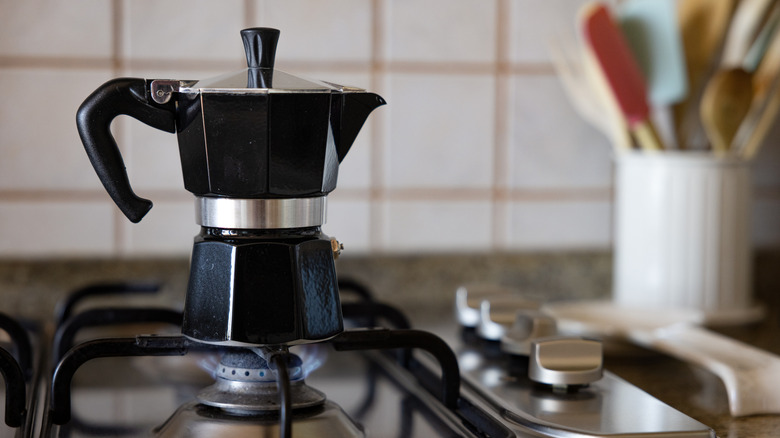
Naturally accompanying Italy's love of straightforward coffee is the reliable and affordable moka pot. It's effortlessly chic and capable of producing a quick, strong, espresso-like cup from the comfort of home. The moka pot works best on gas hobs, and most modern versions are compatible with induction hobs. However, if the power is out, this method only works if you have a gas-powered stove on hand, as induction hobs require electricity to function.
You'll find moka pots in a wide spectrum of colors, shapes, and sizes, but the common denominator is that they're always composed of the same core components. The bottom chamber holds the water, the filter funnel holds the ground coffee, and the collector chamber is what fills with the freshly brewed coffee. When placed over heat, the water in the bottom chamber heats up and creates pressure, pushing the water up the filter funnel, through the coffee grounds, and finally into the upper chamber.
In terms of brewing mechanisms, the moka pot operates similarly to an espresso machine by pushing pressurized water through grounds. However, the water pressure of a moka pot is much lower, so it requires a medium-fine grind for the water to pass through smoothly. For this reason, you should never tamp the coffee, as this can cause blockages.
Use a French press for a rich, full-bodied coffee
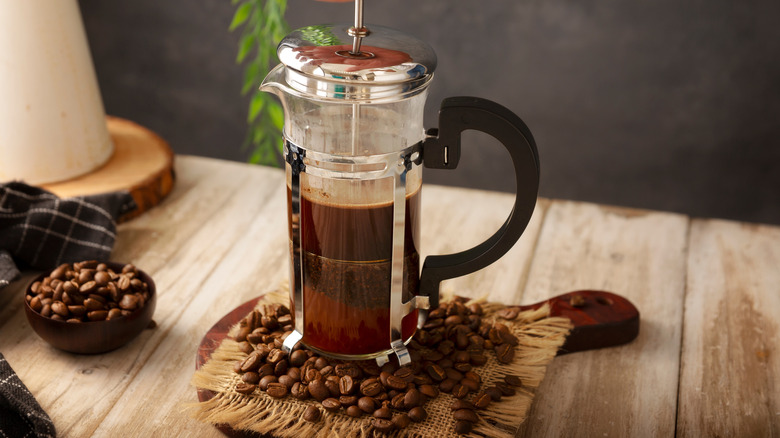
The French press — or the cafetière, if you want to sound fancy — is one of the most recognizable at-home coffee makers. Developed centuries ago in France (with popular legend attributing its invention to a happy mistake), the French press remains one of the simplest ways to brew a delicious cup of coffee at home. When the power is out, all you've got to do is boil your water on a match-lit gas stove or using the tea light method, and combine it with your pre-ground or smashed coffee beans.
The French press is composed of three core elements: a cylindrical glass, a lid, and a plunger with a fine mesh strainer. To brew coffee, combine your coffee grounds with boiling water in the glass. Let it rest for around five minutes for extraction, stir, and then plunge down using the strainer. The strainer separates the gritty grounds from the coffee, and unlike other immersion methods that use paper, the fine-mesh sieve allows the aromatic oils to steep into the final brew, allowing a fuller body and more complex aromas to blossom.
While there's much debate as to the best grind size to use for a French press, the overall consensus is that it doesn't really matter compared to other methods. As it uses a strainer to separate the grounds from the brew, many recommend using coarser grounds to prevent any strays from passing through the filter. However, a small amount of sediment is typically expected from a French press, with claims that it actually contributes to the overall mouthfeel of the coffee.
For Vietnamese-style coffee, use the phin
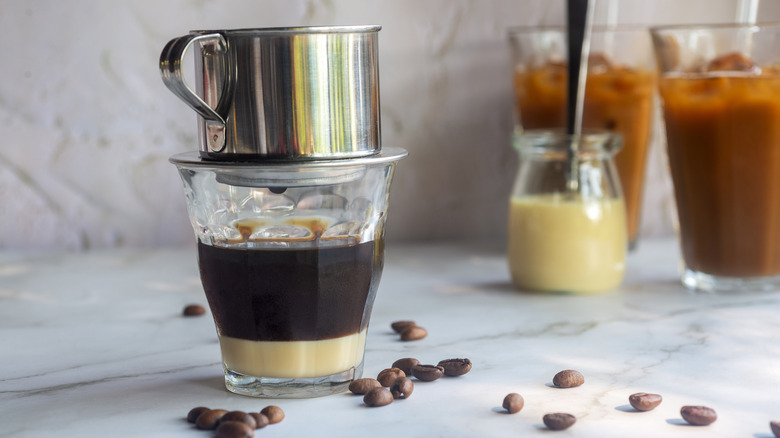
The phin is a simple way to brew coffee when the lights are off: Just heat water on a stove or over a candle and pour it directly over your ground coffee to brew. The phin — a small metal drip filter — was born from a unique blend of local flair paired with Vietnam's French colonial past. Its initial design is said to have been influenced by the French biggin, an 18th-century drip coffee pot that was a predecessor to the French press. Over time, the Vietnamese adapted the drip method to create the slow, concentrated brew that is a must-have if you're looking to whip up a cup of cà phê.
The phin is composed of a brewing chamber, a press insert, and a lid. To make a brew, ground coffee is placed in the brewing chamber and lightly pressed down with the insert. A small amount of hot water is gently poured over the grounds to allow them to set and bloom. After 30 seconds, the remaining water is added, and the lid is placed on top to seal in the heat. The phin is then placed on top of a cup or mug, allowing the coffee to slowly drip through small holes at the base of the chamber and fill the cup. This entire brewing process should take only a few minutes.
If you want to go the extra mile and make a traditional Vietnamese coffee, skip the regular milk and instead use sweetened condensed milk. In summer, this pairing is a dream served over crushed ice. For an even more unique twist, have a go at making a creamy cà phê trứng, or Vietnamese egg coffee, which involves pairing the coffee with egg yolks whisked with condensed milk.
You can't go wrong with pour-over coffee
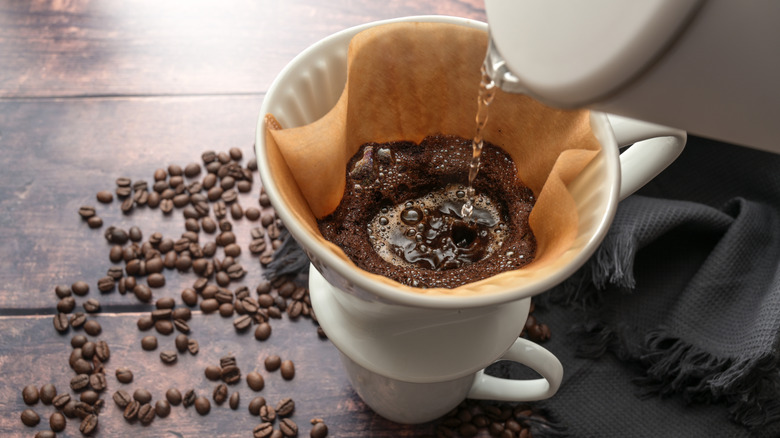
The pour-over method is perhaps the most famous non-electric brewing method and requires only a gas stove or candle to heat the water in the event of a power outage. You've undoubtedly seen the method used at your local artisan coffee shop, and even Starbucks once offered manual pour-over coffee in its early days. While it's best to avoid ordering this drink when a café is busy, this technique is excellent for showcasing the overall character of your coffee beans.
On paper, the pour-over is pretty straightforward. First, fill a paper filter with your coffee grounds, then pour hot water slowly over them in a smooth, circular motion, adjusting the flow to control extraction and achieve your desired strength and flavor. While the method is simple, it does require attention and precision, with a slow, steady stream from a gooseneck kettle being ideal. As for water temperature, aim for around 200 degrees Fahrenheit — you can use a heat thermometer if using a manual heating method. Any lower and your coffee may be underextracted and taste weak, while higher temperatures risk overextraction and bitterness.
Compared with other methods, it's the paper filter that gives the pour-over a unique edge. The paper absorbs and removes oils and sediment, resulting in a comparatively lighter body and cleaner taste than total-immersion methods like the French press. This makes it the go-to method for showcasing the more subtle flavor notes of individual coffee beans — think dark chocolate, bright citrus, or aromatic florals — which is why it's so beloved by coffee enthusiasts.
If you've got time on your hands, make cold brew
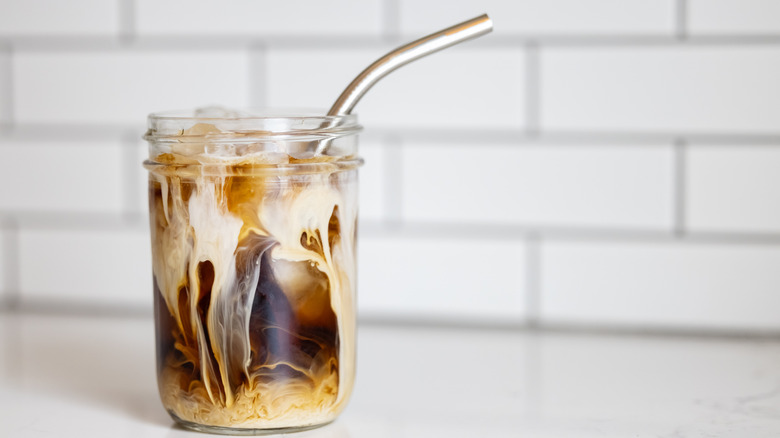
If you've got a little extra time on your hands, you've gotta try the cold brew method. This style stands out from both automatic and manual brewing methods, as it uses time rather than heat to extract the coffee, making it a great option when your kettle is out of commission.
To make a cold brew, simply mix coffee and water. For a strong concentrate, use a 1:4 coffee-to-water ratio, but if you want it ready to drink, you can use a 1:14 ratio instead. Skipping the fridge, steep at room temperature for 12 to 24 hours. Afterward, strain the mixture using a mesh filter or cheesecloth. The final result will be a syrupy coffee concentrate. One of the most important aspects of this method is using coarse coffee grounds, as finer grounds extract very quickly, which can cause overextraction and a bitter finish. Because this method forgoes heat, fewer acidic compounds are extracted from the grounds, resulting in a smoother, less bitter taste that allows the sweeter flavors of the coffee to shine. On top of that, once your power comes back on, you can store it in your refrigerator for up to two weeks!
Because the coffee concentrate is very potent, the best way to enjoy your cold brew is to dilute it. You can do this with water, milk, or even more exciting add-ins like lemonade or lime juice for a refreshing summer drink. If you're feeling creative, try diluting it with equal parts milk and water for a smoother, creamier, naturally sweet finish.