

The Nearly Forgotten Pharmacy That Once Doubled As A Lunch Cafeteria
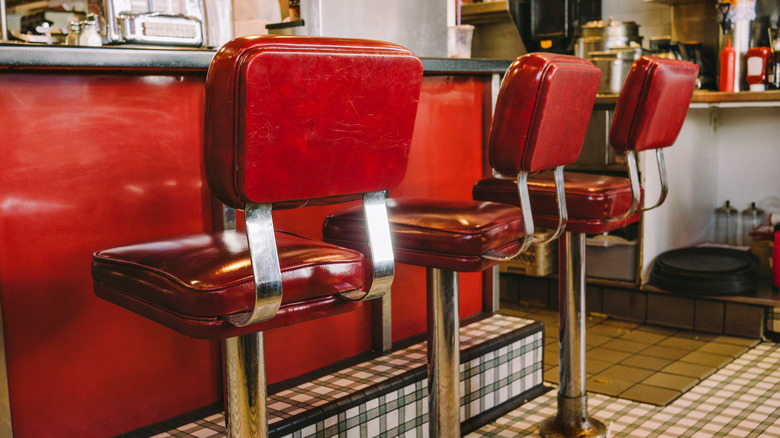
Some restaurant concepts, like fast food windows, have been around for millennia and have seemingly grown more popular with time. Others, like the drive-in, were wildly common in the 1950s but have since tapered off (aside from the major chain we all know and love, Sonic, which has made this retro dining option its whole schtick). The drugstore lunch counter is part of the latter group, and while most of them disappeared throughout the 1970s and '80s, one Rite Aid in North Carolina held onto its lunch counter until 2018.
March 31, 2018, was a sad day for the citizens of North Asheville, who gathered at the tiny diner to say their last goodbyes to what had become an icon in both the city and across the country, as it was one of the last of its kind still operating. The cafe, which actually bucked the trends by opening in 1972, was originally known as the Eckerd Drug Store Coffee Shop until Eckerd was bought out by Rite Aid in 2007. It seated 22 along the outer rim of the counter, which separated the stools from the tiny cooking area, featuring a griddle for cooking pancakes and eggs, a deep fryer, and a small prep line for assembling cold sandwiches.
Sadly, even if the Rite Aid Coffee Shop had not closed its doors in 2018, it likely would have by 2025. That was when the ailing company — which had already seen many stores acquired by Walgreens — filed for bankruptcy and closed its remaining locations.
A brief history of lunch counters in America
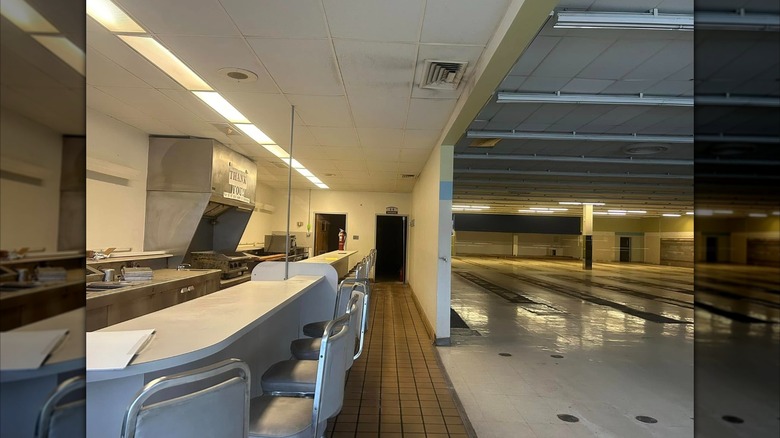
Lunch counters reached their peak popularity in the 1950s, when there were nearly 30,000 located in drugstores and variety stores across the country. These were the descendants of late 19th-century five-and-dime counters, such as Woolworth's, which were added to give patrons the opportunity to enjoy a light meal along with their shopping. Food offerings ranged from cold sandwiches to tasty grilled hot dogs and hamburgers, as well as more elaborate home-cooked "blue-plate specials" like meatloaf or Salisbury steak. To drink, patrons would order a phosphate soda or a malted milk, and for dessert, most locations offered handmade pies or ice cream sundaes.
As idyllic as it all seems today, the good times began to come to an end with the rise of fast food in the 1960s. As American appetites for lunch counters waned, drugstores and pharmacies found it increasingly difficult to justify the cost and space needed to maintain these in-store eateries. Even in the 2010s, difficulty replacing appliance parts was one of the major reasons the Rite Aid Coffee Shop closed. Today, aside from a few notable preserved exceptions, these iconic cafeterias have largely faded into history.