

7 Unique Winter Vegetables You Should Cook Before The Season Ends
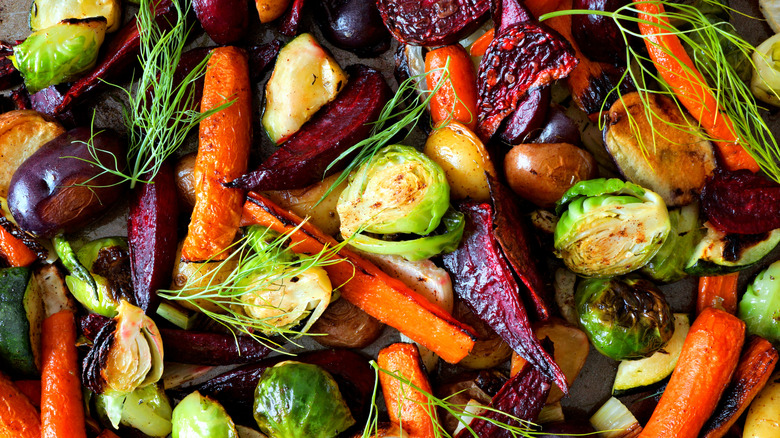
If summer is all about exteriors — picnics, beaches, taking in the sun — then winter is about the interior: taking cozy shelter from historic snowfall, hot chocolate bubbling on the stove, and perhaps some consistent and foreboding cold symptoms that (hopefully) never quite bloom into something more. The same is true of winter vegetables. Often more modest in appearance than their bright, summery counterparts, winter vegetables nonetheless offer a world of flavors underneath their unsightly skins, which are difficult to access any other time of year.
Roots, squashes, and the occasional green abound in this list, unique in their taste and texture and thus distinguishing themselves from the usual winter vegetable suspects. We are in the midst of their peak, seasonality-wise, and so there's no better time to venture into the arctic culinary wilderness than now. Blend these into soups, finely slice into salads and wintry slaws, or roast until crispy. Whatever way you cook them, these unique winter vegetables are worth your time before their season is over.
Kohlrabi
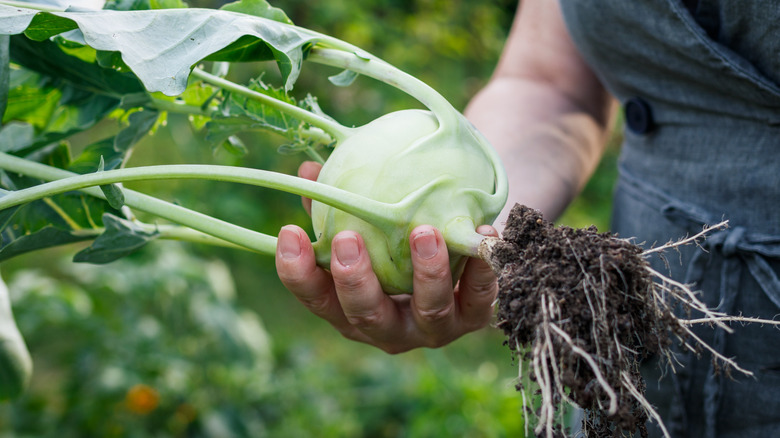
The name 'kohlrabi' may be composed of sounds you've never quite spoken together before, but kohlrabi the vegetable is a comfortingly familiar root that will make a home in your fridge like it has always been there. A knobby cruciferous vegetable with leafy tresses growing from its crown, kohlrabi typically peaks in early winter, though you'll be able to find it throughout the colder months (particularly if you're in a warmer climate).
Kohlrabi is also known as a cabbage turnip, which can give you a good idea of how it makes its way through the kitchen. They have the slightly spicy earthiness of a radish, the sweet crunch of cabbage, making the bulb perfect for a slaw or a soup.
It may be quite a production to prepare this vegetable; you'll put your peeler through the ringer over kohlrabi's erratic bumps on its skin, making a paring knife the more efficient (yet still tedious) option. If you've got the time, fermenting it as kimchi is a great several days-long process which rewards you for the work you put into it. You can also save those greens to create a unique pesto.
Sunchoke
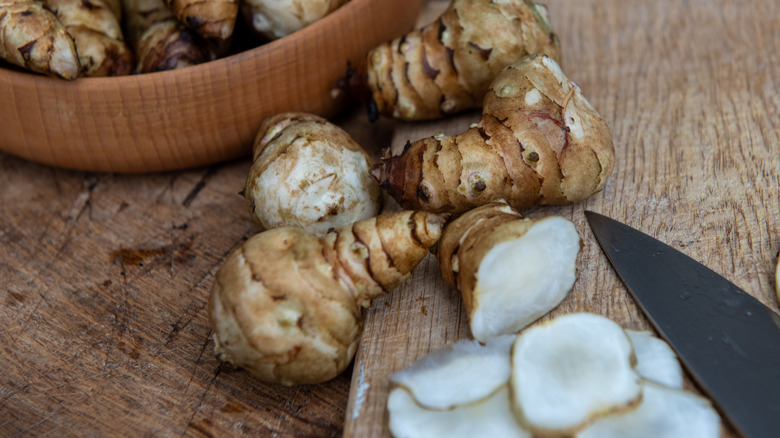
Also known as a Jerusalem artichoke, sunchokes are ginger's doppelgänger without all the abrasive raw flavor. Like other root vegetables on this list, a sunchoke comes out of the ground with a surface that's quite knotty and rough, but beneath its skin is a starchy but light orb of richness. As it grows well in colder climates, sunchokes are a perfect winter vegetable with the heartiness to back it up. With a subtle, artichoke-kissed taste, a sunchoke would thrive in a dish with strong, bright flavors.
Their flesh is similar to a potato — that is, solidly starchy and a little bit sweet — but sunchokes can also be eaten raw in a salad, unlike some other roots. The vegetable's versatility of flavor naturally breeds a versatility of preparation. You can boil these and puree them for an unexpected take on mashed potatoes, fry them in oil, or serve them in a gratin, for a start. Or, for the pasta fanatics, you can even turn sunchokes into gnocchi.
Celeriac
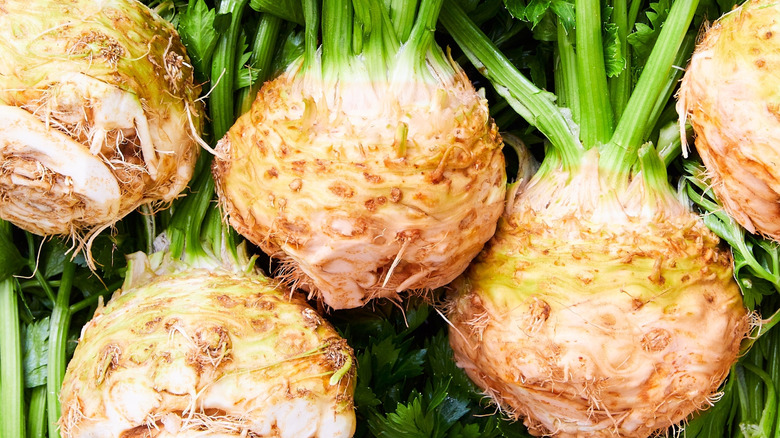
Bespeckled with crater-like spots and rising from the ground with an ethereal glow, celeriacs are like little moons you can cook. Its alternative name — celery root — is also a good definition for it: Celeriac is the bulb from which green celery stalks grow.
Like many of the foods on this list, and winter vegetables at large, celeriac is a robust, underrated root that is both popular in Europe and won't win any beauty contests; it is also the root vegetable Gordon Ramsay himself swears by, using it to make deep-fried vegetable chips, among other dishes. It stands up great in stews and savory pies, its raw flavor mellowing out as it cooks. As delightfully toothsome as celeriac can be in larger chunks, it is also silky smooth when puréed, both as a subtle side dish and in a soft-as-clouds soup.
Rutabaga
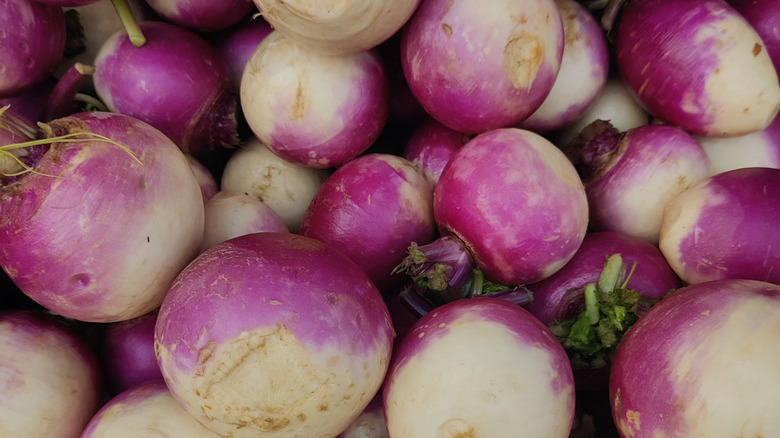
With a pinkish ombré painting its rough skin, rutabagas are like sunsets pulled right from the dirt, and the only thing better than a sunset is a sunset that tastes delicious in a cauldron of warming soup. They are known as swedes in Europe, where they have thrived in the colder areas of the continent. It is quite delicate both in flavor and in temperament; if rutabagas are overcooked, they will fall apart and become bitter.
At the same time, rutabagas benefit from a variety of cooking methods. You can peel and chop them before boiling, straining, and pan-frying to get them barky in color. For the easiest way to cut a rutabaga, chuck it in the microwave and use a paring knife to remove its waxy coat. Feel free to mash a vegetable medley with other cruciferous or root vegetables on this list, like celeriac and squash.
Kalettes
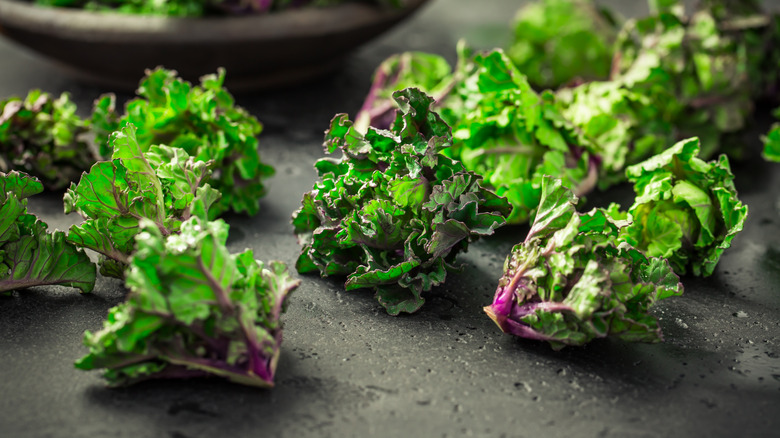
Kalettes have a name that gets straight to business: A mini, cabbage-like hybrid of kale and Brussels sprouts, kalettes are a relatively recent addition to the vegetable stand, but they will grab you as quickly as you grab them from the store. They were bred by a British seed house and gained popularity around 10 years ago, well-earned for their verdant crunch and sweet nuttiness. Kalettes, alternatively called kale sprouts, are also sky-high in vitamins, bringing a healthy reward on top of excellent flavor.
If you need any more reasons why you should get to cooking with kale sprouts, know that the winter months are when they are in their prime season. A simple way to prepare them is to blanch them in boiling water quickly before shocking them in ice water; after this, you can dress them as is or crisp them up in a pan as you would Brussels sprouts.
Kabocha squash
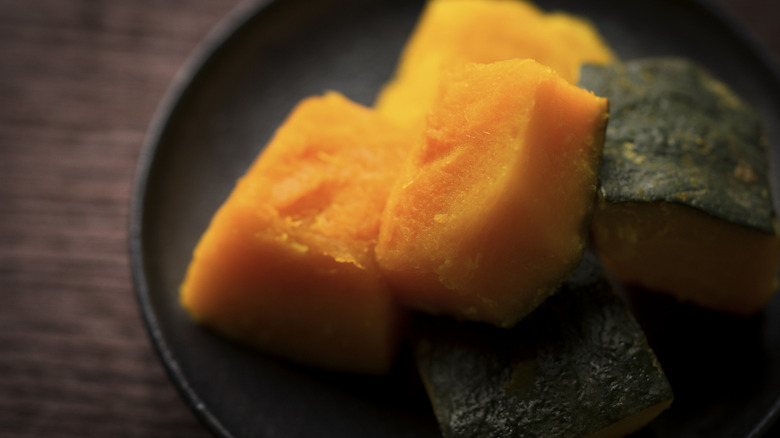
An emerald green trunk hiding brilliant orange treasure within, kabocha squash, also known as a Japanese pumpkin, is one of the more striking vegetables on this list. It is also packing some of the most interesting and nuanced flavor, with some preferring a kabocha custard in their pumpkin pie rather than regular pumpkins. Kabocha squashes have a denser, sweeter, and more pumpkin-forward taste than you may be used to. Pick ones that have some flecks of gold on the outside; a more mottled exterior means a riper interior.
As we are all knee-deep in soup season, let kabocha be your shepherd into those sweet, frosty depths. Like many other hardy winter squash, its extremely sweet and decadent when blended. For a presentation that makes you feel like you're in a cottage in the wilderness in some forgotten time — something we all crave, to be sure — you can even serve the soup in the hollowed-out squash itself.
Fennel
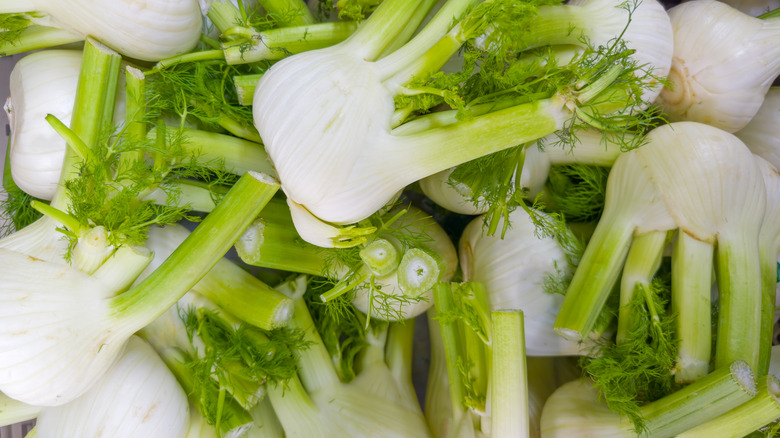
Fennel may be a mainstay in your spice cabinet — its seeds can and will change your jarred tomato sauce forever and upgrade your homemade sausage while you're at it, but fennel stalks are a different beast entirely. An onion-looking globe forms the base of long green stalks, and it tastes as if licorice was a vegetable. Its earthy, anise-adjacent flavor pairs perfectly with cold weather. The entire vegetable can be used, so you'll have no waste at all: Dice the stalks into the mirepoix for a soup, slice the bulb thinly into raw salads, or chop the fronds up for a garnish.
Fennel can be finicky in regards to storing; just looking at the confusing vegetable breeds lunacy. The best way to store fennel for ultimate freshness is to separate the fronds, as they will spoil quicker. After that, wrap the vegetable in a towel, place it in your fridge, and you'll have perky fennel you may mistake for a green licorice stick.