

Don't Throw Away That Old Wine, Use It To Make The Best Slow Cooker Braised Beef
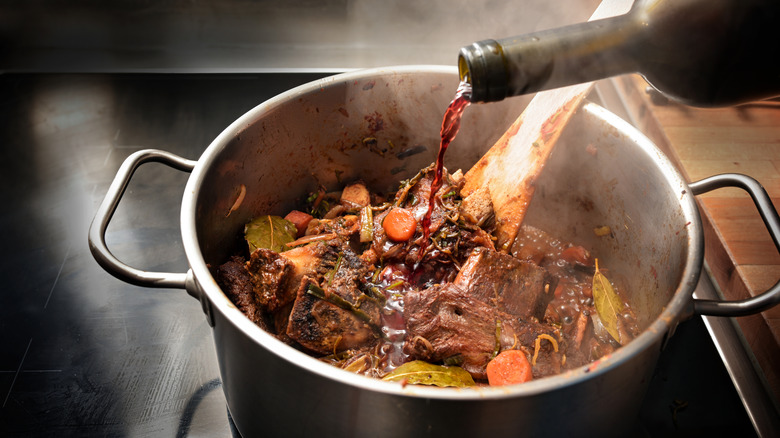
When your wine is no longer at its peak due to age and not contaminants, that does not necessarily mean it's time to throw it out. Lauren Phelps, a recipe developer and food blogger, says the same things that make it worse for drinking may have made it even better for slow cooker braised beef.
"The oxygen exposure to the wine helps tannins relax, which is ideal for long, slow braises," Phelps told Food Republic. "Especially in a slow cooker, which uses low heat and doesn't always cook off the alcohol quickly." The best types of wine to use in dishes like beef bourguignon have fewer tannins to avoid overwhelming the meat's natural flavors, so varieties that may be a poor choice when fresh can actually be great once they've sat opened. You still want something full-bodied and flavorful, like cabernet sauvignon or a Douro red, for maximum taste, but Phelps says the flavor of even lighter vintages tends to concentrate during the braising process.
Phelps cautions against using any wine that smells "sour, vinegary, or musty," which she says is best discarded. "For cooking, 'old' wine typically means a bottle of wine that was opened between [five to seven] days ago," she clarifies. Braising will only amplify those same off-putting odors, and great marbling and tons of seasonings won't be enough to cover them up. Wine is a complex ingredient that only grows more flavorful the longer it cooks, so be mindful of how much you add and adjust your seasonings for best results.
How to make braised beef with older wine
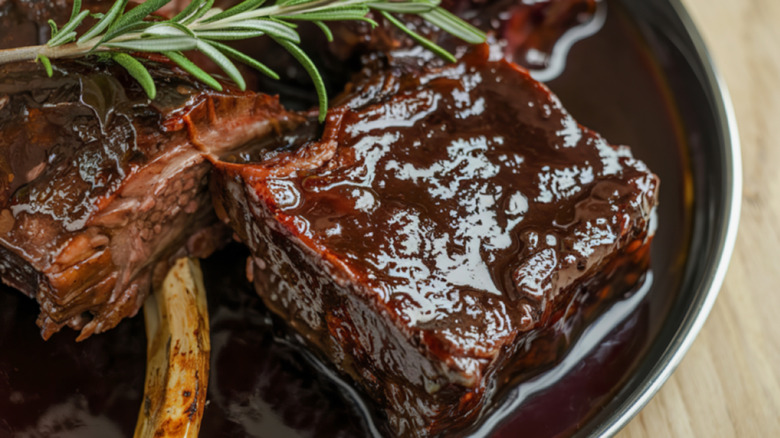
Comfort food classics like braised beef have strong but balanced flavors. Wine is a secret ingredient to achieving the "strong" part, but knowing how to use it lets you keep things balanced.
"When cooking with older wine, you will have to taste test your way to balanced results," Lauren Phelps told Food Republic. She says gradual seasoning is the way to go, letting you account for changes in flavor as the wine concentrates and mixes with the other ingredients. While fresh wines add plenty of acidity to hearty dishes, older ones tend to be a bit flatter and sweeter. Phelps suggests leaning on other sources of acidity, like lemon juice, balsamic vinegar, or tomato paste, to cut through the heaviness of marbled beef and create a complex, delicious sauce.
Heat also plays a direct role in how sweet a wine tastes. Even if your wine's sugars don't caramelize in the low and slow heat of a slow cooker, serving wine warm diminishes the presence of acidity and tannins. To counter this, Phelps recommends adding most of your dish's salt at the end of the cook. It's hard to predict exactly how sweet your older wine will end up tasting, so waiting until the end and seasoning gradually throughout the cook time helps prevent you from over- or under-salting your dish.