

Think Twice About Buying Meat From Walmart. Here's Why

When Food Republic ranked the top 12 grocery store chain meat departments, Walmart fell into spot 10 for a lot of reasons. From price gouging to questionable hot dogs, it didn't impress, so while there's nothing wrong with shopping for meat at Walmart, you may need to spend a little more time sifting through the packages to find something high quality.
The biggest problem with Walmart meat quality is inconsistency. While a supergiant grocery chain is bound to have some bad apples in the mix, online reviews of its steaks are flooded with images of signs the meat has gone bad, from browning muscle fibers to bloated packaging. Though this is by no means the norm, some customers also question the quality of meat that may appear good on the surface. Some complained about bones in their boneless chicken breasts and others lamented that their pick-up orders contained pork chops set to expire the next day.
You also may need to think twice about buying sandwich meat from Walmart. In 2000, its meat cutters unionized, causing the chain to remove its fresh deli meat slicing services. Not only can you not request your preferred thickness but this also preemptively exposes each slice to air and bacteria, shortening its shelf life. Whether you're looking to buy whole chickens or just some sliced ham, it's important that you take the time to evaluate any purchase's freshness before leaving the store.
Here's what to look for before adding meat to your cart
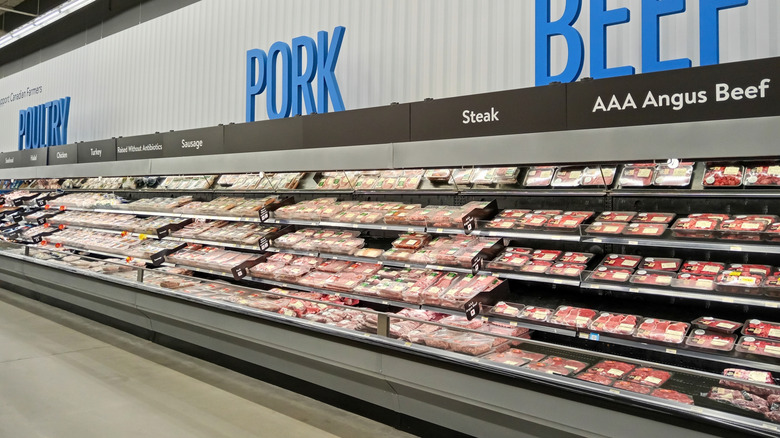
Evaluating the quality of meat from Walmart is fairly easy and just requires you to know the telltale signs of meat that's gone, or about to go, bad. For deli meat, all you have to do is look at its color, when possible, and find something with a recent packaging date. For whole cuts, steaks, and other ingredients, you may need to do a more thorough examination.
Red meat should always be exactly that — red. From roasts to stew meat, steer clear of any cut that has signs of oxidation, like browning. Pork should be pale pink and never white or gray unless it's been cured, as the sodium nitrates tend to give things like ham or bacon a darker red color. Well-butchered beef and pork also shouldn't have any tassels of meat or fat on the sides, so only pick cuts with clean edges and the level of marbling you want.
Chicken, particularly breast meat, has a problem most other kinds of meat don't experience: woodiness. Woody chicken is safe to eat, but tough and snappy thanks to scar tissue formed during a broiler chicken's rapid growth cycle. If your chicken breast looks paler than others and has odd lumps or white striations running through the meat, pick another package. Tender chicken should be a pale pink similar to pork and any fat present will be slightly yellow rather than pure white.