

10 Delicious Substitutes For Coffee Creamer

If the kitchen coffee pot is one of your first stops in the morning, know that you are far from alone. The National Coffee Association's annual report on coffee data trends showed 66% of Americans drink at least one mug of the stuff every day. That might be where the commonality ends, though, because it seems like everyone takes their coffee in a particular way. Some want two lumps of sugar while others take two heaping spoonfuls. Some people drink iced coffee year-round, and others don't understand why you'd dilute coffee with ice at all.
Whatever your personal preference, flavor is the ultimate goal when it comes to a good cup of joe. For decades, coffee creamers have offered people a way to add flavor and mellowness to a mug. Fats from cream and dairy products combine with the bitterness of the brew to both temper the sharpness of the taste and allow the liquid to stay hot longer. But not everyone wants the added fat and calories from traditional creamers, not to mention those among us who are lactose intolerant. And even if you're just looking to change up your routine, these unconventional alternatives for coffee creamer pack in flavor to keep your coffee tasty no matter when you reach for your next cup.
Simple syrups melt in hot and cold coffees

Peppermint, gingerbread, and pumpkin spice syrups let everyone know the holidays have arrived at their local coffee shops. Some people anticipate their favorites all year, never thinking they could be making them at home. Used in hot and cold coffees, cocktails, cake decorating, and more, simple syrups follow a 1-to-1 formula, meaning that however much sugar you use should be combined with exactly that much water. To make it, boil one cup of water with one cup of sugar for around 5 minutes, until all the granulated sugar is dissolved, and remove from the heat.
But just because simple syrups are easy to make doesn't mean the flavors can't be complex. Using the same 1-to-1 ratio, raw sugar creates a sweet solution with depth and richness. Infusing any simple syrup with fruits, spices, and herbs allows you to customize the sugar mixtures to your personal coffee tastes. After you've pulled the liquid off the heat to cool, put whatever ingredients you'd like to infuse into the hot syrup. Depending on what you're using and the strength of the flavor you want, you may leave the syrup to steep anywhere from five minutes to overnight. Vanilla extract and ginger slices should be strained after the liquid is cooled cinnamon sticks can steep from four to twelve hours, depending on your preference. Store the syrups in an airtight container in the fridge for up to a month or for a year in the freezer.
Jams add unexpected sweetness to dark roasts
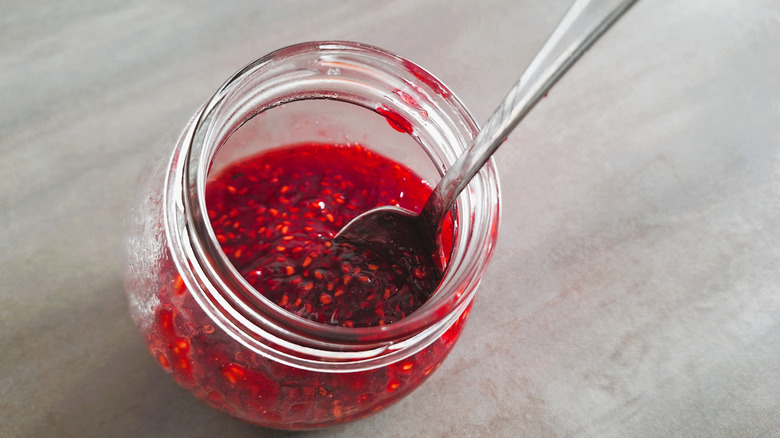
Using jam is one of my favorite ways to create a drink that feels special and uses up the last bits of jelly in a jar. Whether you're making a cup of coffee or a refreshing lemonade, all it takes to add a bit of richness is a tablespoon or so of jam, a bit of water, and some heat. Before you know it, you can have your very own cherry or blackberry latte without waiting in line.
People incorporate jam into coffee in a few ways. Some like to pour their java into the jam jar and shake, while others (me included) prefer to make a simple fruit syrup from the last jammy bits in the jar. The first method is quick and easy, but takes a good bit of shaking to melt the jam and distribute it through the coffee.
Using jam to make a simple fruit syrup fixes this problem, and it only takes about a tablespoon of jam, a teaspoon or two of water, and a heat source. The microwave is fine. Just mix the jam, water, and a little lemon juice if you'd like, into a heatproof microwavable container and warm the mixture in 10-second increments, stirring after each session. Working with such a small amount means the sugar can burn quickly. When the jam is melted and uniformly mixed with the water, you have the easiest gourmet fruit syrup out there. Add a bit of spice to the jam before heating if you want. The possibilities are endless and delicious.
Plant-based milks create creaminess without lactose
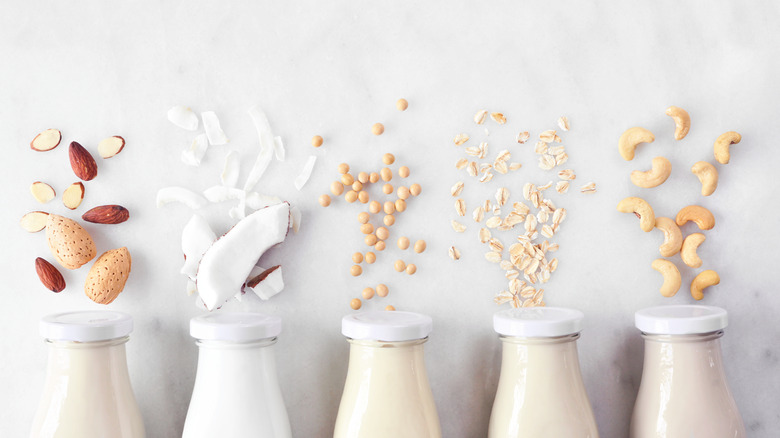
Not everyone wants to use traditional creamers in their coffee. Some folks simply can't digest it, while some prefer not to consume animal products. Still others want healthier, daily alternatives to fat-heavy cream. Whatever reason you may have for trying non-dairy milks, a plant-based one can add some lusciousness to your coffee.
These days, almond milk is only one of dozens of plant-based milks to choose from. Macadamia nut, pistachio, cashew, and coconut are all sold as alternatives to dairy. Each plant milk has its own texture and flavor, so it may take some trial and error to determine which ones you like best. Oat milk works as a neutral base for coffee drinks and provides a subtle toasty taste. Rice milk is neutral, allowing you to couple it with other flavors. Almond, pistachio, and other nut milks tend to have distinct flavors, with selections like hazelnut adding dimension to coffee alongside creamy richness.
A pinch of spice boosts flavor and adds warmth

Scandinavian countries drink the most coffee on Earth, so it makes sense that they'd know a thing or two about brewing it. One of the ways the Nordic countries keep warm and caffeinated is to mix spices like cloves, cinnamon, ginger, and cardamom into coffee grounds before brewing. This mixture highlights the natural flavors of the coffee while adding depth and coziness to every cup. It's a ritual that echoes other parts of the world, such as Turkey, where spiced coffee has been the norm for generations.
If you're not sure about spicing the entire pot of coffee, there are several ways to incorporate a little more warmth into your cup each day. You can sprinkle a mix of spices across the top of the coffee to add just a touch of flavor as you experiment to see which blends work best with your coffee. After you find a mix you like, stir a little more into the hot liquid and taste until you find your happy place. Spices blend well with floral ingredients, too. So, to make your coffee game a bit more flowery, mix dried rose petals into your spiced coffee grounds before brewing, or add rose syrup to your cup.
Baking extracts are a quick and easy way to add flavor

If you're a fan of coffee shop drinks but not long lines — adding a drop of baking extracts, such as almond, peppermint, orange, or vanilla – gives home-brewed coffee a professional flavor upgrade in no time. You can also combine the extracts for even more customizable tastes. Almond and vanilla are great bases to build from, for example.
Using extracts gives you control of your sugar intake, too. Unlike flavored syrups, extracts have no added sweetness, meaning you get to add as much or as little sugar (or alternative sweetener) as you'd like. The only drawback is that it's easy to pour in too much of these concentrated liquids as you get used to them. So, be sure to start with a drop per cup and work up from there. To make the process even easier, add one to two teaspoons of extract to the brewed coffee pot along with a little sweetener.
Salt makes black coffee less bitter
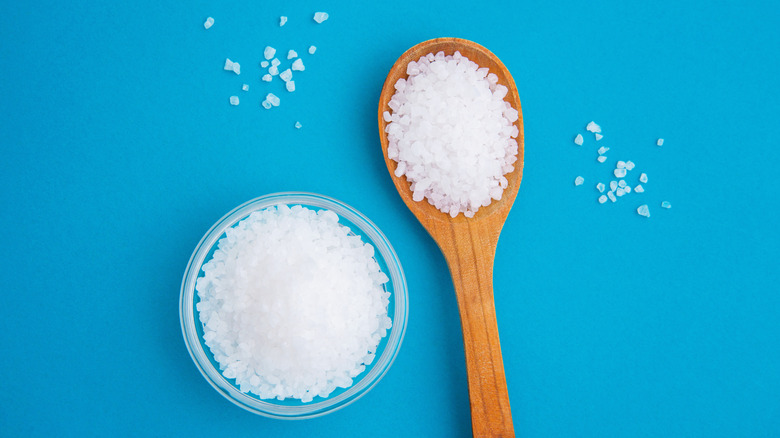
Die-hard black coffee fans don't have to worry about being left out of the flavor-boosting abilities of creamer alternatives. Instead, every coffee fan can benefit from this bit of knowledge: Just a pinch of salt will round out the bitterness of black coffee, allowing the brew's natural flavors to be highlighted without any dilution.
While adding salt to coffee might sound odd, it's fairly common throughout the coffee-drinking world. Vietnamese and Turkish coffees often use salt to complement the spices used in brewing or to offset the sweetness of other common ingredients, such as condensed milk (more on that later). Even if you'd still like to add a creamer alternative, a pinch of salt in the brew can play up the other flavors involved by making sweet things taste sweeter and savory elements more savory. That said, no one wants to end up with a salty cup of java. To avoid that, start by sprinkling just a bit of salt into your mug before tasting and determining if you need more.
Chocolate lets you make your own mocha at home

Adding chocolate to coffee is like adding peanut butter to bread. Some combinations simply cannot be denied. From syrups to shavings, chocolate can be incorporated into coffee in a variety of ways. To use it as a substitute for creamer or just a little something different, try a little chopped chocolate in your next espresso or Americano. Chocolate whipped topping is an indulgent-tasting treat that melts into hot or cold coffee. You can also add hot cocoa mix to your mug before pouring the coffee in to create a quick, no-fuss mocha.
You can even add a block of chocolate to hot coffee for a luxurious hot drink. Break the chocolate into pieces and pour a small amount of coffee over it. Let it sit for a minute to soften before stirring. Add more coffee and keep stirring. Taste to check if there's enough flavor, and if it's not quite there yet, add small pieces of chocolate and wait around 30 seconds before stirring and checking again. For a rich, chocolatey cold drink, combine Nutella with coffee and ice and blend until creamy.
Fats from oil and butter make coffee creamy, too
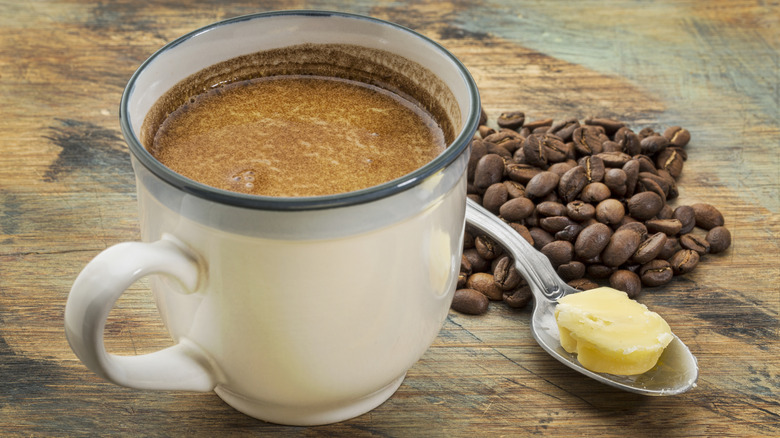
Some of you might remember the butter coffee trend. The social media phenomenon had everyone putting pats of butter into their coffee in an effort to follow a more Keto-like lifestyle. The trend died down pretty quickly, but that's not because the idea was flawed. Fats from butter — particularly clarified butters like ghee — or olive oil are blended into coffee, creating a smooth, luscious drink that some think stops jitteriness, thanks to the fat slowing caffeine absorption and potentially making you feel fuller for longer. Olive oil and butter also have fat-soluble vitamins, which increase the appeal of adding them to coffee for some folks.
The two work well in coffee because that same fattiness mimics how cream interacts with the brew. When fat melts and is stirred into coffee at high speeds, it forms an emulsion that makes the coffee taste richer and less bitter. The fat insulates the hot liquid, keeping the drink warmer for longer. It also coats the tongue, giving a fatty coffee more flavor, while making it less drying than black coffee. But that's only if the coffee is made correctly. Part of the reason the butter coffee trend died out so quickly was that people were putting butter directly into their coffee to melt. That doesn't emulsify the fats, leaving the liquid greasy and separated from the butter. To distribute the butter or oil, either blend or froth the coffee until the fat is stirred through. After that, you'll have a rich, smooth cup of coffee.
Honey and maple syrup are natural ways to add sweetness

Honey and maple syrup are easy to add to both hot and cold drinks and can be used as they are or made into simple syrups. Honey and maple syrup also have the benefit of being made from more complex sugars than granulated sugar, meaning they add depth and dimension to your drinks without becoming cloyingly sweet. Honey has the added advantage of including antioxidants, vitamins, and minerals that granulated sugar doesn't. And honey isn't just a good sweetener; it's a versatile one, allowing you to layer flavors. Try adding cinnamon, ginger, and honey to hot coffee for a tasty wake-up drink. If you're adding honey to iced coffee, shake the drink until the honey dissolves.
Another way to use honey in coffee involves whipping it. Like the viral Dalgona coffee before it, whipped honey lattes use instant coffee crystals and hot water shaken or whisked into a light foam with the addition of honey that has been whisked until smooth and creamy. When the mixture is shaken and frothy, it's poured over iced milk, creating a delicious contrast in textures and taste.
Maple syrup has a similar deep caramel taste to honey and offers many of the same benefits. It has antioxidants and minerals and, according to some research, doesn't spike blood sugar levels the way refined sugar does. There are also several varieties to choose from, ranging from delicate golden to very dark and strong. Experiment to see which one you prefer with your chosen coffee roast strength.
Evaporated and condensed milks create thicker, sweeter, and creamier coffees
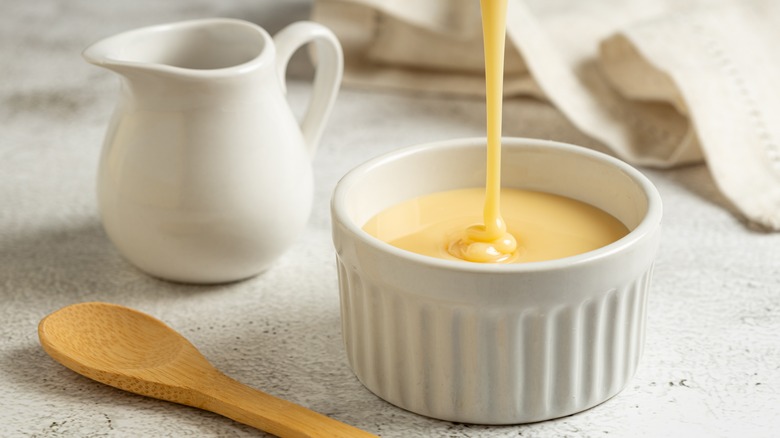
Incorporating evaporated and condensed milks into coffees takes them from tasty to incredible in one fell swoop. For instance, Vietnamese iced coffee is a thick, creamy drink that has a deep caramel flavor with bitter afternotes thanks to condensed milk and strong coffee. It's not difficult to make at home, either. Brew your regular coffee extra strong and add two tablespoons of condensed milk to the hot liquid before stirring until combined. From there, you can enjoy it hot or pour it over ice and stir or shake. (Both ways are delicious.)
Condensed milk is an apt name for the thick, sticky concoction famously sold in short cans at every supermarket. Whole milk is boiled down until part of the water has evaporated, leaving milk solids behind. More sugars are then added and cooked until dissolved. The extra sugar combined with less water makes the remaining liquid thicker and sweeter than it started, resulting in the dense, silky, and lightly caramelized ingredient.
Evaporated milk, on the other hand, doesn't have the same texture or color. Instead, evaporated milk is made by stopping the cooking process after about 60% of the water has been cooked out. The liquid remains fairly thin and can easily be swapped out for cream or whole milk while cooking. For coffee lovers looking for an option with a similar flavor to cream, evaporated milk is a great option. It offers a slightly more unctuous mouthfeel than whole milk, tricking the tongue into believing it's richer than it is, without being as thick or sweet as condensed milk.