

The Difference Between Balsamic Vinegar And Balsamic Glaze (And When To Use Each One)
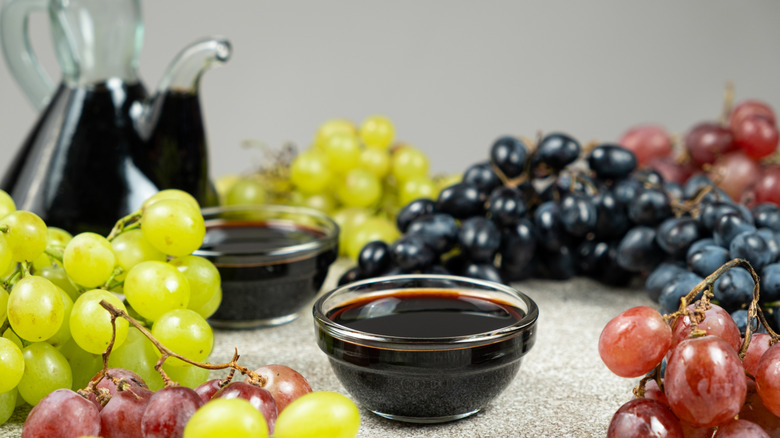
Balsamic vinegar is one of life's simple pleasures. Originating from the Emilia-Romagna region of northern Italy, it's a staple of culinary excellence, and has many unexpected uses in the kitchen. For example, paired with olive oil, it makes the ultimate bread–dipping appetizer, and it's also ideal for emulsifying salad dressings or even upgrading homemade chili with some tang. Balsamic glaze is equally delicious, but instead excels as a finishing touch for salads or meats.
While they share the same initial production process, what makes them distinct is the additional step of reduction that transforms balsamic glaze entirely. By concentrating sugars and altering texture, the reduction produces a product with a distinct culinary role, making balsamic vinegar and balsamic glaze fundamentally different condiments rather than interchangeable ones.
Both balsamic vinegar and balsamic glaze share the same core ingredient: cooked grape must, which includes the stems, skins, juice, and seeds of crushed grapes that then undergo fermentation and aging. They also share a deep, almost black color and a characteristic balance of sweetness and acidity. But beyond these initial similarities, the two diverge significantly in both function and flavor intensity. Balsamic vinegar is prized for its sharp acidity and fluid texture. In contrast, balsamic glaze is thicker, and its sweetness is much more concentrated, making it well-suited to sit on top of a dish rather than blend into it. For this reason, it works best as a garnish or drizzle, where its syrupy consistency and bold sweetness enhance both flavor and visual appeal.
What is balsamic vinegar?
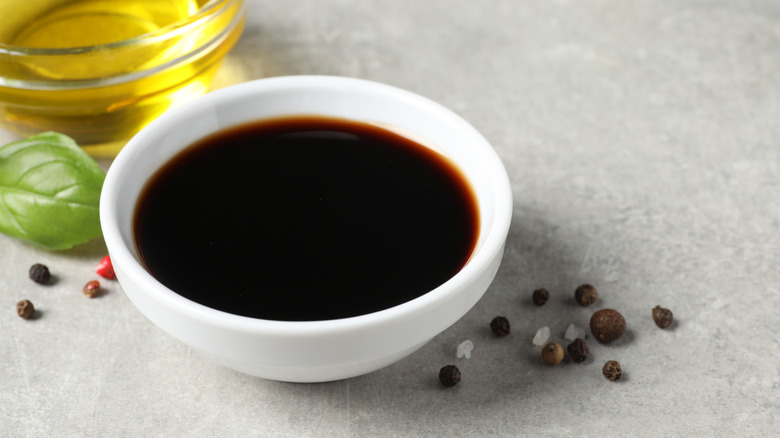
Balsamic vinegar is a dark, concentrated vinegar; however, instead of being made by fermenting wine, it's produced from grape must. As it ages, it develops its characteristic blend of sweetness and acidity, making it a staple in both everyday kitchens and high-end cuisine.
There are several different types of balsamic vinegar available in grocery stores, and unlike many overpriced products, a higher price tag here is often indicative of better quality. At the top end is traditional balsamic vinegar (DOP), which stands for Denominazione di Origine Protetta — an E.U. certification that guarantees a product is made in a specific region using strictly regulated traditional methods. To earn this designation, traditional balsamic vinegar must be produced in the Emilia-Romagna region, using solely cooked grape must that is aged for at least 12 years in wooden barrels. Some exceptional examples can cost upwards of hundreds of dollars. More commonly found is balsamic vinegar of Modena (IGP), which is made from a blend of grape must and wine vinegar and aged for a much shorter period. While it is nowhere near as rich or complex as traditional balsamic, it's still a high-quality product that's great for everyday use.
The type to avoid is industrial balsamic vinegar, which is typically made with minimal grape content and relies on additives such as caramel coloring, thickeners, and sweeteners to imitate the look and flavor of higher-quality balsamic. While cheaper, these versions lack the depth and traditional methods that the pricier versions offer.
What is balsamic glaze?
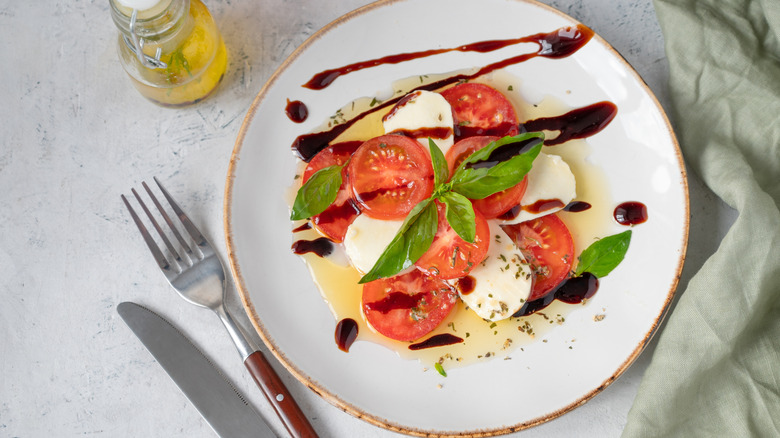
Balsamic glaze — also known as a balsamic reduction — is a thick, glossy condiment made by gently simmering balsamic vinegar (sometimes with added sweeteners such as honey or sugar) until most of the water content evaporates. This process concentrates the flavor, making it noticeably sweeter and more syrupy than balsamic vinegar itself.
While balsamic vinegar works best as a dipping sauce or salad dressing, balsamic glaze is better suited as a topping or finishing touch. In sandwiches, it delivers a distinctive balsamic flavor without soaking the bread — which can easily happen with liquid vinegar. Drizzled over salads, brushed over veggies to let the concentrated sugars caramelize in the oven, or paired over grilled meats — particularly hearty red meats like steak — the glaze's sweetness and richness shine perfectly, whereas the sharper acidity of balsamic vinegar could quickly overwhelm the dish. Its versatility even extends to dessert — try pairing the savory glaze with ice cream.
If you're making a glaze at home, we recommend using balsamic vinegar of Modena (IGP), which strikes a strong balance between quality and affordability. Using very old or expensive traditional balsamic would be unnecessary, as the reduction process amplifies sweetness and strips away the subtle complexity developed through years of aging. Look for balsamic vinegars with a high proportion of grape must and wine vinegar, and avoid those with added thickeners or artificial additives, as these can intensify undesirable flavors when reduced. Unlike balsamic vinegar, which can be stored at room temperature, it's best to store your balsamic glaze in the refrigerator to maintain its texture and freshness.