

Pantry Organizing Supplies Can Be Pricey, But Here's How To Do It For Free
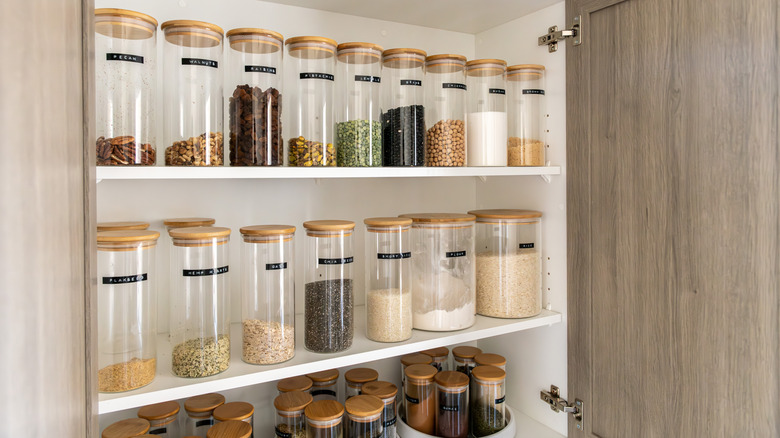
There are very few things as satisfying as a well-organized, aesthetically pleasing pantry. However, anyone who's organized a pantry from scratch knows firsthand how expensive pantry-organizing supplies can be. Functionality is key when organizing your pantry, and that includes finding solutions that work with your home and your budget. One of the most common pantry mistakes people make is spending way too much on organizing supplies. The good news is that you can achieve a beautiful, functional pantry without spending a dime by reusing empty jars.
When you buy food that comes in a glass jar, you're essentially gifted an organizing tool. Glass is ideal for food storage because it's non-porous, which means it doesn't absorb odors or stains; therefore, it helps preserve food's flavor and freshness. It's also easy to clean and doesn't degrade over time. Even better: it comes with food you already buy.
For example, a large glass jar that once contained pickles is the perfect size for storing rice, oatmeal, pasta, flour, and other baking supplies. Medium-sized glass jars, like those used to house peanut butter, spreads, and pasta sauce are perfect for storing dried beans and legumes instead of keeping them in plastic bags. Similar to how this Dollar Tree item is perfect for storing small food bits, jam jars and mason jars are ideal for storing leftover baking supplies or other food items that don't take up much space (think: granola, dried fruit, nuts, and seeds). Even small glass condiment jars can be cleaned out and used to store spices.
More tips for repurposing jars in the pantry
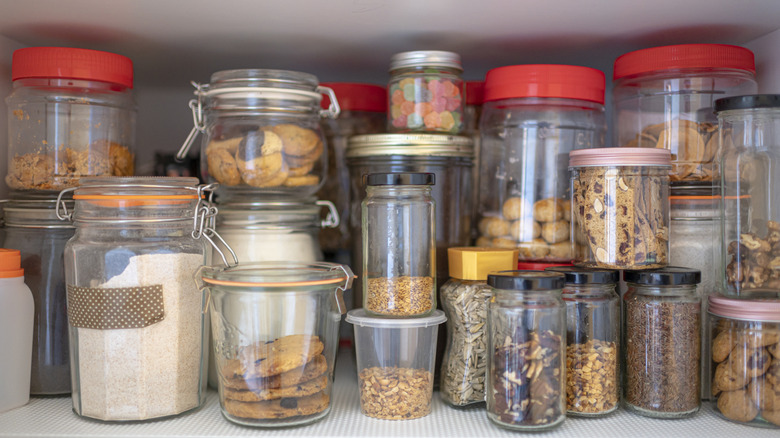
It's not just glass containers that are useful for organizing your pantry. You can also use plastic jars and containers for storing pasta, nuts, crackers, or other snack foods (think: Goldfish crackers or trail mix) in the pantry. The benefit of plastic is that it doesn't break, making it ideal for storing items on lower shelves that are at greater risk of being knocked over.
However, keep in mind that, unlike glass, plastic does degrade over time. It's best to use plastic containers for things you know you're going to eat relatively quickly, and recycle the jar as soon as it shows signs of wear, for example, discoloration, cracking, or a strong plastic smell. Alternatively, you could use plastic jars to store non-food items or items that are wrapped like twist ties, food baggies, tea bags, or condiment packets.
Whether you repurpose old glass jars or plastic ones, you must wash, sanitize (for example, by running them through a hot dishwasher cycle), and dry them thoroughly before decanting pantry items into them. Residual bacteria, moisture, and oil, for example, from peanut butter, can contaminate fresh ingredients, leading to bacterial and mould growth, spoiled flavours, or a shortened shelf life.