

How Lobster Rolls Became A Beloved New England Dish
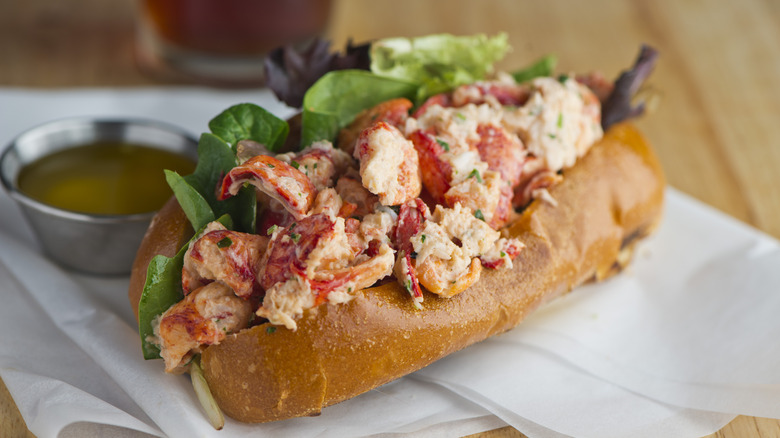
Few things scream coastal New England quite like the lobster roll. It's a regional classic, but how did this simple combination of lobster meat, lightly dressed with mayonnaise and tucked into a hot-dog-style bun, become such a fixture of the food scene? The answer lies in evolution, beginning as a practical meal for fishermen and coastal workers before becoming a beloved regional speciality that was eventually embraced and elevated far beyond New England.
Like many New England delicacies, such as the similar yet different chowder and bisque, the lobster roll is deeply tied to the region because of its locally abundant ingredients. Today, cold, nutrient-rich Atlantic waters off Maine and Massachusetts produce the majority of U.S. lobster, making the crustaceans a natural staple for coastal communities. Before it was considered a luxury, it was so plentiful that fishermen and shipwrights would eat it regularly, including stuffing it into bread, a precursor to the lobster roll's modern form. The first official cold lobster salad recipe that resembles today's Maine-style lobster roll filling appeared in 1829.
While the early origins of the earliest forms of lobster roll have fallen victim to the passage of time, the modern sandwich itself is widely believed to have originated in the 1920s at Perry's restaurant in Milford, Connecticut, where owner Harry Perry served lobster meat in a warm, buttered bun. Over time, the roll spread throughout New England and became especially popular as a casual summer food at seaside shacks.
Regional variations of lobster roll
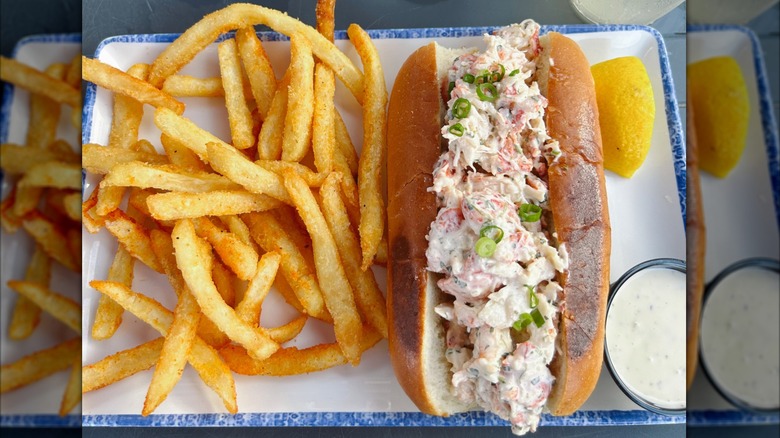
The lobster roll is known as a New England staple, but it's serving-style varies state to state, and even town to town. Before uncovering the differences, there's one element that should always be kept the same: the roll. No matter the variation, a truly local-approved lobster roll must be served in a New England split-top bun that's buttered and toasted — but regular hot dog buns are an acceptable substitute. While side dishes may differ, lobster rolls are traditionally served with potato chips, coleslaw, or fries.
The two classic styles of lobster roll are Maine-style and Connecticut-style. In Maine, the lobster meat is mixed with mayo, and sometimes mixed with lemon juice, celery, and finished with a garnish of chives and other herbs. It's then stuffed into a bun and served cold. In contrast, the Connecticut-style lobster roll features warm lobster meat tossed in melted butter and served hot. While the Maine version is often described as refreshing, the Connecticut style is known for being richer and more indulgent. We're not here to say which one is better — that's entirely up to personal preference — but we definitely recommend trying both if you find yourself exploring New England.
Today, you can also find many more takes on the lobster roll that put a creative spin on the classic while staying true to its roots. Spicy lobster rolls incorporate ingredients like sriracha into the dressing, while tropical Florida-style versions add lime juice and avocado for a brighter flavor. Or if lobster isn't your thing, you might want to try a fried scallop roll instead, which uses the same toasted hot dog bun but swaps lobster for buttery, delicate scallops.