

The Retro Norwegian Enamelware That's Both Stylish And Valuable
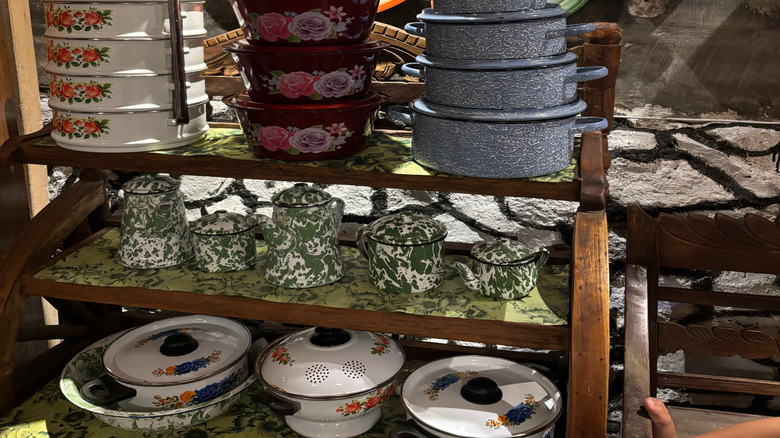
When it comes to food, Norwegians excel in many areas: From world-class seafood offerings like salmon and king crab, to an enduring obsession with hot dogs, and a cutting-edge culinary scene with innovative restaurants like the Salmon Eye. Another one of Norway's many talents is its long history of crafting high-quality enamelware, a durable kitchenware of powdered glass bonded onto heavy-gauge steel. In particular, one brand of Norwegian enamelware that fetches a high price tag when sold second-hand is from the brand Cathrineholm.
Cathrineholm is best known for its iconic, colorful mid-century modern enamel kitchenware, particularly the hugely popular lotus pattern, which features a bold, repeating arrangement of petal-like shapes in contrasting colors to the rest of the piece. The Cathrineholm factory was responsible for producing the enamelware, with its overall design direction shaped by Grete Prytz Kittelsen, a key innovator of Scandinavian design. Under Kittelsen's leadership, Cathrineholm pieces were characterized by clean lines and bold, contrasting colors. However, the celebrated lotus pattern itself is actually attributed to Arne Clausen, a decorator at the factory. Fun fact: Kittelsen openly claimed to have hated the now-iconic lotus design!
Part of the enduring value of Cathrineholm enamelware lies in the fact that it can no longer be purchased new, as the factory unfortunately closed in the early 1970s, which makes this coveted enamelware a collector's darling. Today, Cathrineholm pieces can fetch a very high price tag in the second-hand market. Well-preserved pieces with sought-after patterns like the lotus design can fetch prices of around $500, while smaller pieces like plates or bowls typically range from $70 to over $100.
How to spot a Cathrineholm piece

Today, you can find Cathrineholm enamelware just about everywhere. While these pieces often fetch high price tags on the secondhand market, if you're lucky, you might spot one of these little gems sitting on the shelves of your local thrift store. But because Cathrineholm enamelware was so popular, there are also plenty of dupes out there that aren't nearly as valuable, so knowing how to spot the real deal is important.
If you come across the iconic lotus pattern, which typically sells for the highest prices, there are a few things to look for. On authentic pieces, the lotus design should be wider at the top and slimmer toward the bottom. Additionally, some (but not all) original Cathrineholm items are marked with the company logo on the underside. The absence of a logo doesn't automatically mean a piece is fake, but when it's present, it's a sure sign that you've got your hands on the real thing. Also, similarly to factors affecting the value of antique sterling silverware, the overall condition of your Cathrineholm enamelware will influence its final resale price.
Among the hardest to find Cathrineholm pieces are cute salt and pepper shakers featuring the lotus pattern. Also, if you happen to spot the lotus design in pink (the rarest color of all), you've truly hit the thrift store jackpot. Even if you're not planning on selling your Cathrineholm pieces, authenticity still matters. They're famous for their incredibly strong, durable quality, with some items still in everyday use after more than 40 years.