

10 Unique Ways To Season Chicken You'll Wish You Tried Sooner
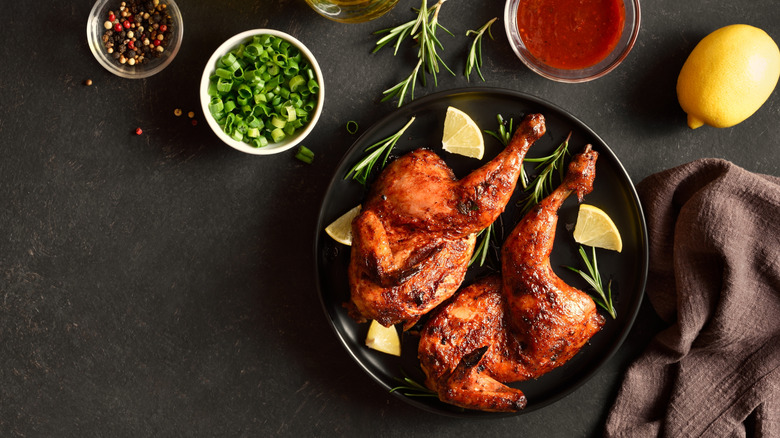
Need a little inspiration for your chicken? We can sometimes fall into a bit of a rut with it. A bit of salt and pepper, maybe a sprinkle of garlic powder — that'll do. Well, we're on a mission to change that. We got the opportunity to talk to Brian Walter, the Executive Chef at 87 Sussex in New Jersey and the owner of Bayberry Culinary Consultants. He's a classically trained French chef with a wealth of knowledge. Not only does he run busy kitchens, but he also teaches cooking classes, develops culinary products, and writes about food.
Brian shared with us some fantastic ways to season chicken that we've never thought of. He told us about spices from different parts of the world that you don't often see in Western home cooking. There's even a historical spice that was commonplace hundreds of years ago but has all but disappeared today. It's not just exotic ingredients, though, as he also suggests seasonings that we already have in our cabinet, but with a twist. Along the way, Brian also shares some great cooking tips to help us get the best out of these seasonings. By the time you finish reading, you'll be closer to becoming a chicken seasoning expert, and you might even discover some new ingredients to add to your spice collection.
Discover Ethiopian cuisine with berbere
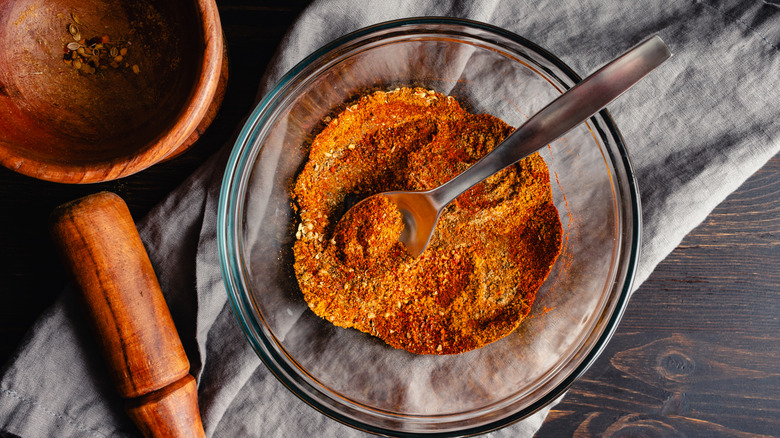
There is one seasoning that Brian Walter wishes more people knew about — berbere from Ethiopia. The word means "pepper" or "hot" in Amharic, Ethiopia's state language. You find it in all sorts of dishes there, but it is probably most well-known for its addition to meat stews. It's got a lot of ingredients, the most prominent being chili and paprika, which are mixed with up to 20 other spices, including garlic, ginger, coriander, cumin, fenugreek, black pepper, mustard seeds, nutmeg, African basil, cinnamon, and clove, among many others. The exact spice blend differs in each region and household.
Historians aren't quite sure when this blend originated, but it is thought to emerge during ancient spice trade routes when the Red Sea route connected with the Silk Road and brought exotic spices from China and India, ranging from black pepper and cinnamon, to ginger and turmeric.
How does it taste? Essentially, it has a warm, earthy, sweet flavor to a dish and adds a beautiful, deep red color. How to use this intriguing spice? Well, you could try recreating the doro wat, the national dish of Ethiopia, which is a chicken stew with hard-boiled eggs. Or you can go a simpler route with Brian Walter's suggestion: "Rub it into chicken thighs with lemon and olive oil and roast, the flavor hits you in waves." Sounds delicious!
Add citrusy notes with sumac
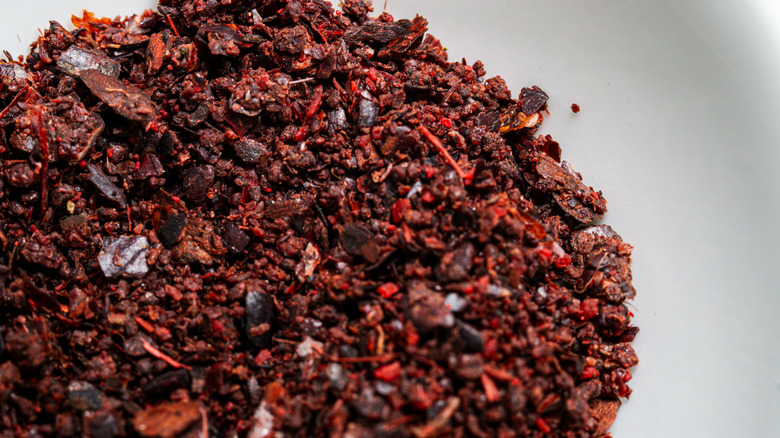
Sumac is a staple in Middle Eastern cuisine. You'll find it commonly used in Palestine, Lebanon, Syria, and Turkey and beyond. The name comes from the word summaq, which means dark red in Arabic. It's made from the berry of the sumac tree, and the unique flavor is all in the outer coating of the berry. The fruit is dried and then ground into a paste or powder. The paste is then dried by the sun or a heat source and becomes powdery.
It has a tart, fruity flavor. It's reminiscent of lemon or hibiscus but with a more earthy and savory profile. "Sumac is a secret weapon because it delivers citrus without using actual lemon," explains Brian Walter. In the Middle East, it is often found on the table much like salt and pepper are used in the West. You'll find it in dips like hummus and baba ghanoush, as a marinade for meat, with vegetables and grains. Basically, sprinkled over everything. You'll be able to pick it up in any Middle Eastern, Turkish, or Armenian grocery store.
Brian's favorite way to use it is sprinkled over grilled chicken. But this stuff is so versatile. Keep it on your table or spice rack and sprinkle it over everything that you'd add lemon to, think salads, meat, vegetables, you name it. And you don't need to stop there, as it's even used in desserts.
Discover the ancient Grains of Paradise
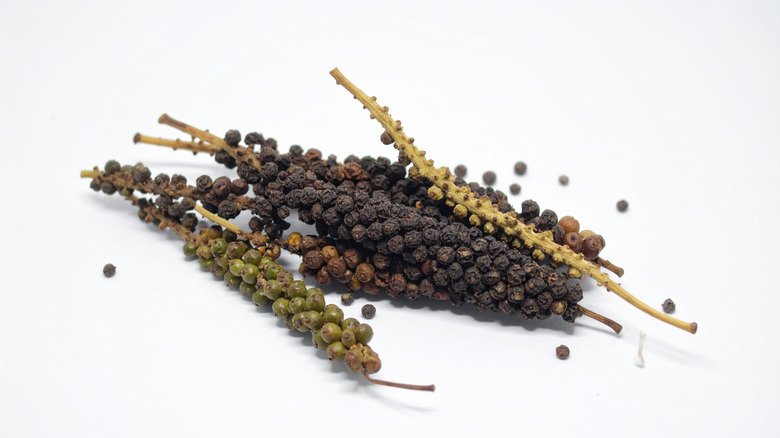
Grains of Paradise have a fascinating history. It comes from primarily from West Africa and tastes extremely similar to black pepper. It was very popular in the West right up to the 19th century. It was a cheaper and more easily available substitute for black pepper, which came from faraway India, and it was also commonly used as a flavoring for beer. When trade routes became more established with India, pepper became more available, and so grains of paradise became relegated to the history books.
The plant is in the ginger family, so it is related to ginger, cardamom, and turmeric, and you can pick up notes of that in the flavor. It has a woody aroma, and the flavor profile is very pepper-forward, with citrus and herby notes, with a well-rounded spiciness at the end. So, what about our chicken? Well, Brian Walter's suggestion for this might surprise you — mix it with salt to create a dry brine. For those of you unfamiliar with the concept, dry brining is a process that creates more juicy and tender meat by salting it ahead of time and letting it rest.
When you cook meat, the muscle fibers tighten up from the heat and squeeze out juice. When we dry brine, the salt draws out moisture and pulls water into the meat through osmosis, which keeps the juices locked in. The salt also breaks down the muscle proteins a bit, which makes it more tender. The proteins then form a gel that traps the water inside. It is some technical wizardry, but it really works!
Give grilled wings an edge with black lime powder
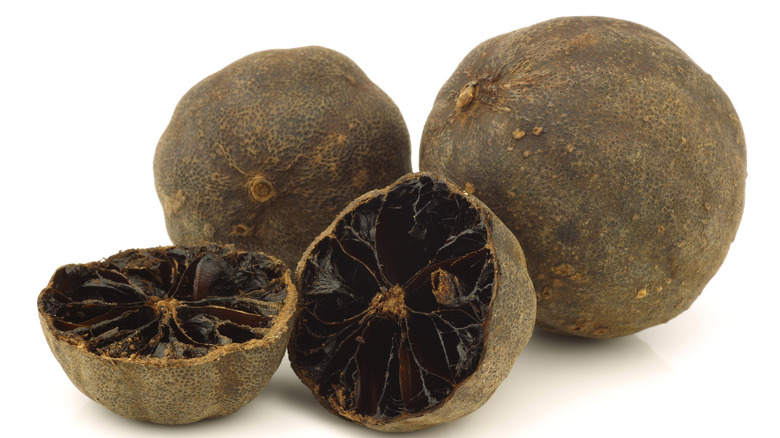
Black limes are basically limes that have been sun-dried. But before they're dried, they're typically blanched in a salty brine, which creates a delicious sour and salty flavor. The drying process also intensifies the citrusy flavor, so they're lovely and pungent. They're used in North African and Middle Eastern cooking often, in tagines and stews.
While they are often added whole to things like soups and stews, Brian Walter's favorite way is to add the powder to grilled wings. "It adds a funky sour edge that is very addictive," he explains.
It's quite difficult to find black lime powder, but it is much better to make your own anyway, as the flavor will be strongest when freshly ground. Remove any seeds and then grind them in a coffee or spice grinder. A high-speed blender would also do. You can find them whole at your local Middle Eastern store, and be aware that they might also be under the names Omani limes, loomi aswad, or noomi basra.
Create beautiful caramelization with sugar
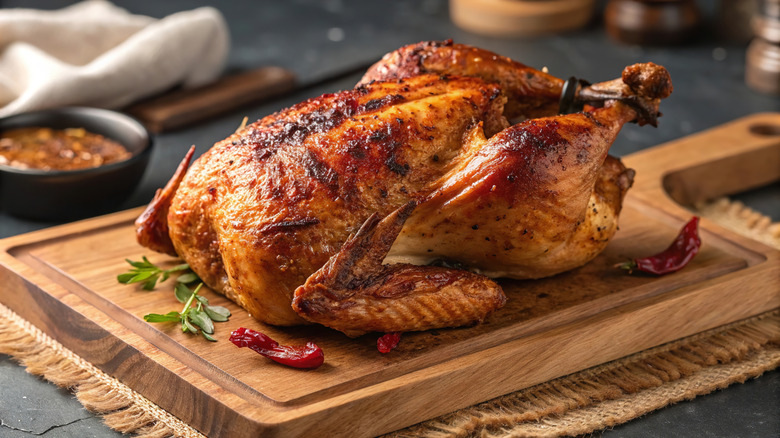
In order to become a great cook, it's usually a good idea to understand the science behind what is happening to your food. When we add sugar to the skin of a roast chicken, it leads to wonderful browning, but what's going on? Let's break it down.
Caramelization — that almost mystical process that creates such a lovely flavor — occurs when sugars are cooked nicely and slowly and eventually end up oxidizing, causing them to brown. High dry heat is needed for this process as it breaks the sugar down, causing volatile chemicals to release, which creates the caramel flavor.
There is also another process going on when we add sugar to chicken — the Maillard reaction. It also creates browning, but through a different process. It occurs when the sugars react with the amino acids in the proteins of the food. Brian Walter recommends using either brown sugar or coconut sugar along with some thyme and paprika for the perfect seasoning. Also, make sure the bird is nice and dry, as this will help the process along.
Create one solid base and then mix it up
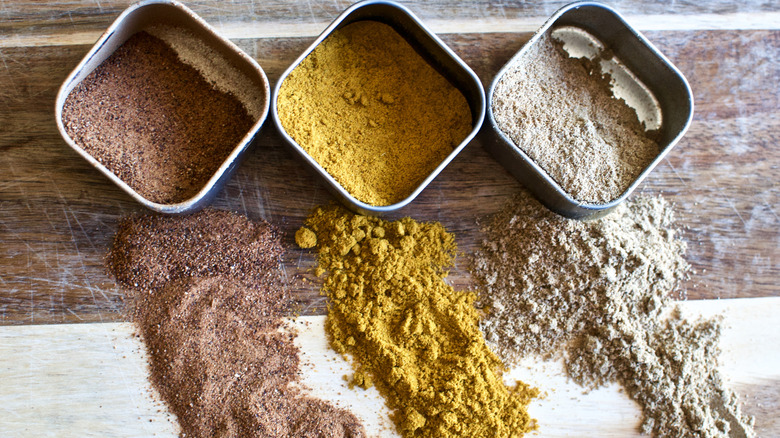
Out of all of Brian Walter's suggestions, this is the one that will level up your chicken game the most. His tip is to create one solid base with salt, pepper, garlic powder, and smoked paprika, and then add different things to your base to create different blends. For a Mediterranean flavor, he suggests adding oregano and lemon. For a Tex-Mex style, add cumin and chili. For Southeast Asian flavors, add curry powder and coconut milk, and for a barbecue style, you could add maple syrup and mustard.
We love this idea. Not only is it going to save on time, but it's also going to get you more motivated to add a bit of pizzazz to your chicken, as half the work is already done. It's also a great way for you to improve your skills in the kitchen. The only way we learn is by doing, and by experimenting with flavors and tasting the result, you will be adding to your knowledge and training your palate.
It's also a great opportunity to get to know a new flavor. Let's say you buy an exotic ingredient in a specialty store, something like berbere, sumac, or black limes. You bring it home, and then you may not be quite sure what to do with it, so it likely gathers dust on your spice shelf. Instead, add it to your base blend or conduct a quick internet search to see what other kinds of pairings seem appealing to you.
Try Trinidadian green seasoning for chicken legs
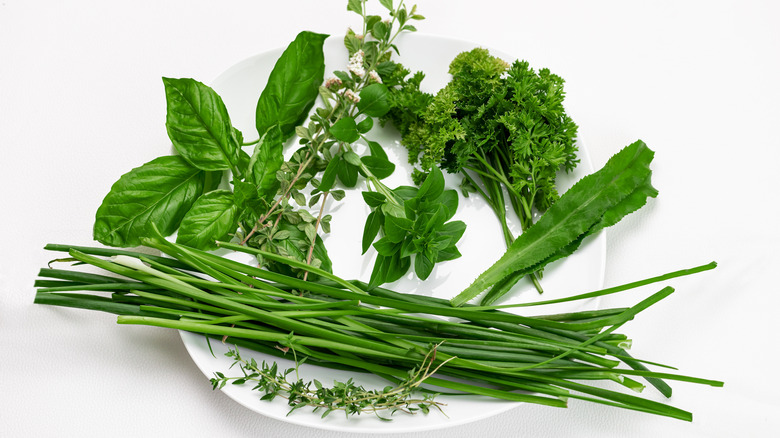
We asked Brian Walter to share a favorite memory of using an unusual seasoning on chicken, and we love the story he told us: "A chef from Trinidad taught me green seasoning. Culantro, scallion, garlic, ginger, lime, and Scotch bonnet blended to a paste. We roasted chicken legs low and slow. The aroma filled the kitchen, and the heat was perfect." What an experience it must have been.
We've got a similar version with this Trinidadian Chicken and Rice recipe if you feel like creating some Caribbean vibes in your kitchen. Pretend you're on a sunny island and not in your cold, cramped urban apartment, make yourself a rum and Coke, and feel the problems of the world melt away.
This doesn't need to be some sort of hard and fast recipe; it's more about using up whatever fresh herbs you have access to, so feel free to customize. It's used for practically everything. Think stews, curries, with seafood, as a marinade for meat, and in Trinidad, sometimes even just between two slices of bread.
Celebrate spring with green garlic and tarragon
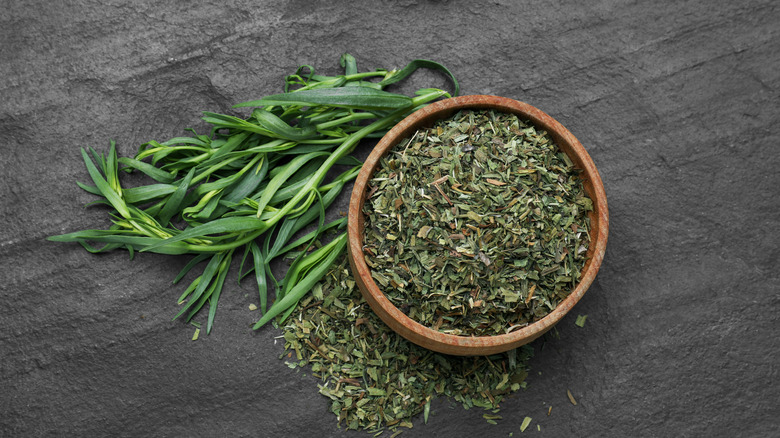
We asked Brian Walter to share some seasonal ideas for seasoning chicken, and we love his suggestion for Spring — tarragon with lemon and green garlic. Even just reading it makes you feel like you are in a meadow.
Green garlic comes from the same garlic you know and love, it's just harvested earlier on in the season, and what's eaten are the fresh young leaves of the plant rather than the bulb, as the bulb hasn't even formed yet. In terms of taste, it lies somewhere between a spring onion and garlic. It is more mellow and less spicy than fresh garlic, but a little spicier than spring onion. It is a wonderful signifier of Spring when you see the first bunch of green garlic at the farmers market, and it's best enjoyed with all the other Spring flavors — roast lamb, pesto, peas, salad, new potatoes — that sort of thing.
Tarragon has a subtle aniseed taste that goes great with eggs, cheese, poultry, and fish (it's also commonly used in French cuisine). There are a few types of tarragon — French, Spanish, and Russian. French tarragon is considered superior as it has a more subtle flavor. It can be an acquired taste though. If you like licorice, you'll like tarragon as that's the most forward flavor, but you'll also be able to pick up on notes of mint, vanilla and pepper. Fresh tarragon really is superior, as the dried version will have lost a lot of the flavor that makes it so special. But when cooking it fresh, make sure to add it towards the end, as it can become bitter if cooked for too long.
Get cozy with cinnamon and smoked paprika
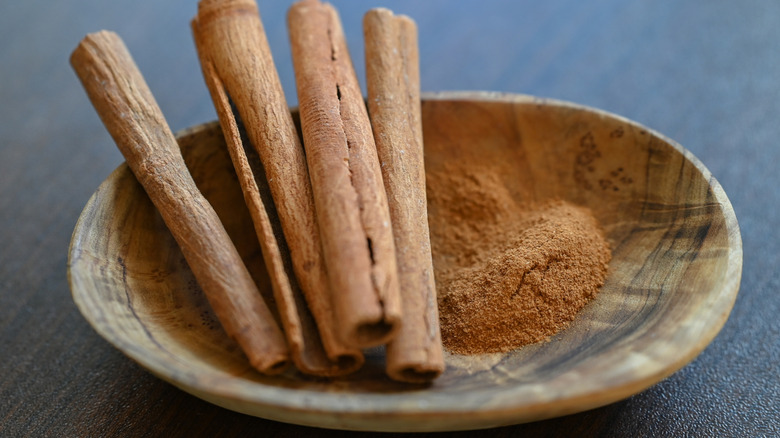
Cinnamon finds its way into everything come autumn: our apartments waft with the scent of cinnamon candles, our bodies glisten with cinnamon lotion, and it goes on every single bit of food that will take it. Those who get it, get it. So, we were delighted when Brian Walter suggested pairing cinnamon with smoked paprika for the perfect fall roast chicken.
You could try Jamie Oliver's secret to getting succulent, crispy rotisserie-style chicken — wedge the chicken in between the bars of the oven rack so that it hangs. Or check out this water-based method where you steam it in the oven for the first half of the cooking process so that the fat renders down and then you can finish it with a blast of dry heat to crisp up the skin.
Use the cinnamon and smoked paprika as a dry rub or even make a tasty marinade. You could go full on cozy and have this as part of a British-style "roast chicken dinner" with roast potatoes, vegetables, and gravy. We're also thinking the spiced flavors would lend themselves really well to a Moroccan-inspired meal, perhaps served with an herby couscous salad or stewed brown lentils. Lots of possibilities.
Elevate grilled chicken with dried citrus
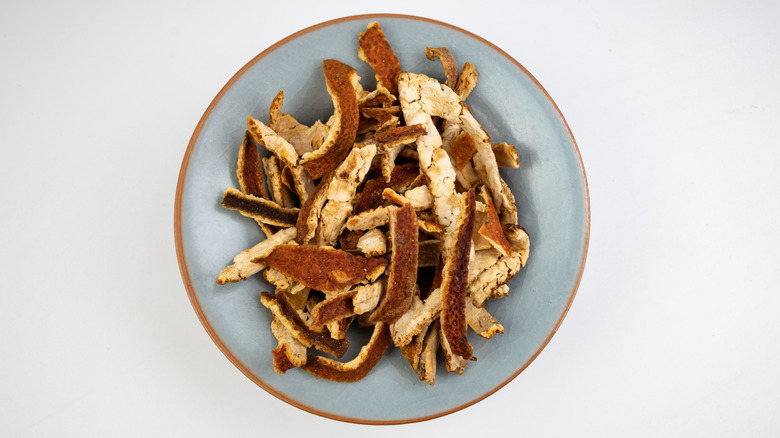
"Summer is all about char, so dried citrus peel is great on grilled chicken," explains Brian Walter. We love this idea as there are few flavors more summery than citrus. And citrus peel is such an underrated ingredient; it adds so much to dishes, and it's surprisingly easy to make.
To make the peel, wash your fruit thoroughly and then dry well. Peel with a sharp peeler into big pieces and try to avoid the pith, as this can taste bitter. Once the fruit is peeled, go over it again and remove any leftover pith. Pop it in the oven at a very low temperature for a few hours or until it's fully dehydrated. Then blend with a spice grinder or blender.
Now you have a beautifully fragrant citrusy seasoning. You can use it in all sorts of homemade spice blends, but it's also fantastic to use in baking, too. For our summer grilled chicken, you are going to want to make a spice rub with it. You can keep it simple with just some salt, pepper, and garlic powder. Or get a little more elaborate with some dried herbs and olive oil. Whichever way you go, the essential oils in the peel are going to create the most delicious flavor for your chicken.