

Trader Joe's Best Frozen Dumplings Aren't What You'd Expect
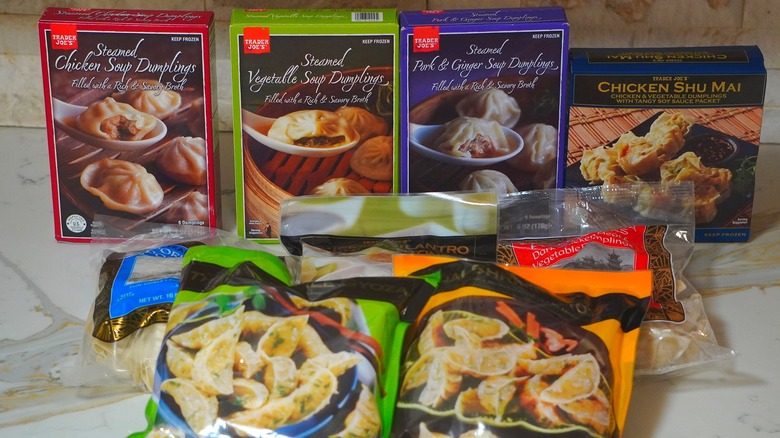
Trader Joe's is the trusty, go-to spot for its unique assortment of quirky, private-label products. Chief among its most delicious offerings is its wide assortment of frozen goods, including an impressive selection of frozen dumplings. But which of these frozen dumplings are a must-have, and which are best left in the freezer? To find out, Food Republic tried and ranked nine TJ's frozen dumplings. The verdict? The Thai Vegetable Gyoza was leagues ahead of the competition.
Priced at a reasonable — though slightly higher — $4.99 compared to the other dumplings, the Thai Vegetable Gyoza more than makes up the difference in flavor. These Chinese-Thai fusion dumplings feature a well-balanced medley of classic dumplings' vegetable fillings, including chives, white cabbage, and white radish. These veggies are then balanced out with the addition of umami-rich soy sauce that makes them the perfect balance of sweet and savory. They're also one of the most accessible dumplings in the line-up, catering to both meat-eaters and vegetarians alike — but unfortunately contain allergens like wheat, soy, and sesame (though these are expected in dumplings).
Another pro of the Thai Vegetable Gyoza is its versatility. There are several ways you can cook up these bad boys, depending on your personal preference. According to Trader Joe's website, you can toss them into a steamer, give them a quick pan-fry, add them to soup, or even microwave them. If you've gotten home from work and want a quick dinner, just pop them in the microwave. For something more complex and visually impressive, add a slurry of water and cornstarch as they pan-fry to create a "skirt" that connects all the dumplings.
Gyoza versus soup dumplings
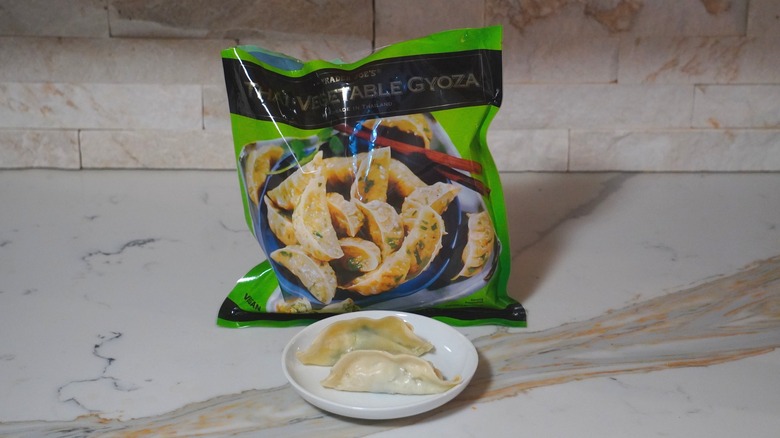
Interestingly, while the Thai Vegetable Gyoza came first in our rankings, the only other veggie-friendly option — the Steamed Vegetable Soup Dumplings — actually came in last. Despite similarities in ingredients, the shape and cooking-style of soup dumplings versus potstickers could explain why the gyoza ranked so much higher.
The traditional way to cook up a gyoza is to fry it in a pan (which is also the method that Trader Joe's recommends). When fried, the wrappers caramelize and get deliciously crunchy. Pair that with a neutral, high-heat oil, like vegetable or canola, and you'll have a crisp exterior that'll provide a delicious textural contrast to each bite. On the other hand, soup dumplings are usually steamed, which cooks the vegetables and melts the broth. Unfortunately, streaming generally yields much weaker flavors than methods like frying. This makes the fillings super important, which is why soup dumplings like Xiao Long Bao are so beloved all over the world. But in the case of the Steamed Vegetable Soup Dumplings, it's clear that steaming ended up diluting the vegetables' flavor, leaving the fillings and taste to be far less satisfying than the crisp, boldly flavored Thai Vegetable Gyoza.
You can also steam the Thai Vegetable Gyoza, but the lack of flavorless broth in the gyoza fillings means that they wouldn't be diluted in the same way as the Vegetable Soup Dumpling. This allows the natural flavors to shine through, especially when paired with a drizzle of soy sauce, sesame oil, or rice vinegar. Posters on Reddit also noted that the texture of the Vegetable Soup Dumplings is gummy, and the filling absorbs the soup, leaving you with soggy veggies instead of a delicious broth.