

Here's Why Popeyes Marinates Its Fried Chicken For 12 Hours
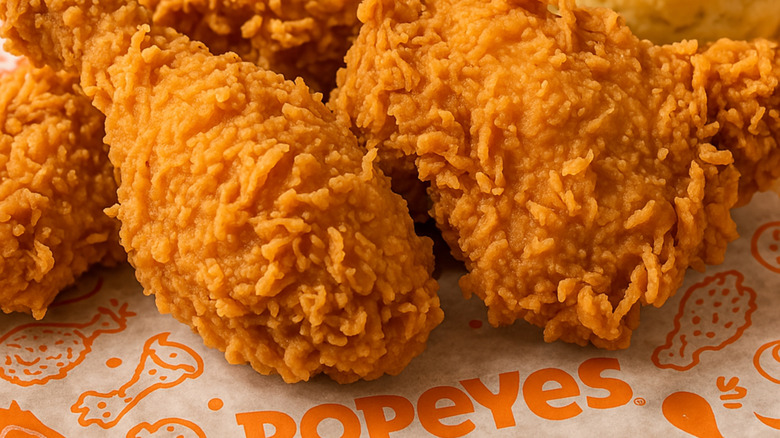
From a secret blend of seasonings to frying chicken in beef tallow, there are a lot of things that made Popeyes Anthony Bourdain's favorite fast food fried chicken. But it's the 12-hour marinade that truly gives the chicken its flavor, imparting tenderness, juiciness, and depth that takes hours to get right.
When you make a marinade properly, it should be a liquid base full of salt and seasoning. Over time, the salt draws water out of the chicken's muscle fibers, replacing it with the marinade through osmosis. This directly infuses the meat with taste, penetrating it in a way you can't replicate by just sprinkling some seasonings over it beforehand. A good marinade, laden with salt and acid, also tenderizes the meat and engorges muscle fibers, making them more absorbent — so by the end of the process, they actually hold more moisture than they started with.
Generally, you shouldn't marinate chicken for less than two hours or more than 24, but this is highly dependent on your ingredients. While we don't know exactly what goes into Popeyes' marinade, its combination of acid and salt peaks at the 12-hour mark, readying it for cooking. But an incredible marinade is only the first step — it's the chain's frying practices that really make its chicken come to life. Rather than relying on expensive technology or complicated techniques, Popeyes opts to keep things simple and consistent with easily replicable methods.
How does Popeyes fry its chicken?
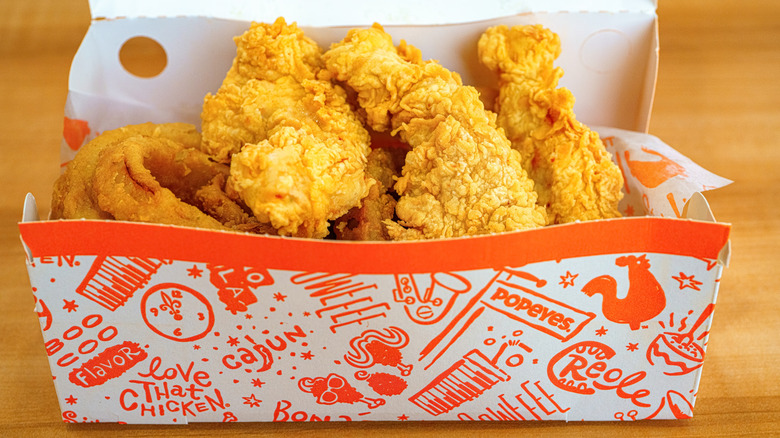
When a restaurant produces something so good it can get sued for not having a sandwich, you know it's doing something right. Solid breading and battering techniques, mixed with precision frying, produce the same delicious product every time, at every location.
Once the chicken finishes marinating, cooks drop each piece in batter, then hand-toss it in flour multiple times to ensure an even coating and plenty of breading on every bite. Popeyes' two flavors of chicken — spicy and original recipe — each have their own fryer to prevent cross-contamination of flavor. The fryer for spicy pieces generally ends up much darker than the one for the original recipe because of the increased amount of spices. Finally, each piece cooks for 12 minutes in 340-degree Fahrenheit oil until it turns crispy and golden brown (via YouTube).
That temperature is no mistake — it creates an important thermic reaction. When cold chicken hits hot oil, it produces steam, which forms a sort of thermal barrier around the meat. This steam is actually boiling water and marinade escaping the chicken, passing through the breading and releasing into the fryer. If the oil were any cooler, the water wouldn't steam properly and would become trapped in the breading, creating a soggy rather than crispy crust. Water escaping also has the added benefit of being replaced by oil, creating the rich, satisfying flavor we associate with fried food.