

Forget Expensive Ribeye: A Cheaper Cut For Delicious Beef Stroganoff
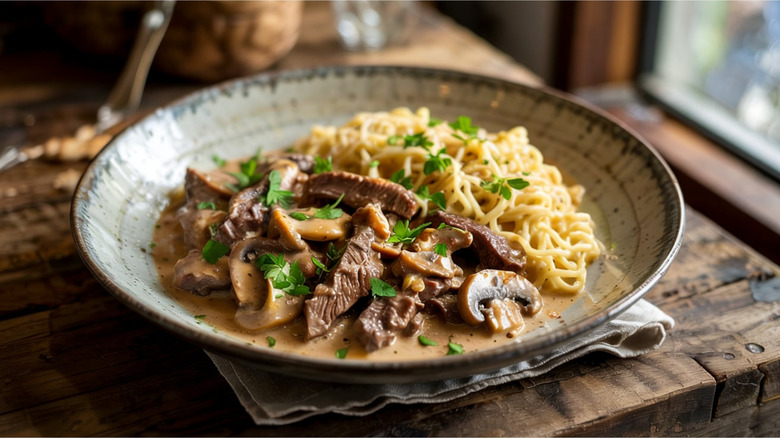
Indulgently and immensely comforting, beef stroganoff is one of those low-effort meals you make when you just want to feel good. But one thing that might not lift your spirits is the price. Classic stroganoff starts off with strips of thinly sliced beef, with cuts like ribeye being among the best picks. We're not here to fault ribeye, which has earned its price for a reason, but if you want to knock a few dollars off your next batch, try swapping in ground beef instead.
While it may not satisfy the purist, and might even horrify a Russian (the dish's country of origin), we'd argue that ground beef is a worthy alternative to any traditional whole cut of steak. The texture is bound to be different, and you'll need to adjust how you cook it, but good-quality ground beef still has the rich, beefy flavor that pairs so well with the tang of sour cream, earthy mushrooms, and the sweet depth of cooked-down onions, all at a significantly lower cost.
Another reason ground beef works so well here is its cooking time. Traditional beef stroganoff relies on expensive cuts that are prized for their tenderness and quick-cooking nature. Cheaper, tougher cuts like chuck or round usually need hours of braising to soften, which doesn't suit a dish that's meant to come together quickly. Ground beef, however, is often made from those same economical cuts, and the grinding process does all the tenderizing mechanically. That means you're getting all that mouthwatering flavor without the waiting, guaranteeing a tasty, Boomer-approved meal.
Treat ground beef right when substituting it for ribeye
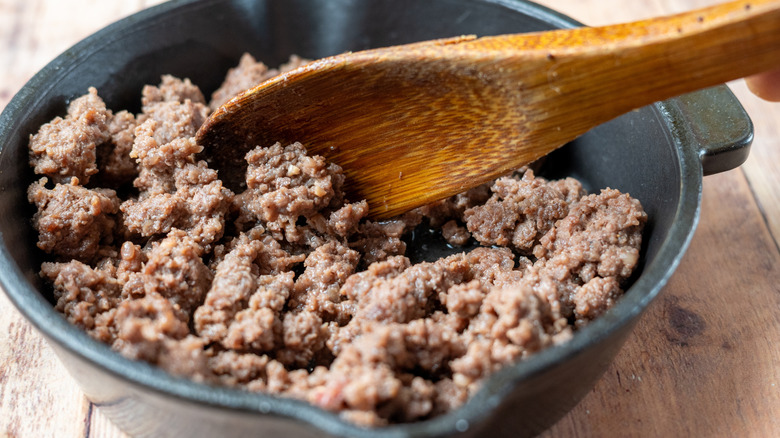
If you make the switch from ribeye to ground beef, you'll want to do a few things differently. First, check out the numbers on your ground beef packaging. You're looking for a blend that doesn't shy away from fat, something like an 80-to-20 lean-to-fat ratio, or even 70-to-30. Like ribeye, these fattier blends are packed with rich flavor, and the fat that'll render out will elevate the sauce, just in a different format. Go any leaner and you risk dry, chewy beef pebbles floating in your sauce.
With ribeye, standard practice is to slice the beef ultra-thin, give it a quick sear, then let it simmer in the sauce for a few minutes. The process for ground beef is similar, albeit with a few caveats. For starters, there's no slicing, so you're already saving time. Like ribeye, you want to get the meat nicely browned. Our personal advice is to add the beef to the pan in small handfuls and flatten each one with the back of a spoon, which allows it to brown without overcrowding the pan.
Remove the beef from the pan once it's seared, which isn't usually done with ribeye. Even in a fattier blend, ground beef has far more exposed surface area than your average slice of steak, so it risks drying out if it's left to simmer for too long. For the most tender results, build your sauce first, then add the beef back in and stir once you're just about ready to serve. Don't worry about the flavors not melding, since the fat and fond left behind from searing will be doing most of the heavy lifting.