

Follow One Rule For Crispier Chicken Skin Every Time (Thanks, Jacques Pépin)

Crispy skin needs dry heat, a bit of fat, and plenty of time to develop the beautiful golden-brown coloring that always signifies great flavor. But not every recipe can achieve this. That's why Jacques Pépin has a simple rule: Only leave the skin on if you're serving the chicken browned.
Skin preserves moisture in meat, which is why it's a key component of Ina Garten's secret for juicier chicken. Under dry heat, the fat just below its surface renders, infusing the meat with unparalleled deliciousness while the skin becomes crispy and rich. For Pépin's famous poulet à la crème, or chicken with cream sauce, however, he prefers to remove the skin because he says moisture replaces the fat, making it gummy and unappetizing (via YouTube). This is largely because moist cooking methods soften the skin and prevent it from crisping, which has its place in the kitchen but isn't great for a straightforward piece of roasted chicken.
If you're ever in doubt, always think about the end product. Pépin has no problem browning meat first to add some Maillard flavor to the sauce, but you can do this just fine if you remove the skin first. Not knowing when to remove the skin is an especially detrimental mistake to avoid when making chicken thighs, which naturally contain more fat and have great potential for crispy skin. A moisture-free, dry environment is vital to getting the right result, so pat them dry beforehand and keep them dry when cooking if you want that extra-crispy skin.
What to do with leftover chicken skin
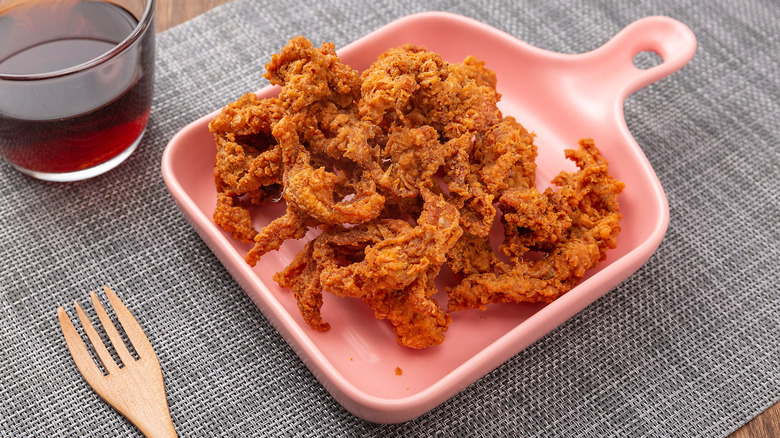
Even if you don't serve it on the meat itself, skin has a ton of potential in a wide variety of recipes. Whether you have yellow or white chicken skin, from the breast or thigh, large or small, each scrap is a valuable source of potential flavor you can repurpose for other foods or use to make future ingredients.
If you want something easy and long-lasting, there's no better use for chicken skin than for stocks. While you'll still want to include some backbones or feet to round out the flavor, this scrap comes loaded with fat and collagen that don't need a ton of time to render into the water. While you may not have enough from one recipe, you can always chuck it in a zip-top bag and freeze it for up to nine months while you build your "stock" pile. This is especially good if you have a surplus of tiny scraps that may not be as useful in other recipes by themselves.
If you have a few larger pieces of skin, these are prime candidates for cracklings. Jacques Pépin's own mother used to bake them in the oven for about 20 to 30 minutes at 400 degrees Fahrenheit for something he says is better than bacon and a perfect topping for salads. If you want to get fancy with it, you can wrap small, precooked foods, like meatballs or mushrooms, in them and roast them in the oven for little chicken skin lollipops!