

What's The Difference Between Yellow And White Chicken Skin?
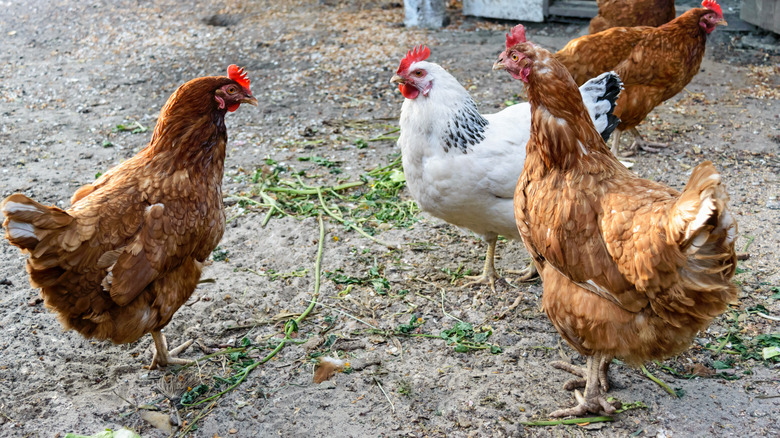
Between mass-producing farms and local businesses, chicken comes in no small amount of variety. When most people first encounter yellow chicken skin, they can be shocked at the color difference and possibly even think the meat has spoiled. However, this isn't an indication of freshness, but rather the life the chicken had before processing.
Differences in skin color come from a number of factors, and genetics can play a major role. Some lineages are more prone to developing white, yellow, or even black skin. Still, more often than not, the color of chicken skin is due to something called carotenoids, a type of pigment that finds its way into chicken fat. Chickens raised on a processed diet may not get as much of this in their feed, so their skin ends up the familiar, pearly white. Poultry fed through grazing or given kitchen scraps or even corn can pick up enough of this pigment that it tends to dye their fat, much of which is found beneath their skin.
Just like how grass-fed beef tastes different, a chicken with yellow fat can taste quite distinct. If left to graze most of its life, it may taste a bit more complex, with a slight gaminess. In some cases, corn-fed breeds may also develop more fat, making them taste richer. Still, freshness, point of origin, and size are the important factors when selecting the most flavorful chicken at the store.
White chicken skin is a reliable choice for most recipes
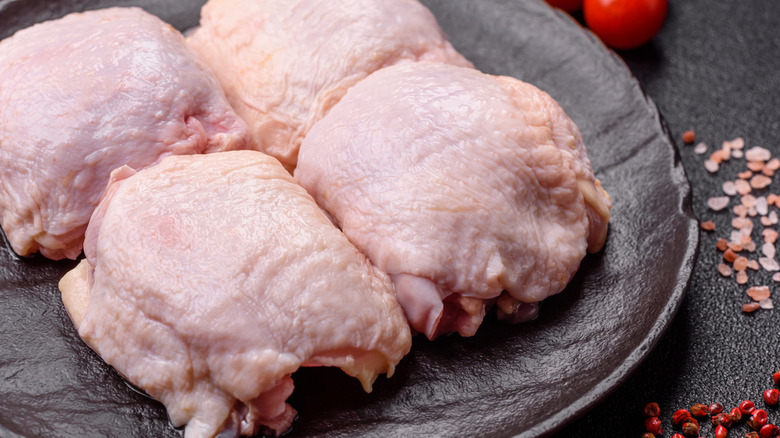
Whether you're roasting a whole bird or looking to make some crackling, white skin on a chicken is a familiar choice for most people. When prepared properly, it can develop a uniform, golden-brown hue with great flavor and has enough fat and collagen to make a perfectly good stock.
If you're feeding a crowd, it's often best to go with consistency and familiarity to appeal to a broader range of palates. While you may prefer a bit of nuance in your poultry, a white-skinned chicken is often a safe choice. While it may not have quite the complexity of a free-range, grazing bird, it can still have just as much flavor. While not a 100% exact correlation, white-skinned broiler chickens raised in conventional farming operations also tend to be larger than free-range, grazing ones raised at a slower pace on farms equipped to let them have a more varied diet.
While corn can contribute to fat development in everything from cows to chickens, it doesn't necessarily make for the richest poultry available. A plump chicken with white skin may still have had a fairly varied diet, as skin color isn't a reliable indicator of what it ate. Ultimately, the best way to determine a chicken's fat content is to break it down and look for yourself.
Yellow chicken is a good option when you need flavorful fat and skin
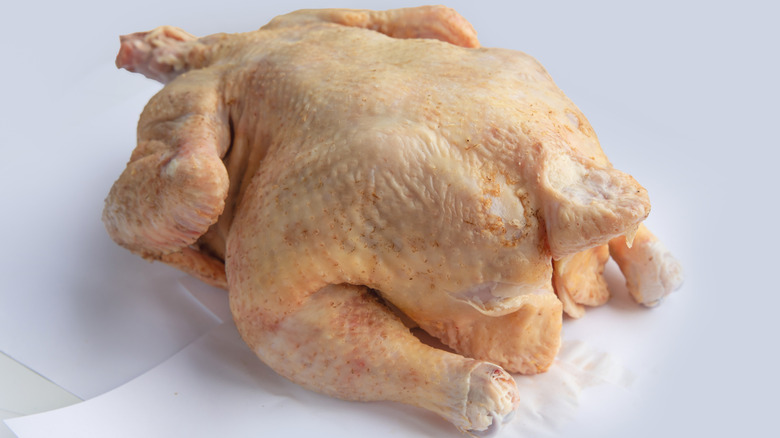
From lambs to chickens to humans, beta-carotene is a pigment that can accumulate in fat deposits. More marbled cuts, like dark meat, carry a greater amount of fat and a subtly rich flavor, making them invaluable in certain recipes. If you use skin or fat as a specialty ingredient, yellow-skinned birds can be a great way to add intense meatiness.
Just like lard or tallow, chicken fat is an incredibly potent cooking fat with a respectably high smoke point once clarified. In particular, Jewish communities have a long history of making schmaltz, rendered chicken fat often made from skin and sometimes seasoned with aromatics. Whether you're keeping it on hand in the fridge or adding chicken drippings to Alfredo sauce, it's important to use only a small amount to prevent things from becoming greasy. In this case, you want the most flavorful ingredient possible, and that can start with a yellow-skinned bird raised on a varied diet.
When made right, chicken skin crackling can be better than bacon. While you can always add seasonings to upgrade it, those looking to focus more on the "chicken flavor" of the ingredient may see better results with yellow-skinned birds. Both white- and yellow-skin cracklings are undeniably tasty, but ones made from yellow skin may need only a little sprinkle of salt and a trip to the oven to be truly marvelous. Even if you don't plan on using it right away, any leftover skin from a yellow chicken is always worth saving.