

Pickle Juice Vs Buttermilk: Which Marinade Is Best For Fried Chicken?
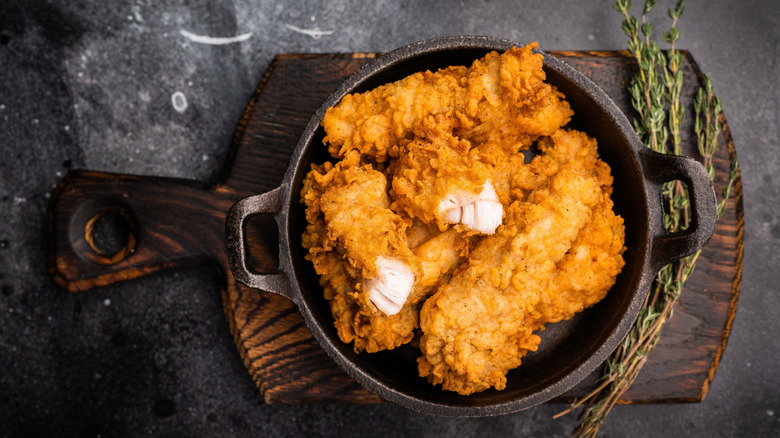
When it comes to down-home Southern cooking, buttermilk and pickles both have a prominent place thanks to their flavors and how they affect the chemistry of cooking. Todd Johnson, Proprietor of Strips Chicken & Brewing, insists that both have a place in fried chicken — although he asserts that buttermilk is the better all-around choice.
"If you're going to marinate your chicken, buttermilk wins," Johnson told Food Republic. "It's gently acidic, so it softens the surface of the chicken without turning it mushy. It's also thick enough to leave a tacky layer that flour clings to. That's the foundation of a craggy, crunchy crust." Just about any marinade can infuse the muscle fibers with moisture and keep it more tender, but it's that combination of subtle acid, sugars, and milk solids that gives it a more well-rounded, heartier flavor and makes it such an essential ingredient in fried chicken. Since it lacks the potency of a pickle brine, it also tends to absorb other seasonings quite well, so you don't have to rely solely on your breading.
While Johnson admits to being "not a fan of pickle juice as a marinade," he noted that it can have its place. "It's already salty and acidic, so it seasons and moistens the meat quickly," he explained. "You'll notice results in a couple of hours instead of overnight." Still, its high acidity means you have a narrower window between tender and mushy chicken, so it's not an ideal choice for beginners. Brine is a pretty potent ingredient, so while it's effective, it also calls for an experienced hand unless you're willing to experiment.
Buttermilk marinades go beyond just the meat
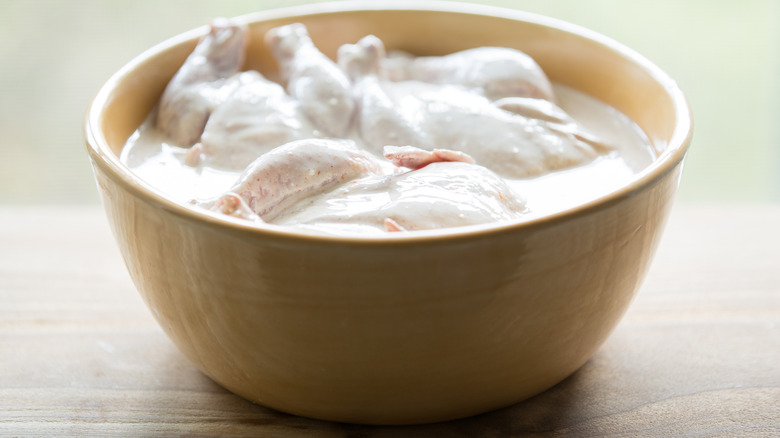
Good fried chicken has three components: meat, breading, and oil. Buttermilk is such a mainstay in recipes because it has a delicious effect on all three of these, promoting flavor, browning, and texture.
One of many major mistakes everyone makes with fried chicken is creating a breading that doesn't stick, and dry ingredients aren't the only contributor to this. "Oil and fat act like a release agent between meat and crust," Todd Johnson explained. "That's why we use fat-free buttermilk." For this aspect, it may seem like pickle brine is the right choice, but Johnson said that its lack of fat comes at the cost of a thinner consistency. Fat-free buttermilk is far more adhesive, giving your dry ingredients a prime surface to cling to, so they won't fall off the meat once they hit the oil.
Johnson conceded that buttermilk has a tendency to "over-brown" if your oil gets too hot, burning the milk sugars and solids, fouling the flavor. This is a pretty hefty disadvantage, but one that can be turned to an advantage with a careful eye. If you maintain Johnson's recommended oil temperature of 350 degrees Fahrenheit, you can toast, rather than burn, those solids, delivering a robust flavor profile focused on a hearty, umami-rich breading. Buttermilk is also a more convenient option, as you can just remove the excess drippings and drop your meat directly into your breading.
Pickle brine trades versatility for intensity
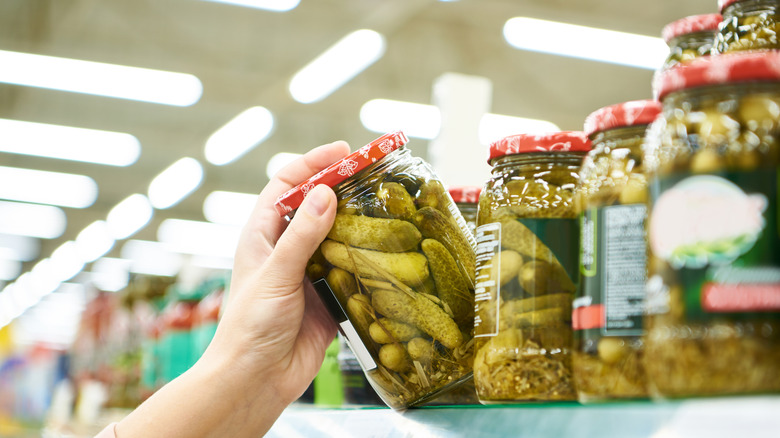
When you're looking to make fried chicken on the fly or don't have a surplus of seasoning, there are few options better than pickle brine. Todd Johnson said it's indispensable for achieving that "sandwich shop flavor" that some folks prefer, even if it has its quirks.
While you can always add some salt to your buttermilk, it won't have quite the same effect as using a jar of leftover pickle brine. "It's already salty and acidic, so it seasons and moistens the meat quickly," Todd Johnson clarified. Its extremely high and well-dissolved sodium content loosens up muscle fibers, making them far better at retaining moisture. While it lacks the rich solids and sugars of buttermilk, it brings far more tang, so it'll cut through even the heartiest, most marbled pieces of fried meat quite easily.
The biggest downside to pickle juice in your marinade is inconsistency and lack of other seasoning options. Not all brines are made the same, so unless you work with the exact same brand and product every time, there's always some amount of guess work involved. While pickle juice is one of the most powerful vehicles for flavor, it also leaves very little room for anything more subtle or nuanced. After marinating your meat, you'll also need to carefully pat dry each piece before tossing it in a batter or dry ingredients. Excess surface moisture creates a steam barrier between your chicken and breading, so even a bit left on the surface can ruin your food.