

Not Butter Or Mayo: Roasted Potatoes Are 10x Richer With One Ingredient
We may receive a commission on purchases made from links.
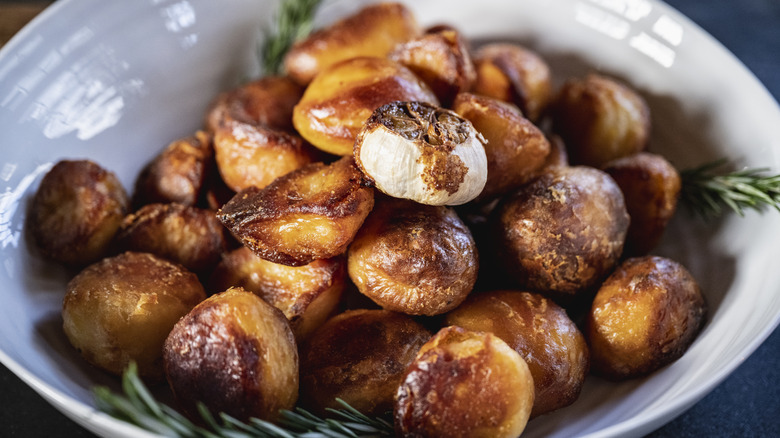
Crafting a top-tier batch of roasted potatoes is often harder than it seems — there are many mistakes everyone tends to make. A detail that's especially commonly overlooked is the employed fat. The type you use doesn't only help crisp up your spuds, but it can be transformative for the overall texture and taste. With that in mind, ditch classic options like olive oil or butter, and look to French and British tradition and opt for duck fat instead. It's an easy way to add mouth-watering richness and remarkable crunch, all without perceptible duck-like flavors.
Often used in European cuisine, duck fat lands on the obscure side in American cooking. Tracking down the foodstuff isn't too difficult, though. You can grab a can of Rendered Duck Fat for Cooking on Amazon, grab some from Walmart, as well as peruse your local farmer's market. A huge quantity isn't necessary: A quarter cup is suitable for three pounds of potatoes.
Once procured, melt the duck fat before adding to a roast, using either a stovetop or microwave for gentle softening. Combine the fat with optional aromatics, then coat the potatoes, and roast away. You'll get a tray of uber-crispy spuds, enhanced with an extra decadent touch, that will stay crispy.
Tips for getting the best and crispiest duck fat roasted potatoes
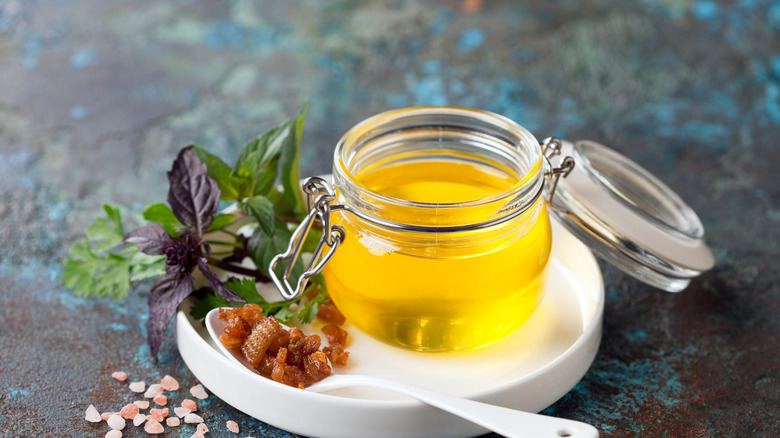
Duck fat alone establishes a strong character for roast potatoes, meaning you won't need many additional components to round out the dish. It's common — but not essential – to incorporate flour or semolina for the crispiest roast potatoes. The starch binds with the fat and seasonings to create an extra crispy external layer, lending the dish an added textural touch. Alternatively, some boil the potatoes in baking soda before roasting, a savvy technique that produces an extra soft spud interior. Or you can take a tip from British roasted potatoes and parboil, then shake your spuds before they get roasted.
In addition to the potato consistency, there are also potential seasonings to consider. A generous sprinkling of salt is a must, pepper is strongly encouraged, and further ingredients are to personal taste. Garlic roasted potatoes are a tried-and-true classic, as are tubers flavored with rosemary or thyme. You can also add a single bay leaf for herbal complexity, or finish with a sprinkle of parmesan for a cheesy touch. If you're running low on duck fat — or craving a potato rendition that's less rich — feel free to cut the ingredient with olive oil. However, you won't want to leave the ingredient out altogether: Duck fat is roast potato magic.