

The Spicy Sauce That Turns Beef Sandwiches Into A Baltimore Classic
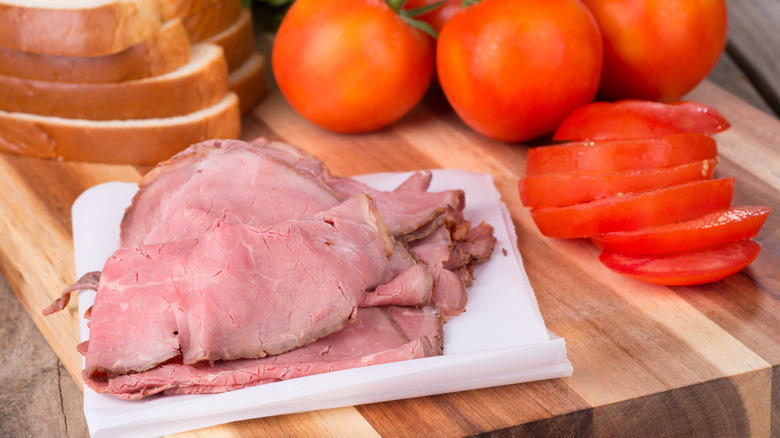
There are plenty of reasons to take a trip to Baltimore; perhaps you're a fan of Old Bay seasoning and want to visit the place where its story began, or maybe you're eager to try Maryland's world-famous blue crabs. While Baltimore certainly doesn't lack options when it comes to seafood, the state is also home to a seriously impressive sandwich: pit beef. Made with thinly sliced, smoky roast beef piled onto a kaiser roll along with raw white onions, no pit beef is complete without a generous dollop of spicy tiger sauce.
Baltimore tiger sauce, a controversial inductee amongst regional barbecue sauces, requires just two core ingredients: mayonnaise and horseradish. Lemon juice, garlic, salt, and pepper are also common additions. Thanks to the horseradish, the sauce brings a different kind of burn than you get from chili peppers. When the root is grated or crushed, naturally occurring compounds called glucosinolates break down into pungent substances, including allyl isothiocyanate, which stimulates the same sensory receptors responsible for the sharp, biting sensation you get from wasabi — you know, the kind that hurts in the best way possible.
This sharp pungency helps cut through the richness of the smoky beef, and it's a great example of how a sandwich made with just a smattering of ingredients can still deliver complex flavors without needing to be piled high with a mismatch of toppings. A fresh batch can be stored in an airtight container in the refrigerator for up to two days, and you can use it for more than just pit beef sandwiches; try spreading it on other roast beef sandwiches, serving it alongside steak, or using it as a dipping sauce for fries when regular old mayo just isn't cutting it.
Tiger sauce is only one part of a wider picture
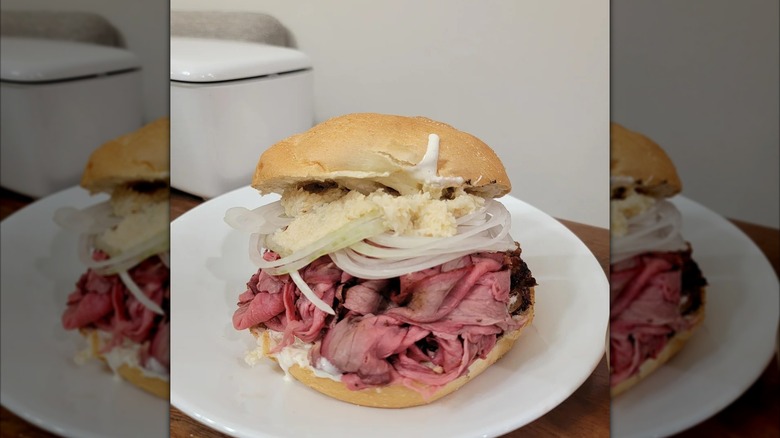
If you don't want your nose tingling and your eyes watering the entire time you're eating your pit beef, you'll need to go easy on the horseradish. Even a small amount packs a hefty punch, especially when fresh. For a milder, more manageable kick, reach for prepared horseradish instead. This condiment is made from freshly grated or ground horseradish root mixed with vinegar and salt, and pairing it with mayo helps tame some of its harsh pungency. As a frame of reference, start without about one tablespoon of prepared horseradish for every quarter cup of mayonnaise, then taste and gradually add more until you reach your preferred level of punchiness.
But there's one element even more important than the tiger sauce, and that's the beef itself. There's plenty of debate over which cut works best, although most roads lead to either top round or bottom round. Both come from the cow's hindquarters, making them relatively lean cuts that are well-suited to pit beef. Traditionally, the meat is cooked over a hot charcoal fire, developing that smoky, browned crust while the inside stays pink and juicy. At home, a gas grill or even a hot cast iron skillet can get the job done if you don't have a charcoal grill handy.
Since these cuts don't have much fat to keep them moist, take care not to overcook them, or you'll end up with tough, dry beef. Once the roast has rested, grab the sharpest knife you own and slice the beef as thinly as possible (always against the grain). Those wafer-thin slices are key to getting that signature Baltimore pit beef sandwich texture.